Kentucky Reading and Writing C.9-10.1
Standard Cluster
Compose arguments to support claims in an analysis of substantive topics or texts, using valid reasoning and relevant and sufficient evidence. Produce clear and coherent writing in which the development, organization and style are appropriate to task, purpose and audience. Introduce precise claim(s), distinguish the claim(s) from alternate or opposing claims and create an organization that establishes clear relationships among claim(s), counterclaims, reasons and evidence. Develop claim(s) and counterclaims fairly, supplying evidence for each while pointing out the strengths and limitations of both in a manner that anticipates the audience’s knowledge level and concerns. Link the major sections of the text cohesively, and clarify the relationships among claim(s), counterclaims, reasons and evidence. Establish and maintain a task-appropriate writing style. Provide a concluding statement or section that follows and supports the argument presented. Develop and strengthen writing as needed by planning, revising, editing, rewriting or trying a new approach, focusing on addressing what is most significant for a specific purpose and audience.
Kentucky Academic Standards for Reading and Writing (2025) · Text Types and Purpose
Cluster contents
Standards in This Cluster
C.9-10.1 is a cluster heading. These are the individual standards under it.
- C.9-10.1.d
Link the major sections of the text cohesively, and clarify the relationships among claim(s), counterclaims, reasons and evidence.
- C.9-10.1.e
Establish and maintain a task appropriate writing style.
- C.9-10.1.f
Provide a concluding statement or section that follows and supports the argument presented.
Teacher's field guide
What This Cluster Means
What Students Need to Do
- Students take a position on a debatable issue or text and support it with relevant evidence. They address an objection fairly, organize their reasons, and revise for a specific reader.
What Mastery Looks Like
- A strong draft states a precise claim, groups reasons with evidence, and explains what the evidence shows. It considers the opposing view without distorting it and ends with a conclusion that follows from the argument.
Common Misconceptions
- Students may treat a strong opinion as proof or add a quote without explaining it. They may make the opposing view sound foolish instead of addressing its best point. Some end by repeating the claim without drawing their reasons together.
How to Assess It
- Give students this sample poll: 18 of 25 students report phone distractions; 7 of 25 use phones for assignment reminders. In six sentences, ask students to recommend a phone rule to the principal, use both results, address an objection, and conclude.
Lesson moves
Ways to Teach It
Give pairs sentence strips about phone rules to sort into claim, evidence, counterclaim, reply, and conclusion, then arrange into an argument.
Write two replies to 'Phones should be banned at lunch,' one that dismisses the other side and one that weighs it fairly.
Race pairs to match '18 of 25 distracted' and '7 use reminders' poll cards to phone-rule claims, then explain each match.
Use the posted school phone policy to draft an email to the principal proposing one change, citing a rule, and answering a likely objection.
Free download
Printable C.9-10.1 Worksheet
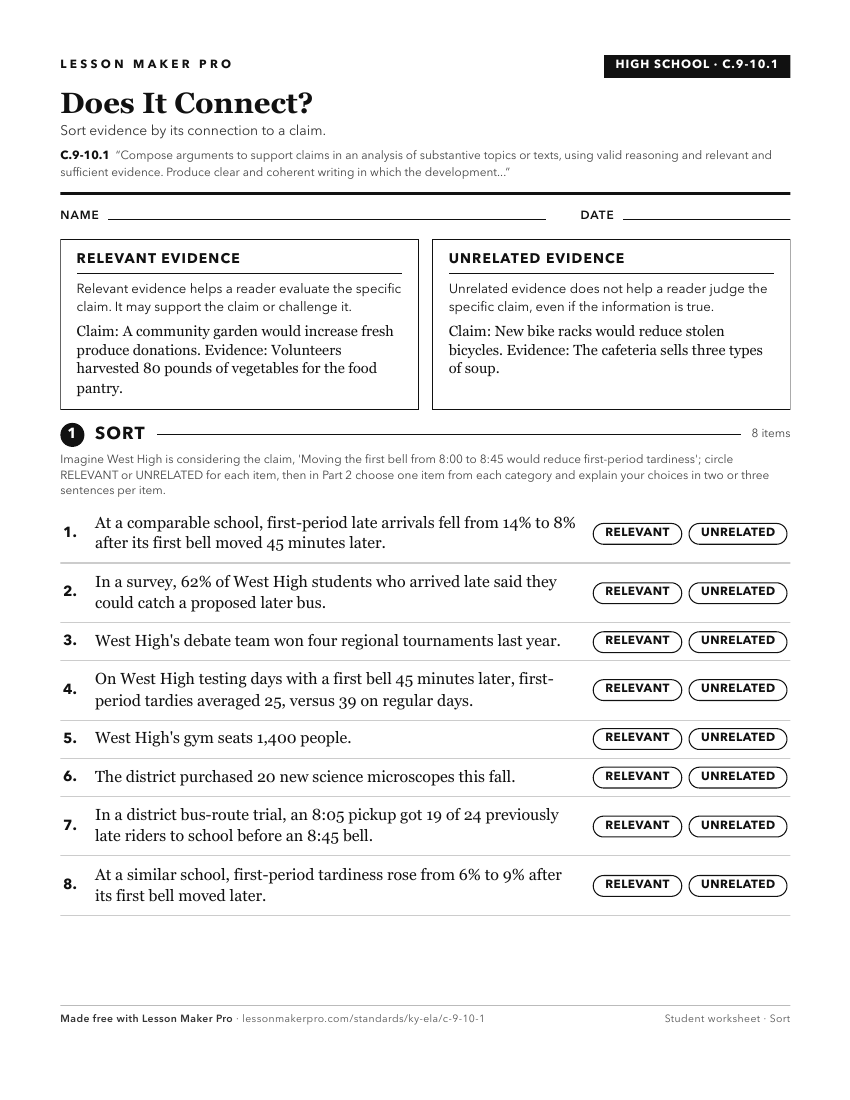
A ready-to-print activity worksheet aligned to C.9-10.1, with an answer key for the teacher on its own page. No account needed.
PDF, US Letter, prints cleanly in black and white.
Download the worksheetKeep exploring
Related Standards
Turn this cluster into a lesson
Grade, subject, topic, and the complete cluster are prefilled. Create one free, no account needed.
Also for this cluster:Make a WorksheetMake a QuizMake a Sub Lesson