Kentucky Reading and Writing C.3.2
Standard Cluster
Compose informative and/or explanatory texts, using writing and digital resources, to examine a topic and provide information. With guidance and support from adults, produce writing in which the development and organization are appropriate to task and purpose. Introduce a topic and group related information together; include illustrations when useful to aiding comprehension. Develop the topic with facts, definitions and details. Use grade-appropriate conjunctions to develop text structure within sentences. Use grade-appropriate transitions to develop text structure in sentences and paragraphs. Provide a concluding section. With guidance and support from peers and adults, develop and strengthen writing as needed by planning, revising and editing.
Kentucky Academic Standards for Reading and Writing (2025) · Text Types and Purpose
Cluster contents
Standards in This Cluster
C.3.2 is a cluster heading. These are the individual standards under it.
Teacher's field guide
What This Cluster Means
What Students Need to Do
- Students use a book or child-friendly website to gather facts about a topic. They group related facts, explain key words, and add a picture if it helps the reader. They connect ideas with words such as because and for example, then revise and edit with help.
What Mastery Looks Like
- A reader can find the topic at the start and follow the facts through to a closing section. The student groups related details, uses connecting words accurately, and improves the draft after feedback.
Common Misconceptions
- Students may list facts in the order they found them instead of grouping related ideas. They may treat an opinion as a fact or add a new fact in the closing section.
How to Assess It
- Give students these notes: bees drink nectar, pollen sticks to bees, and bees carry pollen to other flowers. Ask them to explain how bees help flowers, with an opening, two connected facts, the word because, and a closing sentence.
Lesson moves
Ways to Teach It
Give pairs six printed frog facts and two picture cards; have them sort facts under Body and Life Cycle, then draft labeled paragraphs.
Ask students to write why a tadpole detail belongs in a life cycle paragraph rather than a frog body paragraph.
Play transition match: partners draw sentence strips about frogs and choose because, for example, or also to connect facts accurately.
Use a school garden seed packet and a weather chart to write a planting guide with grouped facts and a closing.
Free download
Printable C.3.2 Worksheet
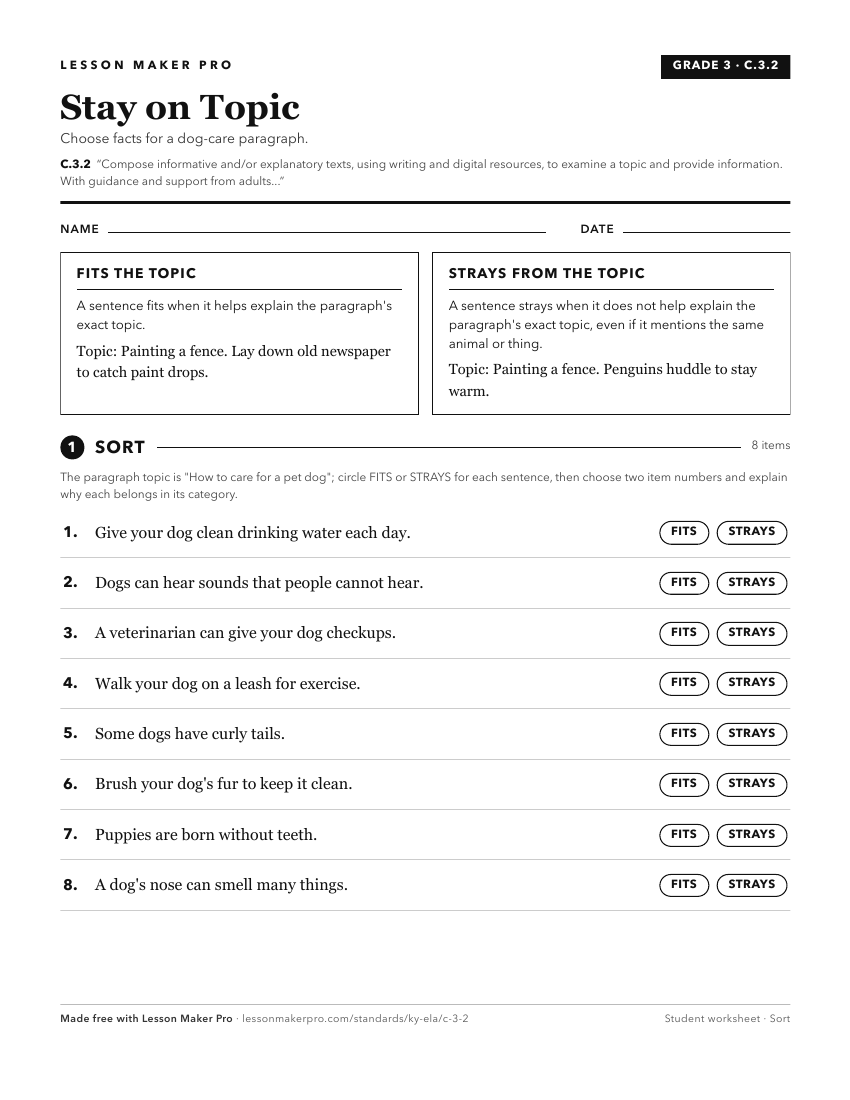
A ready-to-print activity worksheet aligned to C.3.2, with an answer key for the teacher on its own page. No account needed.
PDF, US Letter, prints cleanly in black and white.
Download the worksheetKeep exploring
Related Standards
- C.2.2
Compose informative and/or explanatory texts, using writing and digital resources, to establish a topic and provide information about the topic.
- C.1.2
Compose informative and/or explanatory texts, using a combination of drawing, dictating, writing and digital resources, to establish a topic and provide informa...
- C.4.2
Compose informative and/or explanatory texts, using writing and digital resources, to examine a topic and convey ideas and information clearly.
- C.5.2
Compose informative and/or explanatory texts, using writing and digital resources, to examine a topic and convey ideas and information clearly.
Turn this cluster into a lesson
Grade, subject, topic, and the complete cluster are prefilled. Create one free, no account needed.
Also for this cluster:Make a WorksheetMake a QuizMake a Sub Lesson