Kentucky Reading and Writing C.5.2
Standard Cluster
Compose informative and/or explanatory texts, using writing and digital resources, to examine a topic and convey ideas and information clearly. Produce clear and coherent writing in which the development and organization are appropriate to task, purpose and audience. Introduce a topic clearly, provide a general observation and focus and group related information logically; include formatting, illustrations and multimedia when useful to aiding comprehension. Develop the topic with facts, definitions, concrete details, quotations or other information and examples related to the topic. Use grade-appropriate conjunctions to develop text structure within sentences. Use grade-appropriate transitions to develop text structure in sentences and paragraphs. Use precise language and domain-specific vocabulary to inform about or explain the topic. Provide a concluding section. With guidance and support from peers and adults, develop and strengthen writing as needed by planning, revising, editing, rewriting or trying a new approach.
Kentucky Academic Standards for Reading and Writing (2025) · Text Types and Purpose
Cluster contents
Standards in This Cluster
C.5.2 is a cluster heading. These are the individual standards under it.
Teacher's field guide
What This Cluster Means
What Students Need to Do
- Students explain a topic with a clear opening, related facts in a sensible order, and a closing. They use source notes, precise words, and transitions, then revise after feedback. They add a heading or labeled picture when it helps the reader.
What Mastery Looks Like
- Given notes on pollination, a student can write separate paragraphs about how pollen moves and why that helps plants. They use accurate terms and connect a cause to its result. They close without adding a new fact and rewrite a confusing sentence after feedback.
Common Misconceptions
- Students may list facts in the order they found them, so paragraphs jump between ideas. Some copy sentences from a website or use vague words like stuff instead of pollen. Others use first, next, and finally to explain causes rather than steps.
How to Assess It
- Exit ticket: Provide three facts, bees carry pollen between flowers, pollinated flowers make seeds, and flower patches feed bees. Ask students to write an opening, two linked facts using because or as a result, and a closing sentence about why flower patches matter.
Lesson moves
Ways to Teach It
Give pairs six pollination fact cards to sort into how it works and why it matters piles, then draft section headings.
Ask which opening explains more: Bees are interesting, or Bees carry pollen that helps plants make seeds? Have students defend their choice.
Hand out sentence strips and cards labeled because, also, and as a result; teams connect pollination facts and explain why each link fits.
Show a flower bed photo; students write a sign explaining its value to bees with two facts from a science book.
Free download
Printable C.5.2 Worksheet
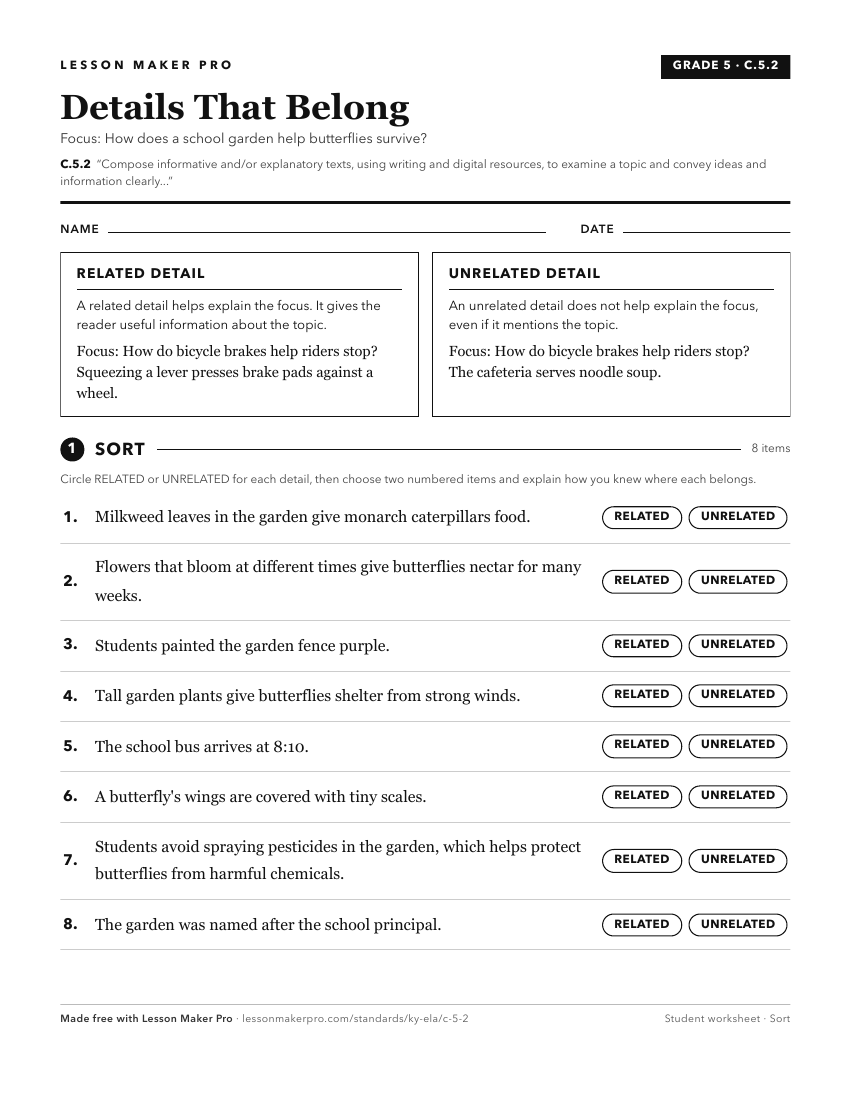
A ready-to-print activity worksheet aligned to C.5.2, with an answer key for the teacher on its own page. No account needed.
PDF, US Letter, prints cleanly in black and white.
Download the worksheetKeep exploring
Related Standards
- C.2.2
Compose informative and/or explanatory texts, using writing and digital resources, to establish a topic and provide information about the topic.
- C.3.2
Compose informative and/or explanatory texts, using writing and digital resources, to examine a topic and provide information.
- C.4.2
The 4th Grade version of this standard.
Turn this cluster into a lesson
Grade, subject, topic, and the complete cluster are prefilled. Create one free, no account needed.
Also for this cluster:Make a WorksheetMake a QuizMake a Sub Lesson