Kentucky Reading and Writing C.2.1
Standard Cluster
Compose opinion pieces, using a combination of writing and digital resources, on topics or texts, with supporting reasons. With guidance and support from adults, strengthen writing through peer collaboration and adding details through writing and/or pictures as needed. Introduce the topic, followed by opinion statement, and create an organizational structure. Provide reasons with details to support the opinion. Use grade-appropriate transitions to connect sentences and paragraphs. Provide a concluding section. With guidance and support from peers and adults, develop and strengthen writing as needed by planning, revising and editing.
Kentucky Academic Standards for Reading and Writing (2025) · Text Types and Purpose
Cluster contents
Standards in This Cluster
C.2.1 is a cluster heading. These are the individual standards under it.
- C.2.1.a
With guidance and support from adults, strengthen writing through peer collaboration and adding details through writing and/or pictures as needed.
- C.2.1.b
Introduce the topic, followed by opinion statement, and create an organizational structure.
- C.2.1.c
Provide reasons with details to support the opinion.
- C.2.1.d
Use grade-appropriate transitions to connect sentences and paragraphs.
- C.2.1.e
Provide a concluding section.
- C.2.1.f
With guidance and support from peers and adults, develop and strengthen writing as needed by planning, revising and editing.
Teacher's field guide
What This Cluster Means
What Students Need to Do
- Students write an opinion about a story or familiar topic, using a digital source such as a photo for ideas. They name the topic, state their opinion, give reasons with details, connect ideas, and write an ending. With help, they plan, share drafts, and add or fix words and pictures.
What Mastery Looks Like
- A student opens with the topic and a clear opinion. They support it with specific details, use words like “also” and “because” to connect ideas, and write a closing. After a partner reads the draft, they can add a useful detail or fix a confusing sentence.
Common Misconceptions
- Students may list what they like without saying what they want the reader to agree with. They may repeat the same reason, leave out details, or end after their last reason. Some add “also” between sentences that do not connect.
How to Assess It
- Exit ticket: Should our class have a reading corner? Write an opening that names the topic and gives your opinion, two reasons with details, a connecting word, and a closing sentence.
Lesson moves
Ways to Teach It
Give pairs sentence strips from a note about longer recess; have them arrange the opening, opinion, reasons, details, and ending.
Ask, “Should our class read outside?” Have partners share reasons, write their own answers, then trade drafts and add one detail after feedback.
In teams, race to arrange sentence cards about a class pet into an opinion, two supported reasons, and a closing; add “also” where it fits.
Use a tablet photo of the schoolyard to write the principal a note asking for a bench, with two reasons for that location.
Free download
Printable C.2.1 Worksheet
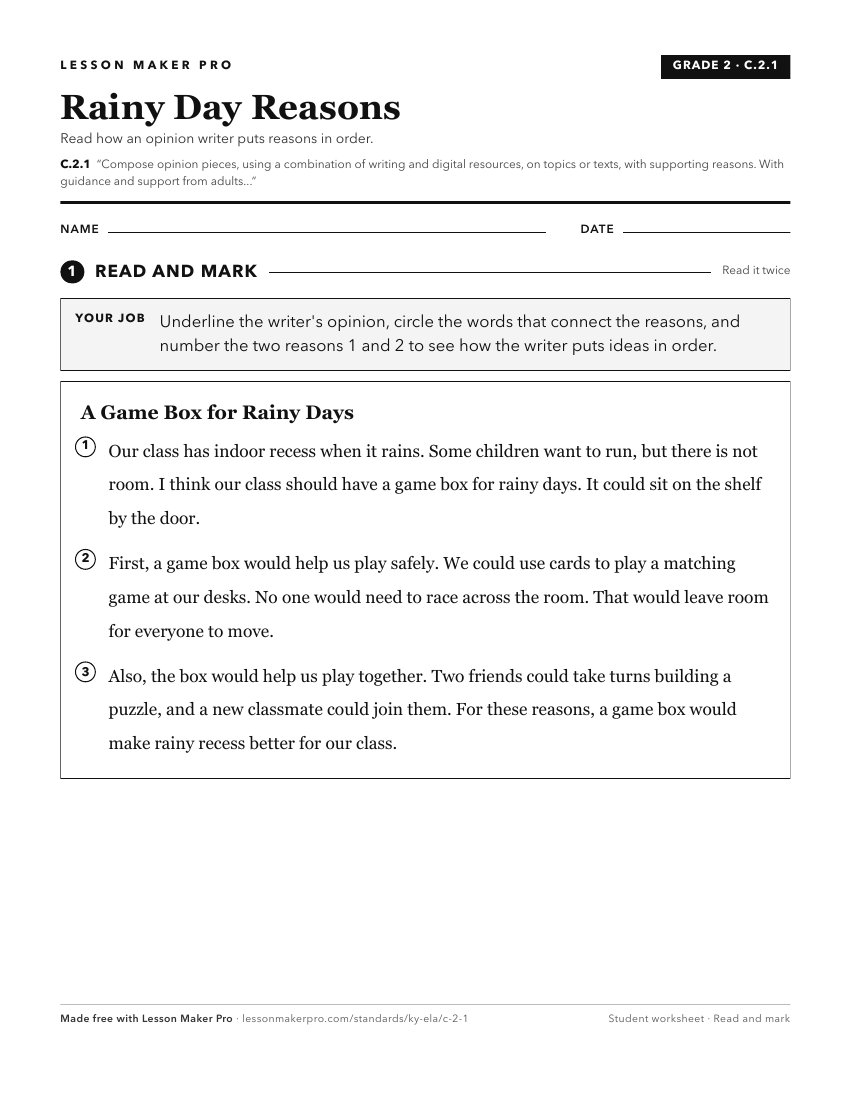
A ready-to-print activity worksheet aligned to C.2.1, with an answer key for the teacher on its own page. No account needed.
PDF, US Letter, prints cleanly in black and white.
Download the worksheetKeep exploring
Related Standards
- C.4.1
Compose opinions, using writing and digital resources, on topics or texts, supporting an author's perspective with reasons and information.
- C.3.1
The 3rd Grade version of this standard.
- C.5.1
Compose opinion pieces, using writing and digital resources, on topics or texts, supporting the writer's perspective with reasons and information.
- C.K.1
Compose opinion pieces, using a combination of drawing, dictating, writing and digital resources, to state the topic and an opinion.
Turn this cluster into a lesson
Grade, subject, topic, and the complete cluster are prefilled. Create one free, no account needed.
Also for this cluster:Make a WorksheetMake a QuizMake a Sub Lesson