Indiana Social Studies WG.4.18
The Standard
Identify specific situations where human or cultural factors are involved in geographic conflict and identify different viewpoints in the conflict.
2026 Indiana Academic Standards: K-12 Social Studies · Cooperation and Conflict
Teacher's field guide
What This Standard Means
What Students Need to Do
- Students locate places such as the Nile River and Kashmir on a map. They name the water needs, political claims, or cultural ties behind a dispute and explain how affected groups see it differently.
What Mastery Looks Like
- A student can explain why Ethiopia wants electricity from a Nile dam and why Egyptian farmers worry about river flow. They can use a map or short source to support each viewpoint without assuming everyone in a country agrees.
Common Misconceptions
- Students may blame the river or border alone without naming the competing needs or claims. They may treat a government's position as the view of every person who lives there.
How to Assess It
- Show a map of the Nile with Ethiopia and Egypt labeled. Ask: Why might Ethiopia support a dam, why might an Egyptian farmer object, and how does the river's path matter?
Lesson moves
Ways to Teach It
Give pairs a Nile map and sticky notes. Have them mark Ethiopia's dam and Egypt's farms, then trace the river's flow.
Ask students to write one reason Indian officials, Pakistani officials, and a Kashmiri resident might each care about control of Kashmir.
Give groups claim cards from the Nile and Kashmir disputes. Have them match each claim to a place and the group making it.
Put a recent Nile dam news excerpt beside a river map. Students circle whose view appears and write one viewpoint the excerpt leaves out.
Free download
Printable WG.4.18 Worksheet
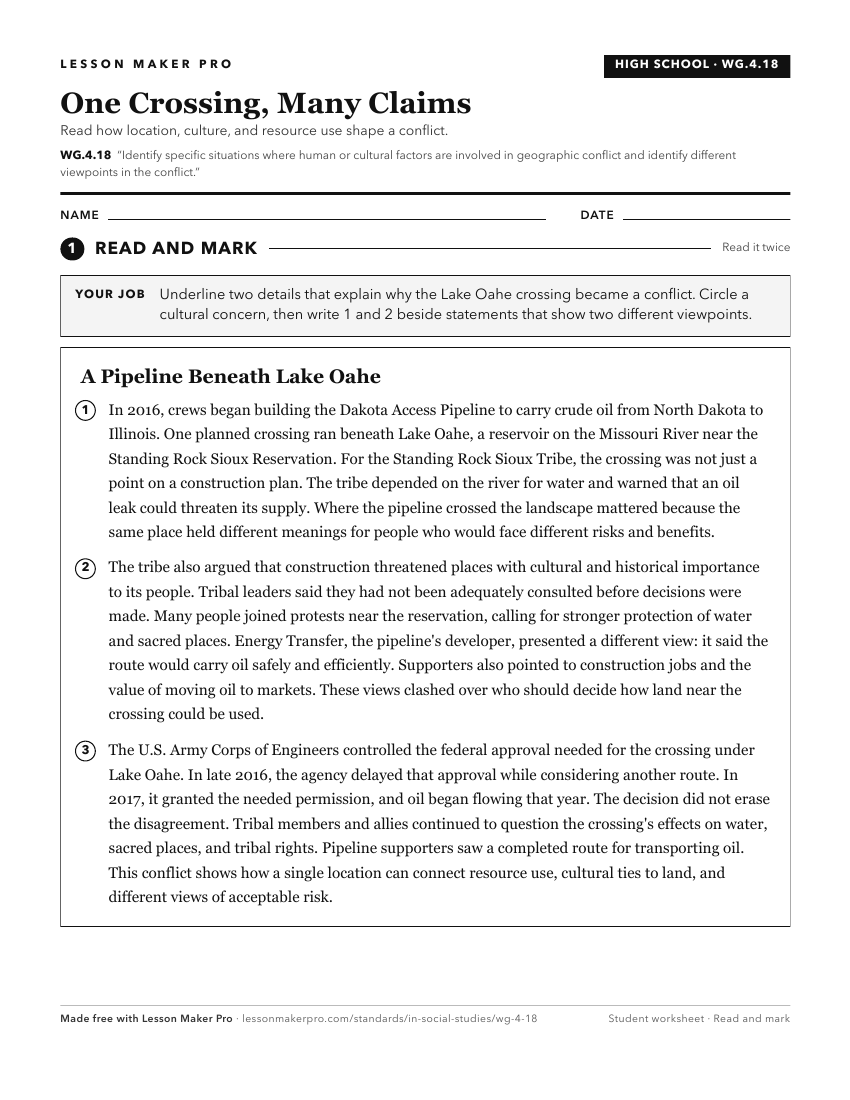
A ready-to-print activity worksheet aligned to WG.4.18, with an answer key for the teacher on its own page. No account needed.
PDF, US Letter, prints cleanly in black and white.
Download the worksheetKeep exploring
Related Standards
- WG.2.2
Analyze and provide examples of ways in which people's changing views of places and regions reflect cultural changes; explain how people's views of physical fea...
- WG.5.5
Identify examples from different world regions, involving the use and management of resources. Explain how different points of view influence policies relating ...
- GHW.7.1
Recognize that conflict and cooperation among groups of people occur for a variety of reasons, including nationalist, racial, ethnic, religious, political, econ...
- GHW.7.2
Analyze the physical and human factors involved in conflicts and violence related to nationalist, racial, ethnic, religious, economic, political, and/or resourc...
Turn this exact standard into a lesson
Grade, subject, topic, and the complete standard are prefilled. Create one free, no account needed.
Also for this standard:Make a WorksheetMake a QuizMake a Sub Lesson