Indiana Social Studies USG.3.11
The Standard
Analyze the functions of political parties in elections and government at national, state, and local levels of the federal system.
2026 Indiana Academic Standards: K-12 Social Studies · Students understand the nature of citizenship, politics, and governments, understanding the rights and responsibilities of citizens and how these are part of local, state, and national government. Students examine how the United States Constitution protects rights and provides the structure and functions of various levels of government. Students examine how the United States interacts with other nations as well as the government's role in world affairs will be examined.
Teacher's field guide
What This Standard Means
What Students Need to Do
- Students explain how parties recruit candidates, set policy goals, and help voters choose and turn out. They compare what parties do during elections and in government at the local, state, and national levels.
What Mastery Looks Like
- A student can explain why a county party canvasses for a candidate and why a House party caucus coordinates votes. They can tell which action helps win an election and which shapes a government decision.
Common Misconceptions
- Students may think parties only pick presidential nominees or stop working after Election Day. They may assume every local race has party labels or that a party platform becomes law automatically.
How to Assess It
- Exit ticket: A county party canvasses for a commissioner candidate, a state party organizes voters for a governor, and a House party caucus coordinates a vote. For each, name the level and explain whether the party is helping win an election or shape a government decision.
Lesson moves
Ways to Teach It
Give pairs cards labeled county canvassing, governor endorsement, and House caucus vote; have them sort the cards by level and by election or governing role.
Ask students to write two sentences explaining how a party could help elect a governor and then help that governor pass a budget.
Run a one-minute sort: students place canvassing and candidate endorsements under elections, then committee assignments and coordinated votes under governing.
Show a local sample ballot; have students mark races with party labels and discuss whether parties can back candidates in races without them.
Free download
Printable USG.3.11 Worksheet
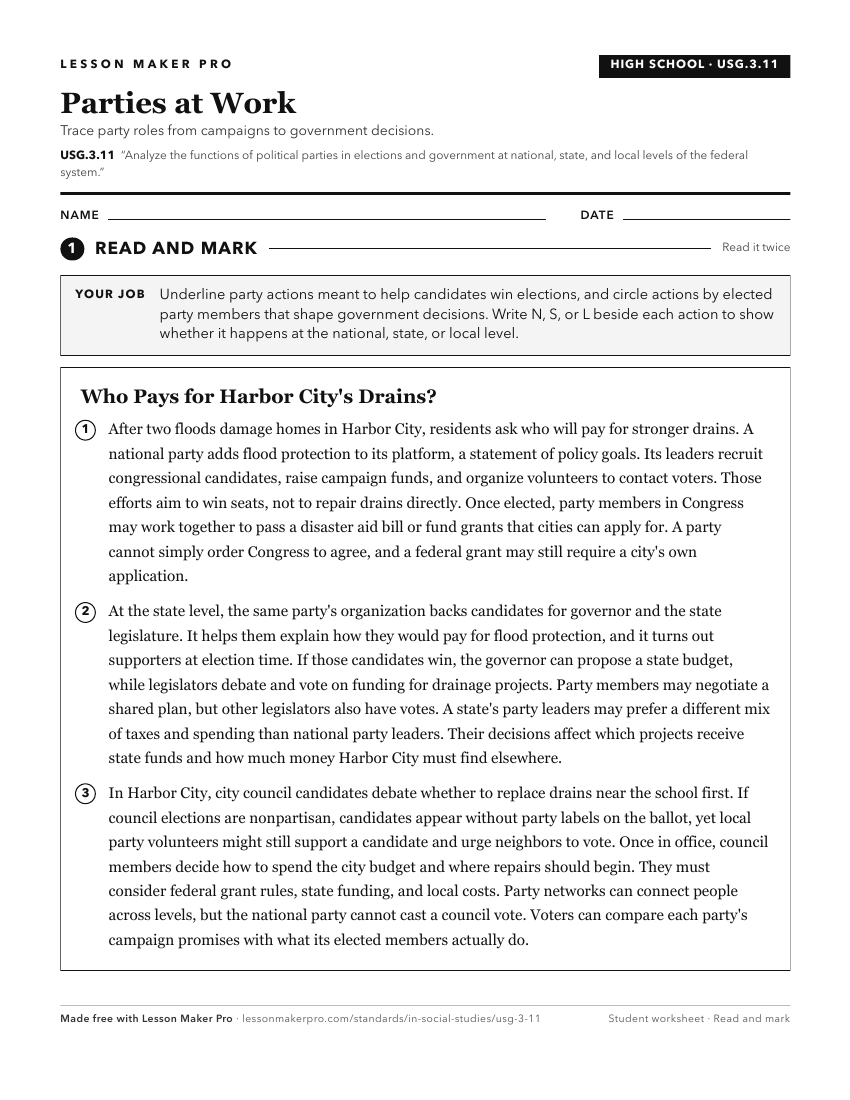
A ready-to-print activity worksheet aligned to USG.3.11, with an answer key for the teacher on its own page. No account needed.
PDF, US Letter, prints cleanly in black and white.
Download the worksheetKeep exploring
Related Standards
- 8.C.6
Explain ways that citizens can participate in the election process (e.g., political parties, campaigns, and elections) at the federal, state, and local levels.
- 5.H.16
Explain why the first American political parties developed, and analyze the impact political parties had on early presidential elections.
- USG.3.10
Examine the progression of political parties and their ideologies and the broad political spectrum in the American governmental system, and analyze their functi...
- USG.3.8
Explain the electoral process in terms of election laws and election systems on the national, state, and local level.
Turn this exact standard into a lesson
Grade, subject, topic, and the complete standard are prefilled. Create one free, no account needed.
Also for this standard:Make a WorksheetMake a QuizMake a Sub Lesson