Indiana Social Studies S.8.3
The Standard
Describe how collective behavior can influence and change society.
2026 Indiana Academic Standards: K-12 Social Studies
Teacher's field guide
What This Standard Means
What Students Need to Do
- Students identify what people did together and how others responded. They explain how that shared action could lead to a change in rules, attitudes, or daily life.
What Mastery Looks Like
- A student can explain how the Montgomery bus boycott put pressure on the bus system and helped bring attention to segregation. They can name the court ruling that changed bus seating rules without claiming the boycott alone caused it.
Common Misconceptions
- Students may think any large crowd is a social movement or that a protest changes a law right away. They may credit one leader and miss the work of many participants.
How to Assess It
- Exit ticket: “Montgomery residents boycotted city buses and organized carpools; bus revenue fell, and a court later ruled bus segregation illegal.” Name the shared action, one response, and the change.
Lesson moves
Ways to Teach It
Hand out cards labeled boycott, carpools, lost bus fares, court ruling, and integrated buses; students arrange them and draw arrows between connected events.
Ask, “Would a viral post about unfair bus fares change a policy on its own?” Have students name an action people could take next.
In pairs, match cards for panic buying, a school petition, and a boycott to possible responses; explain one match aloud.
Draft a petition to change a school lunch rule, then name who would decide and how students could check whether anything changed.
Free download
Printable S.8.3 Worksheet
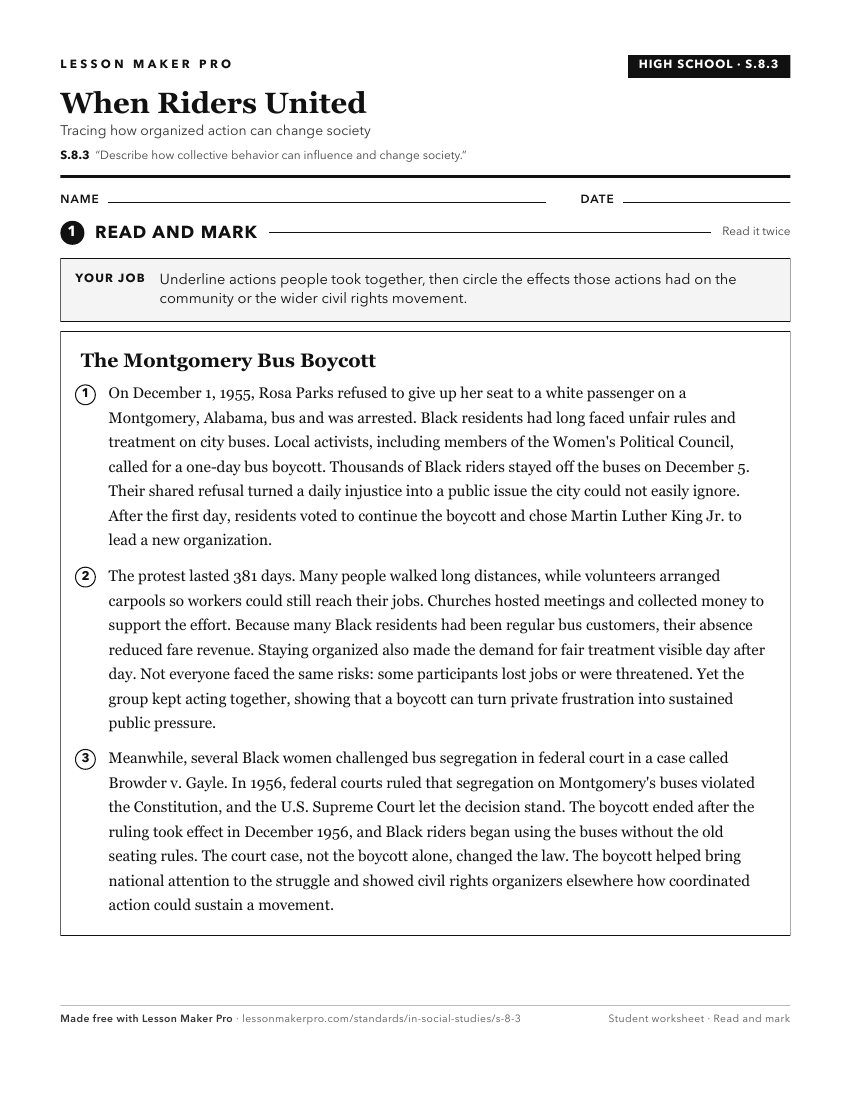
A ready-to-print activity worksheet aligned to S.8.3, with an answer key for the teacher on its own page. No account needed.
PDF, US Letter, prints cleanly in black and white.
Download the worksheetKeep exploring
Related Standards
- S.8.7
Discuss theories that attempt to explain collective behavior.
- S.8.5
Distinguish major differences between social movements and collective behavior with examples.
- S.8.10
Discuss both the benefits and social costs of collective behavior in society.
- S.8.1
Describe how and why societies change over time.
Turn this exact standard into a lesson
Grade, subject, topic, and the complete standard are prefilled. Create one free, no account needed.
Also for this standard:Make a WorksheetMake a QuizMake a Sub Lesson