Indiana Social Studies S.8.10
The Standard
Discuss both the benefits and social costs of collective behavior in society.
2026 Indiana Academic Standards: K-12 Social Studies
Teacher's field guide
What This Standard Means
What Students Need to Do
- Students examine what happens when people act together in crowds, boycotts, or emergencies. They explain who benefits, who bears costs, and how the same action can do both.
What Mastery Looks Like
- Given an account of a bus boycott, a student names a gain, such as changed bus rules, and a hardship, such as long walks to work. They use details from the account to explain who experienced each effect.
Common Misconceptions
- Students may assume every crowd is violent or that a good goal prevents any harm. Some blame protesters for attacks carried out against them.
How to Assess It
- Exit ticket: A neighborhood storm cleanup clears sidewalks but blocks a street for two hours. Name one benefit, one cost, and who experiences each.
Lesson moves
Ways to Teach It
Give six pairs household cards and 12 water tokens; set a two-token need, let two pairs take four, and count shortages.
Read a short account of the Montgomery bus boycott; write who gained, who faced hardships, and whether those costs were shared equally.
Sort cards about a bus boycott, storm cleanup, and panic buying into benefit, cost, or both; explain one choice.
Use a road closure notice for a local march to identify whose message gains attention and whose travel is disrupted.
Free download
Printable S.8.10 Worksheet
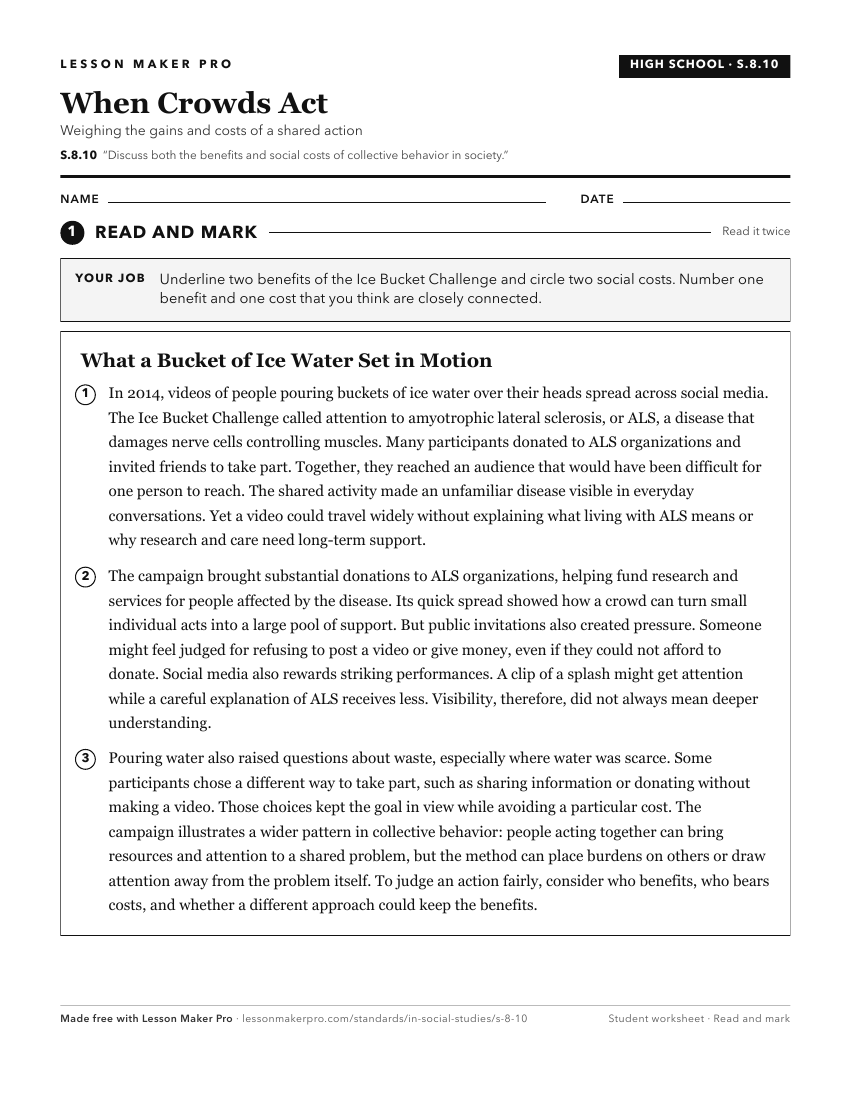
A ready-to-print activity worksheet aligned to S.8.10, with an answer key for the teacher on its own page. No account needed.
PDF, US Letter, prints cleanly in black and white.
Download the worksheetKeep exploring
Related Standards
Turn this exact standard into a lesson
Grade, subject, topic, and the complete standard are prefilled. Create one free, no account needed.
Also for this standard:Make a WorksheetMake a QuizMake a Sub Lesson