Indiana Science HS-AP11-4
The Standard
Construct an explanation for maintaining blood pH via specialized carbon dioxide receptors and the respiratory response.
Indiana Academic Standards for Science (2023) · Absorption and Excretion, the Respiratory System
Teacher's field guide
What This Standard Means
What Students Need to Do
- Explain how extra carbon dioxide lowers blood pH. Trace how chemoreceptors trigger faster, deeper breathing to remove carbon dioxide and bring pH back toward normal.
What Mastery Looks Like
- Given a rise in blood carbon dioxide, students can draw the path from receptor detection to increased breathing and a return toward normal pH. They can explain why removing carbon dioxide makes blood less acidic.
Common Misconceptions
- Students often say faster breathing fixes pH by adding oxygen, rather than removing carbon dioxide. Some think chemoreceptors remove carbon dioxide themselves or that more carbon dioxide makes blood more basic.
How to Assess It
- Ask: “Blood carbon dioxide rises. What happens to pH, what detects the change, and how does breathing help?” Have students answer in three sentences.
Lesson moves
Ways to Teach It
Use pH strips to compare tap water and unflavored seltzer, then ask how dissolved carbon dioxide affects pH.
Ask students to write three sentences explaining why breathing speeds up when blood carbon dioxide rises.
Give pairs six cards: CO2 rises, pH falls, receptors signal, breaths deepen, CO2 leaves, pH recovers; have them race to order the cards.
Ask why a runner keeps breathing hard after stopping, using carbon dioxide, receptors, and blood pH in the explanation.
Free download
Printable HS-AP11-4 Worksheet
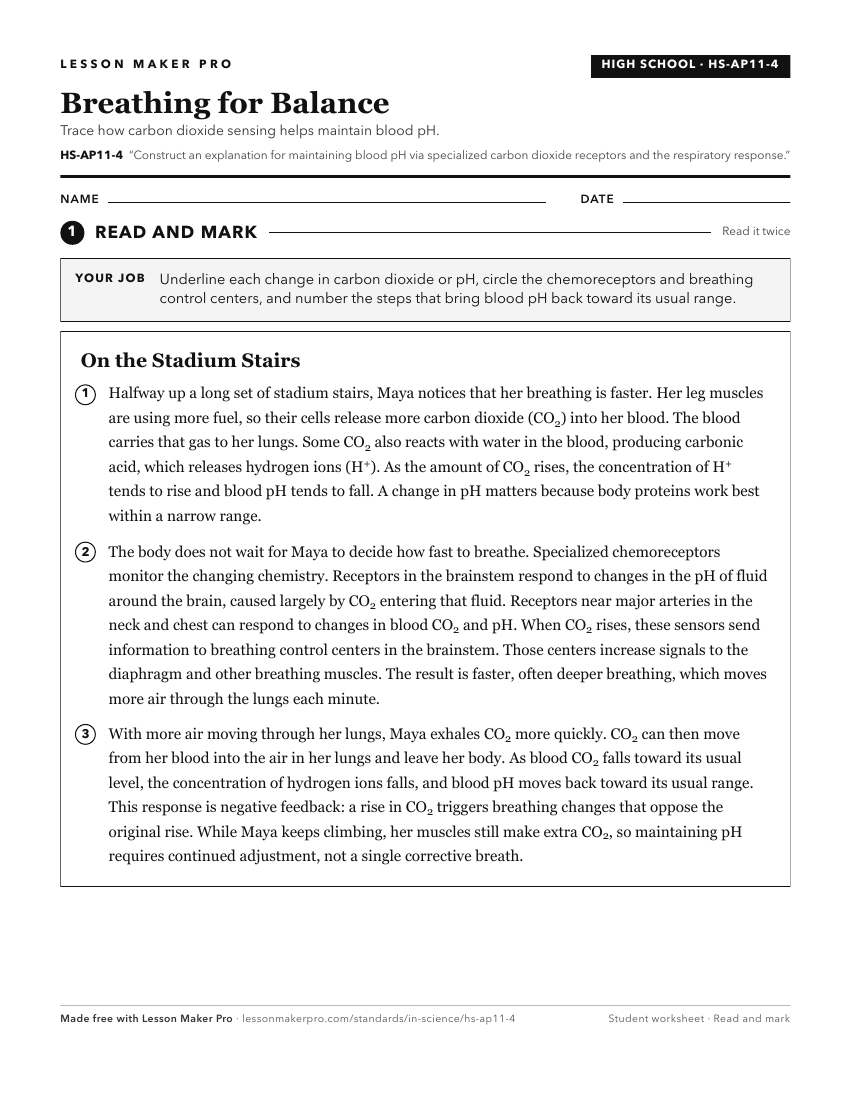
A ready-to-print activity worksheet aligned to HS-AP11-4, with an answer key for the teacher on its own page. No account needed.
PDF, US Letter, prints cleanly in black and white.
Download the worksheetKeep exploring
Related Standards
- HS-AP10-4
Differentiate between metabolic and respiratory acidosis and alkalosis.
- HS-AP7-5
Construct an explanation for maintaining blood sugar levels via endocrine and exocrine functions of the pancreas.
- HS-AP11-3
Analyze data to investigate how percentages and partial pressure gradients of oxygen and carbon dioxide impact net gas exchange.
Turn this exact standard into a lesson
Grade, subject, topic, and the complete standard are prefilled. Create one free, no account needed.
Also for this standard:Make a WorksheetMake a QuizMake a Sub Lesson