Idaho Social Studies 9-12.WC.35
The Standard
Summarize religious reforms associated with key figures and movements, including, but not limited to Luther, Calvin, Zwingli, Henry VIII, John of Leyden, Ignatius of Loyola (Jesuits), and the Council of Trent, and analyze the effects of the Reformation and Counter-Reformation on Europe.
Idaho Content Standards: K-12 Social Studies · The Renaissance and Reformation (c. 1450 AD – 1600 AD)
Teacher's field guide
What This Standard Means
What Students Need to Do
- Students identify the beliefs and church changes tied to major reformers and Catholic leaders. They explain how those disputes affected rulers, religious groups, and conflicts across Europe.
What Mastery Looks Like
- A student can explain Luther’s views on faith and scripture, Calvin’s predestination, and Zwingli’s view of communion. They can distinguish Henry VIII’s royal church from John of Leyden’s rule in Münster. They can connect Jesuit schools and the Council of Trent to Catholic renewal and name an effect on Europe.
Common Misconceptions
- Students may say Henry VIII broke with Rome over predestination, rather than his marriage and control of the English church. They may treat John of Leyden’s rule in Münster as typical of all Anabaptists. They may think the Council of Trent adopted Protestant beliefs instead of reaffirming Catholic teachings and reforming clergy.
How to Assess It
- Exit ticket: Choose Luther, Calvin, Zwingli, Henry VIII, or John of Leyden; name one belief or reform and explain one effect it had in Europe. Add one Catholic response from the Jesuits or the Council of Trent.
Lesson moves
Ways to Teach It
Print dated cards for Luther, Calvin, Zwingli, Henry VIII, John of Leyden, Loyola, and Trent; pairs match each to a reform card.
Ask: Why might a ruler support Henry VIII’s break with Rome but oppose John of Leyden’s rule in Münster?
Play a quick match round: read “predestination,” “Münster,” or “Jesuit schools,” and have students hold up the matching name card.
Print Church of England and Vatican leadership pages; students circle who leads each church and link the difference to Henry VIII.
Free download
Printable 9-12.WC.35 Worksheet
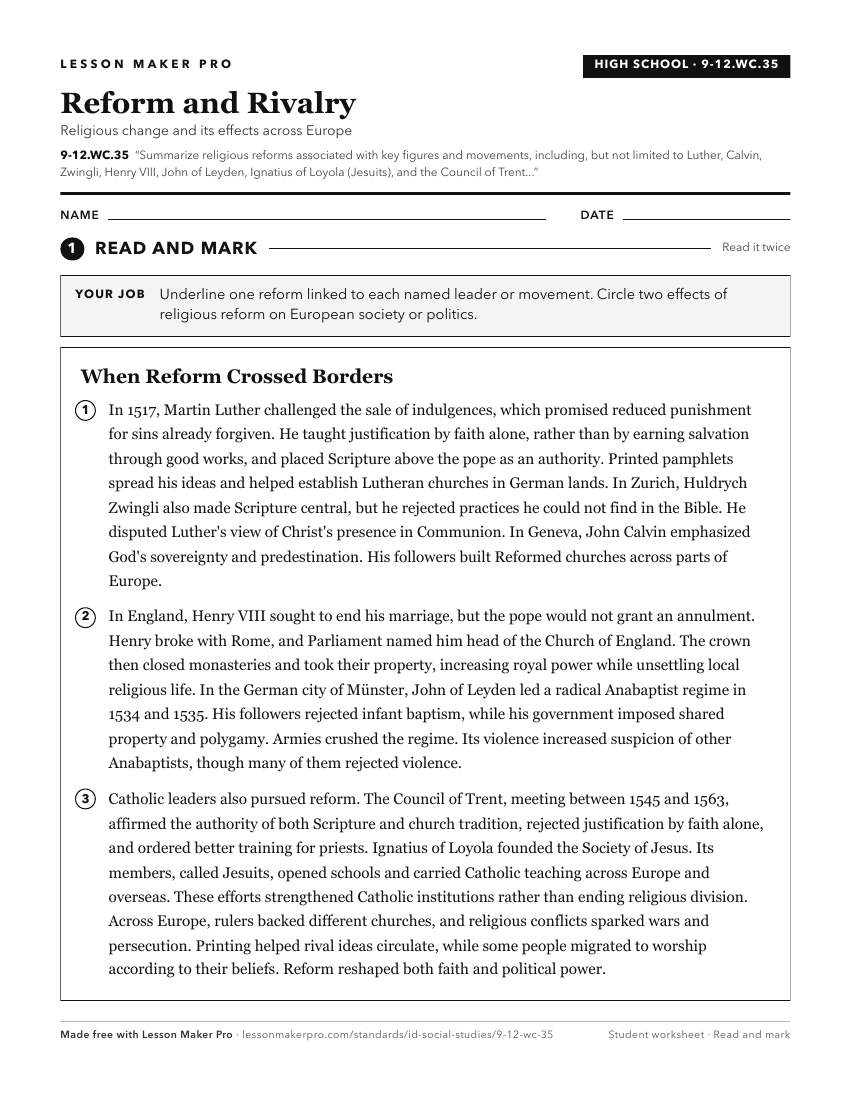
A ready-to-print activity worksheet aligned to 9-12.WC.35, with an answer key for the teacher on its own page. No account needed.
PDF, US Letter, prints cleanly in black and white.
Download the worksheetKeep exploring
Related Standards
- 9-12.WC.23
Identify key figures, artistic and intellectual achievements of the medieval period in Western Europe, (e.g. Thomas Aquinas, Hildegard von Bingen, Dante, Gothic...
- 9-12.WC.38
Analyze the causes and consequences of the Thirty Years’ War.
- 6-12.US1.34
Investigate the Second Great Awakening and various reform movements such as prison, education, and women’s rights, as they formed the greater story of the Unite...
- 9-12.WC.15
Analyze the causes and consequences of Diocletian’s reforms and Constantine the Great's establishment of "New Rome" (Constantinople) and the recognition of Chri...
Turn this exact standard into a lesson
Grade, subject, topic, and the complete standard are prefilled. Create one free, no account needed.
Also for this standard:Make a WorksheetMake a QuizMake a Sub Lesson