Idaho Social Studies 6-12.US1.34
The Standard
Investigate the Second Great Awakening and various reform movements such as prison, education, and women’s rights, as they formed the greater story of the United States in the 19th century.
Idaho Content Standards: K-12 Social Studies · Geographic Expansion and Political and Social Changes 1820-1860
Teacher's field guide
What This Standard Means
What Students Need to Do
- Students explain how religious revivals inspired some Americans to change society. They compare efforts to improve jails, expand public schools, and win rights for women.
What Mastery Looks Like
- Students can explain a link between a revival message and a reform proposal. They can name what Dorothea Dix, Horace Mann, and Elizabeth Cady Stanton wanted to change, and recognize that not everyone supported their goals.
Common Misconceptions
- Students may think every reformer was part of a religious revival or that all revival audiences agreed on reform. They may think the Seneca Falls meeting gave women the right to vote nationwide.
How to Assess It
- Exit ticket: A revival speaker urges people to improve society. Explain how that message might support Dix's campaign for better care for people with mental illness held in jails.
Lesson moves
Ways to Teach It
Give pairs short excerpts from a revival sermon, Dix's jail report, Mann's school proposal, and Seneca Falls demands; sort them by problem and proposed change.
Ask: Did calls for moral improvement lead to equal rights for everyone? Discuss using the Seneca Falls demands and the revival sermon.
Play reformer match: pair Dix, Mann, and Stanton with a problem and a proposed change, then explain each match.
Bring a school board meeting agenda; compare one decision about public schools with Mann's proposal for tax-supported schooling.
Free download
Printable 6-12.US1.34 Worksheet
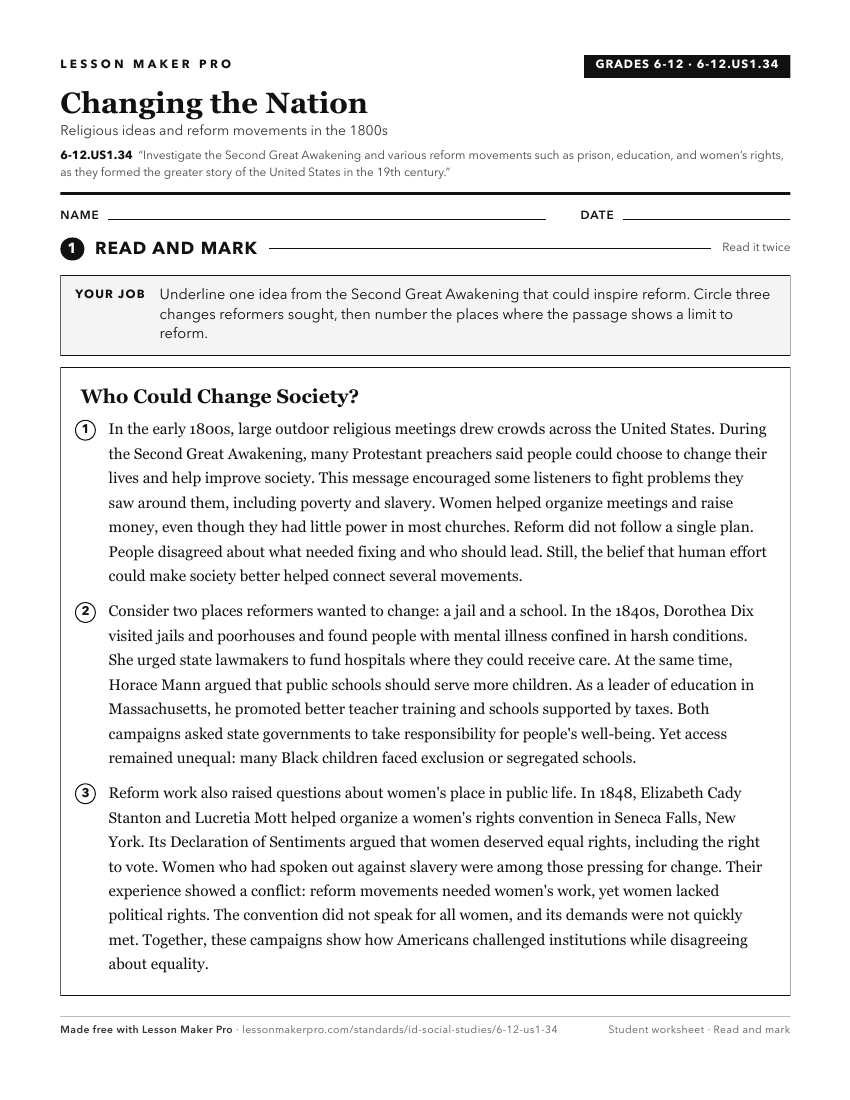
A ready-to-print activity worksheet aligned to 6-12.US1.34, with an answer key for the teacher on its own page. No account needed.
PDF, US Letter, prints cleanly in black and white.
Download the worksheetKeep exploring
Related Standards
- 6-12.US1.26
Analyze the religious, political, and economic motives of immigrants who came to North America between 1820-1860.
- 6-12.US1.17
Identify the traits, beliefs, and characteristics that united and divided the United States as a nation and a society during this time period.
- 6-12.US1.46
Analyze the religious, political, and economic motives of 19th-century immigrants who came to North America.
- 6-12.US1.7
Trace and analyze the colonial social, religious, political, and economic developments that provided context for the American Revolution, including, but not lim...
Turn this exact standard into a lesson
Grade, subject, topic, and the complete standard are prefilled. Create one free, no account needed.
Also for this standard:Make a WorksheetMake a QuizMake a Sub Lesson