Idaho Social Studies 9-12.US2.7
The Standard
Explain how new technologies influenced strategies, military tactics, and battle conditions on the Western Front during World War One.
Idaho Content Standards: K-12 Social Studies · World War I, 1915-1919
Teacher's field guide
What This Standard Means
What Students Need to Do
- Students explain why machine guns and artillery made attacks across open ground so deadly. They describe how gas, tanks, and aircraft changed attack plans and the conditions soldiers faced.
What Mastery Looks Like
- Given a trench map, a student can explain why a straight charge would likely fail and how an artillery barrage or tanks might help. They can also name a limit, such as tanks breaking down or gas drifting with the wind.
Common Misconceptions
- Some students think tanks ended trench warfare as soon as they appeared. Others think gas attacks worked regardless of wind, or miss that aircraft helped spot enemy positions.
How to Assess It
- Give students a sketch of two trenches separated by barbed wire. Ask: How did machine guns change an infantry attack, and how could a tank change soldiers’ movement across this ground?
Lesson moves
Ways to Teach It
Use string for trenches and paper strips for wire; have pairs move paper troops past marked machine-gun firing zones, then revise their route.
Show a trench photo and an early tank photo; ask students to write whether tanks made an attack safe, using evidence from both.
Match technology cards labeled machine gun, gas mask, tank, and aircraft to problem cards labeled open ground, gas exposure, wire, and hidden guns.
Compare a World War I aerial reconnaissance photo with a modern aerial photo; have students mark what a commander could spot in each.
Free download
Printable 9-12.US2.7 Worksheet
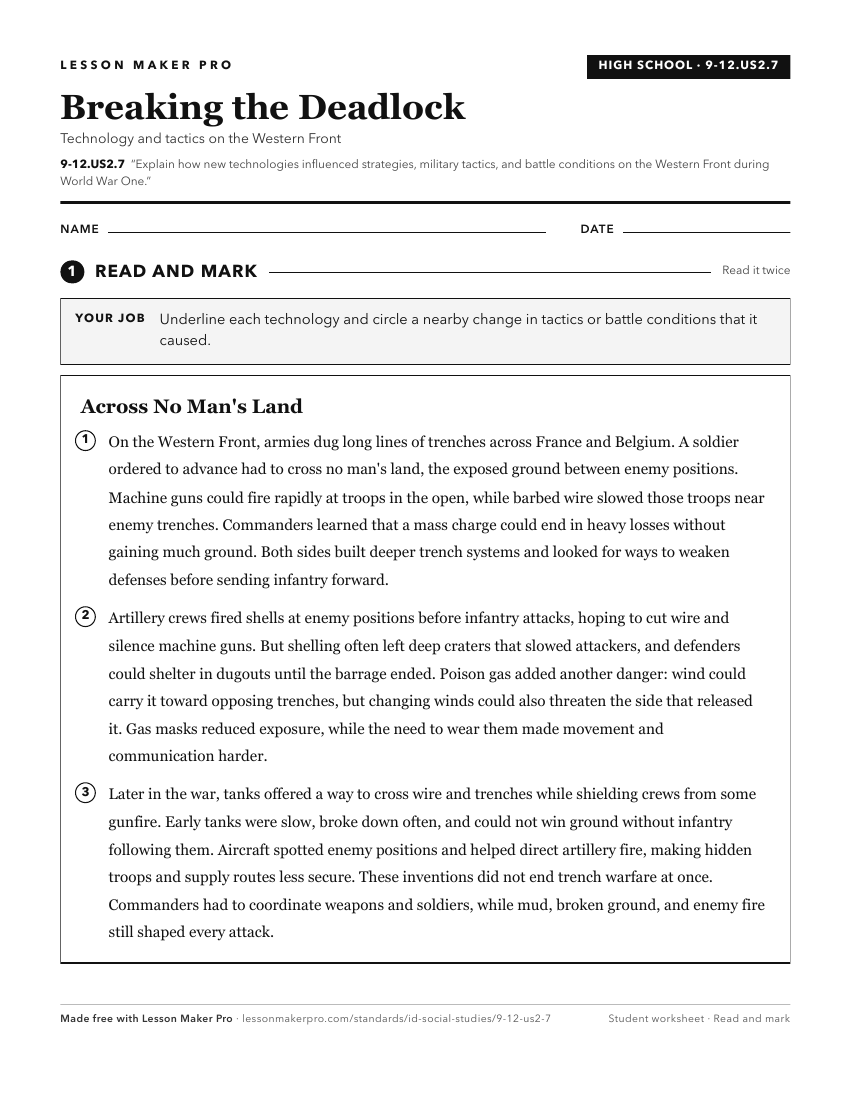
A ready-to-print activity worksheet aligned to 9-12.US2.7, with an answer key for the teacher on its own page. No account needed.
PDF, US Letter, prints cleanly in black and white.
Download the worksheetKeep exploring
Related Standards
- 9-12.US2.18
Compare and contrast the experience of Americans on the Pacific and European battle fronts during World War Two.
- 9-12.US2.17
Describe the strategies, events, and turning points that shaped the outcomes of World War Two.
- 9-12.US2.20
Analyze the impact of events and policies on the Homefront during World War Two.
- 9-12.US2.5
Explain the factors that led to World War One and describe the factors that were deterring the United States from involvement as well as the driving forces that...
Turn this exact standard into a lesson
Grade, subject, topic, and the complete standard are prefilled. Create one free, no account needed.
Also for this standard:Make a WorksheetMake a QuizMake a Sub Lesson