Idaho Social Studies 9-12.GOV.25
The Standard
Evaluate the Supreme Court’s interpretations of the freedoms in the 14th Amendment, equal protection, and due process clauses including Plessy v. Ferguson, Roe v. Wade, Dobbs v. Jackson Women’s Health Organization, Gitlow v. New York, Loving v. Virginia, Obergefell v. Hodges, and Brown v. Board of Education, 1954.
Idaho Content Standards: K-12 Social Studies · Citizenship and Civic Participation
Teacher's field guide
What This Standard Means
What Students Need to Do
- Students explain how the Court used equal protection and due process in cases about segregation, marriage, speech, and abortion. They trace changes across the rulings. They use opinion excerpts to judge the Court’s reasoning.
What Mastery Looks Like
- Students can explain why Brown rejected Plessy’s separate-but-equal rule for public schools. They can explain why Gitlow applied speech protections to states but upheld the conviction, and compare the marriage rulings in Loving and Obergefell. They can explain Roe’s due process reasoning and why Dobbs overturned it.
Common Misconceptions
- Some students think due process only covers courtroom procedures, so they miss its role in speech and abortion rulings. Others assume Gitlow won because speech protections applied to states. Some think Dobbs banned abortion nationwide, rather than ending Roe’s federal constitutional protection.
How to Assess It
- Give students brief excerpts from Plessy and Brown. Ask: “Why did Brown reject separate but equal in public schools? Use one phrase from each excerpt to compare the Court’s reasoning.”
Lesson moves
Ways to Teach It
Give pairs seven case cards with a holding and short opinion excerpt; have them arrange the cards by year and label each constitutional claim.
Ask: “What changed between Plessy and Brown?” Have students cite one sentence from each ruling in a written answer.
Play a case-match relay: teams pair seven case names with holdings, then defend one match using a clause from an excerpt.
Print a county marriage license application and an Obergefell excerpt; ask students why the county cannot refuse a same-sex couple.
Free download
Printable 9-12.GOV.25 Worksheet
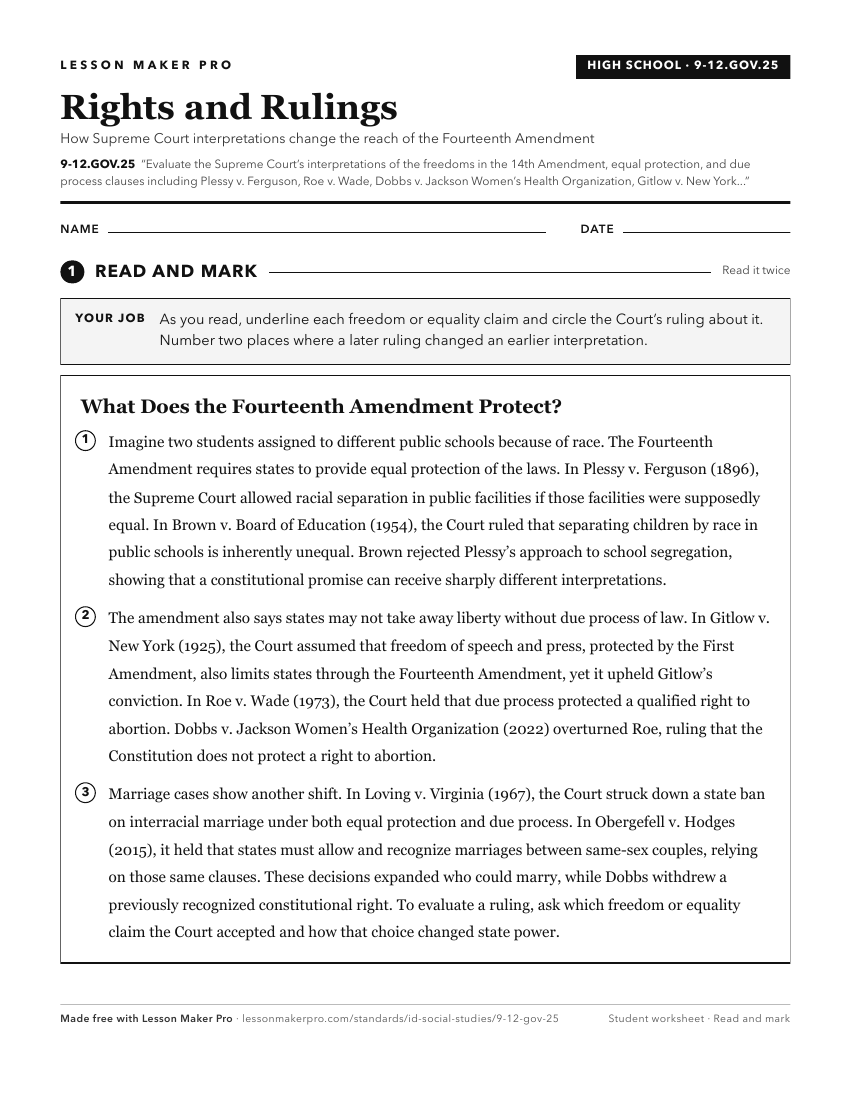
A ready-to-print activity worksheet aligned to 9-12.GOV.25, with an answer key for the teacher on its own page. No account needed.
PDF, US Letter, prints cleanly in black and white.
Download the worksheetKeep exploring
Related Standards
- 9-12.US2.46
Evaluate the progress of civil rights and immigration issues in recent United States history.
- 9-12.GOV.24
Evaluate the Supreme Court’s interpretations of freedoms in the Fourth through Eighth Amendments, including Mapp v. Ohio, Gideon v. Wainwright, and Miranda v. A...
- 9-12.GOV.23
Evaluate the Supreme Court’s interpretations of the freedoms articulated in the First Amendment, including Schenck v. United States, New York Times v. United St...
- 9-12.GOV.38
Analyze Article III of the Constitution as it relates to judicial power, including the length of terms and the jurisdiction of the U.S. Supreme Court.
Turn this exact standard into a lesson
Grade, subject, topic, and the complete standard are prefilled. Create one free, no account needed.
Also for this standard:Make a WorksheetMake a QuizMake a Sub Lesson