Idaho Social Studies 6-9.WG.2.16
The Standard
Explain how human-caused changes in the physical environment in one place can cause changes in another place such as irrigation, air pollution, water pollution, and deforestation.
Idaho Content Standards: K-12 Social Studies
Teacher's field guide
What This Standard Means
What Students Need to Do
- Students trace how a change to land, air, or water in one place affects another place. They explain the path between them, such as polluted river water moving downstream or smoke carried by wind.
What Mastery Looks Like
- Given a river map, a student can show how an upstream diversion leaves less water downstream. They name the action, trace where the water goes, and explain the effect on people or the environment.
Common Misconceptions
- Students may assume pollution stays where it starts or that rivers carry it upstream. They may think cutting trees only affects the cleared area, missing how exposed soil can wash into downstream water.
How to Assess It
- Exit ticket: A town clears trees beside an upstream creek. Draw arrows on a river map and write two sentences explaining one likely change downstream.
Lesson moves
Ways to Teach It
Build a foil river with a side channel; pour water upstream and measure how much reaches a downstream cup with and without diversion.
On a two-town river map, write three sentences explaining how an upstream factory spill could affect the downstream town.
Match cards for fertilizer runoff, algae blooms, tree cutting, and muddy rivers; draw arrows showing how water connects each pair.
On a local river map, mark an upstream road and trace where rain could carry road salt toward a downstream town.
Free download
Printable 6-9.WG.2.16 Worksheet
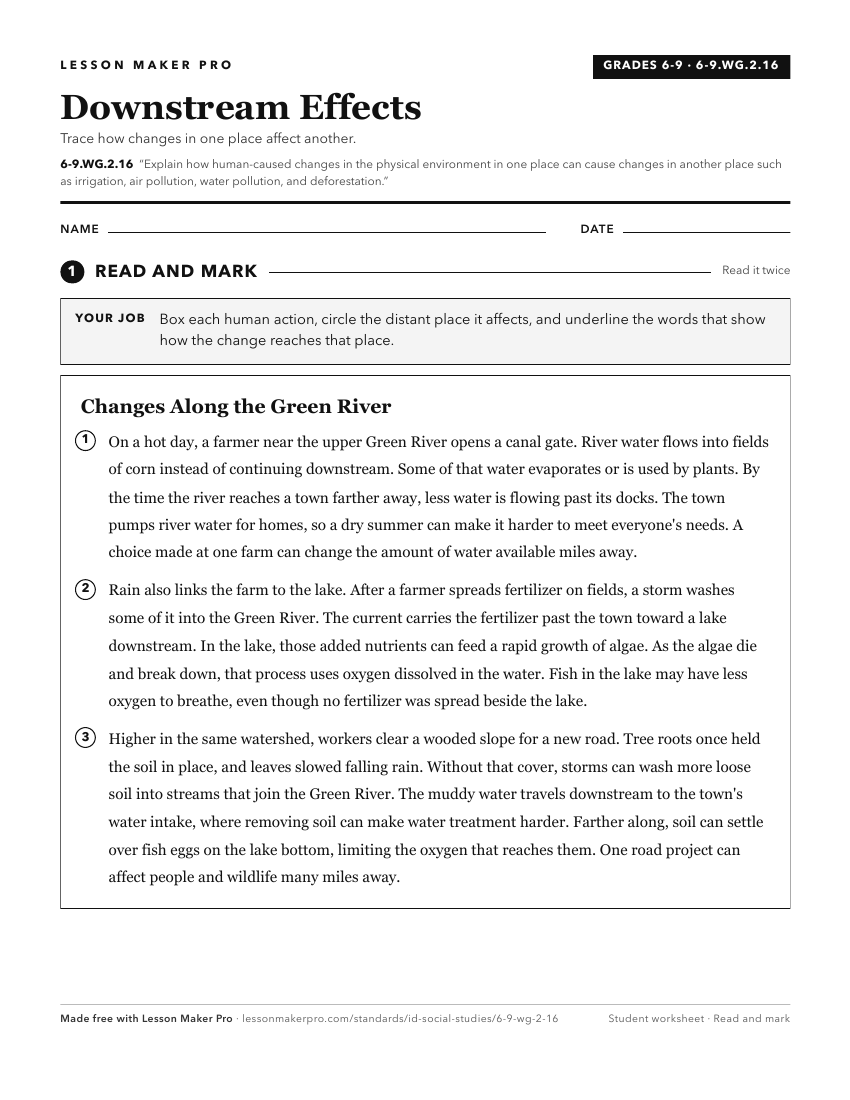
A ready-to-print activity worksheet aligned to 6-9.WG.2.16, with an answer key for the teacher on its own page. No account needed.
PDF, US Letter, prints cleanly in black and white.
Download the worksheetKeep exploring
Related Standards
- 6-9.WG.2.13
Give examples of how both natural and technological hazards have impacted the physical environment and human populations in regions throughout the world.
- 6-9.WG.2.14
Give examples of how landforms, water, climate, and natural vegetation have influenced historical trends and developments in regions throughout the world.
- 6-9.WG.2.6
Analyze and give examples of the consequences of human impact on the physical environment, including the role of technology.
- 6-9.WG.5.6
Explain the causes and consequences of current global issues, including the expansion of global markets, the urbanization of the developing world, the consumpti...
Turn this exact standard into a lesson
Grade, subject, topic, and the complete standard are prefilled. Create one free, no account needed.
Also for this standard:Make a WorksheetMake a QuizMake a Sub Lesson