Idaho Social Studies 6-12.US1.38
The Standard
Trace the evolution of Lincoln’s political thought on slavery, equality and rights for blacks, and the meaning of the war from the 1857 Dred Scott decision through the Lincoln Douglas debates, the First Inaugural Address, the Emancipation Proclamation, and the Gettysburg Address to his Second Inaugural Address.
Idaho Content Standards: K-12 Social Studies · Civil War and Reconstruction 1860s-1890
Teacher's field guide
What This Standard Means
What Students Need to Do
- Students put Lincoln's response to Dred Scott and his later speeches in order. They use dated excerpts to explain how his public positions on slavery, Black rights, and the war changed.
What Mastery Looks Like
- Students distinguish Lincoln's early opposition to slavery's spread from support for full political equality. They explain that the Emancipation Proclamation applied only to areas in rebellion. They connect Gettysburg's appeal to equality with the Second Inaugural's account of slavery as a cause of the war.
Common Misconceptions
- Students may think Lincoln backed full political equality in the 1858 debates. They may assume the Emancipation Proclamation freed every enslaved person or that his First Inaugural promised to end slavery.
How to Assess It
- Give students brief, dated excerpts from the First Inaugural, Emancipation Proclamation, and Second Inaugural. Ask: "What changed in how Lincoln spoke about slavery and the war? Cite two excerpts."
Lesson moves
Ways to Teach It
Give pairs six dated excerpt cards, including Lincoln's response to Dred Scott, to arrange and annotate for slavery, equality, and war aims.
Ask students to write what changed between Lincoln's First and Second Inaugural Addresses, using one quotation from each.
Run a timeline match with six brief excerpts, then have students explain one shift without claiming Lincoln backed full equality throughout.
Compare two dated school announcements about a rule change, then discuss how changed circumstances can shift a leader's public message.
Free download
Printable 6-12.US1.38 Worksheet
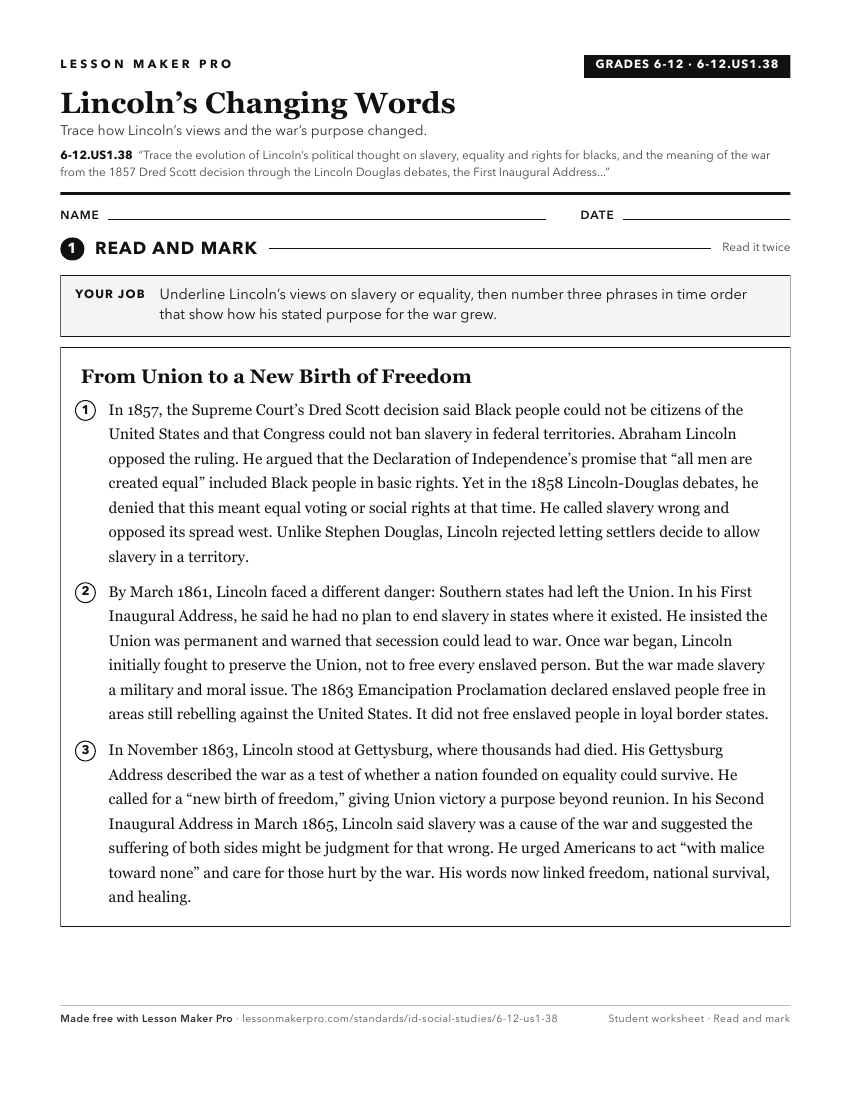
A ready-to-print activity worksheet aligned to 6-12.US1.38, with an answer key for the teacher on its own page. No account needed.
PDF, US Letter, prints cleanly in black and white.
Download the worksheetKeep exploring
Related Standards
- 6-12.US1.45
Explain the social and political impacts of the Civil War on Americans during the war and in the immediate aftermath of the war.
- 6-12.US1.24
Analyze how economic, political, and social events led to the Civil War, including, but not limited to:
- 6-12.US1.42
Analyze the outcomes of the American Civil War and the legal, political, and social implications of Reconstruction.
- 6-12.US1.25
Compare the political differences and similarities among Democratic and Whig presidents from 1825 to 1860, including but not limited to:
Turn this exact standard into a lesson
Grade, subject, topic, and the complete standard are prefilled. Create one free, no account needed.
Also for this standard:Make a WorksheetMake a QuizMake a Sub Lesson