Idaho Social Studies 6-12.US1.24
The Standard
Analyze how economic, political, and social events led to the Civil War, including, but not limited to: • Slavery • Virgina and Kentucky Resolutions • Nullification Crisis • Missouri Compromise • Compromise of 1850 • Publication of Uncle Tom’s Cabin • Fugitive Slave Act • Personal Liberty Laws in the North • Kansas-Nebraska Act • Dred Scott Decision • Rise of the Republican Party and the Election of 1856 • John Brown’s Raid • Election of 1860 • Crittenden Compromise
Idaho Content Standards: K-12 Social Studies · Geographic Expansion and Political and Social Changes 1820-1860
Teacher's field guide
What This Standard Means
What Students Need to Do
- Students trace how slavery and the fight over its expansion shaped the economy, laws, and elections. They connect specific events to growing conflict between North and South.
What Mastery Looks Like
- A student can explain why the Kansas-Nebraska Act reopened the fight over slavery in western territories and why the Dred Scott ruling intensified it. They can connect cotton profits, resistance to the Fugitive Slave Act, and the 1860 election to the breakdown of compromise.
Common Misconceptions
- Students may treat tariffs as the main cause of the war or assume every dispute over state power was about slavery. They may think the Missouri Compromise settled the issue for good or that the Dred Scott ruling freed Scott.
How to Assess It
- Exit ticket: How did cotton profits, the Fugitive Slave Act, and the election of 1860 each increase conflict over slavery? Give one link for each.
Lesson moves
Ways to Teach It
Have pairs order cards for the Missouri Compromise, Fugitive Slave Act, Kansas-Nebraska Act, Dred Scott ruling, and 1860 election, then draw two cause arrows.
Read short excerpts from the Fugitive Slave Act and a northern personal liberty law, then ask: Why did each side accuse the other of overreach?
Give teams cause and effect cards for Kansas-Nebraska, Dred Scott, and John Brown's raid; award points when they explain an accurate match.
Bring a cotton T-shirt and an 1860 cotton production map; ask how demand for cotton affected enslavers' push for new territory.
Free download
Printable 6-12.US1.24 Worksheet
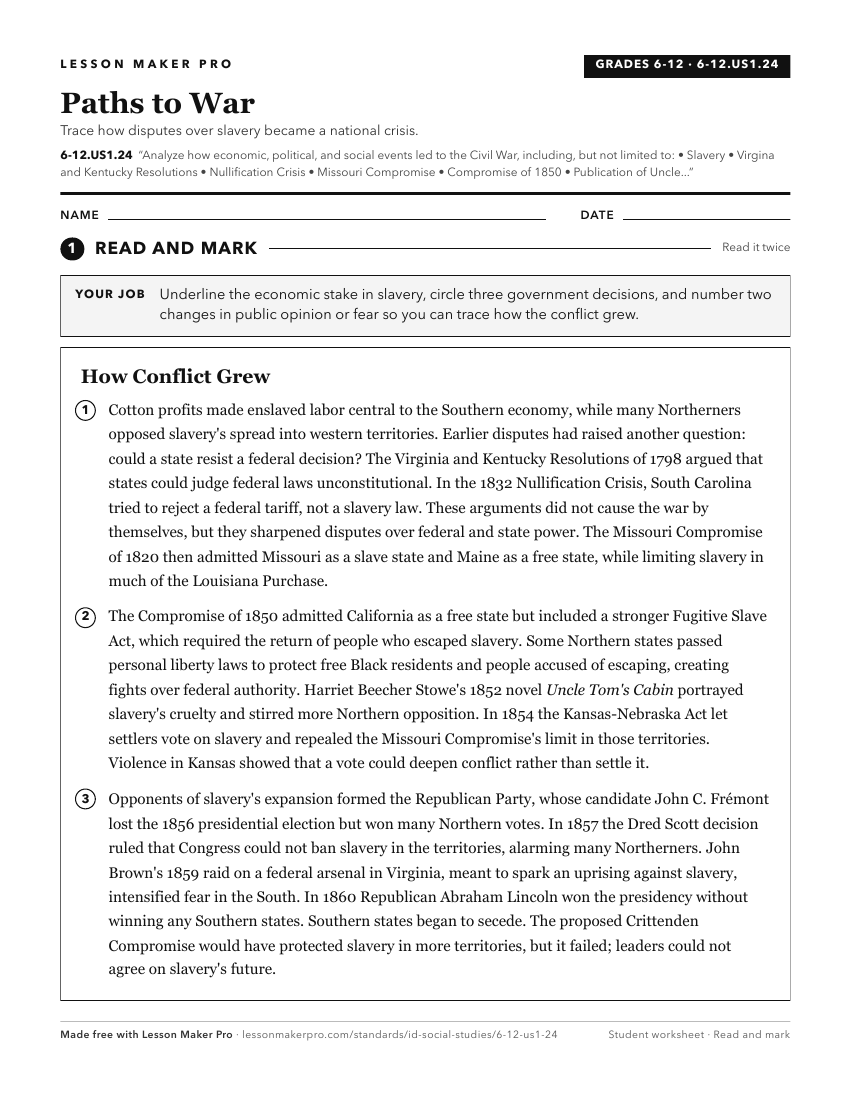
A ready-to-print activity worksheet aligned to 6-12.US1.24, with an answer key for the teacher on its own page. No account needed.
PDF, US Letter, prints cleanly in black and white.
Download the worksheetKeep exploring
Related Standards
- 6-12.US1.42
Analyze the outcomes of the American Civil War and the legal, political, and social implications of Reconstruction.
- 6-12.US1.41
Explain the contributions of key historical figures and groups during the Civil War period, including, but not limited to:
- 6-12.US1.7
Trace and analyze the colonial social, religious, political, and economic developments that provided context for the American Revolution, including, but not lim...
- 6-12.US1.39
Analyze the impact of major military events in the Civil War, including, but not limited to Fort Sumter, First Bull Run, Antietam, Vicksburg, Fredericksburg, Ge...
Turn this exact standard into a lesson
Grade, subject, topic, and the complete standard are prefilled. Create one free, no account needed.
Also for this standard:Make a WorksheetMake a QuizMake a Sub Lesson