Idaho Social Studies 6-12.US1.42
The Standard
Analyze the outcomes of the American Civil War and the legal, political, and social implications of Reconstruction. • Reconstruction Amendments (13th, 14th, and 15th) • State, local, and federal elections • New political representation • Military presence • American Indian Warrior involvement • 1st and 2nd Indian Home Guard • Emancipation • Freedman’s Bureau • Black Codes • Sharecropping • Ku Klux Klan (KKK)
Idaho Content Standards: K-12 Social Studies · Civil War and Reconstruction 1860s-1890
Teacher's field guide
What This Standard Means
What Students Need to Do
- Students explain how emancipation and three amendments changed freedom, citizenship, and voting. They track Black officeholders in local, state, and federal elections and the roles of federal troops and the Freedmen's Bureau. They examine Black Codes, sharecropping, Klan violence, and the wartime service of the First and Second Indian Home Guard.
What Mastery Looks Like
- A student can match each amendment to a change in law and name a limit on its enforcement. They can use a historical source to show how Black political gains and federal aid met resistance through violence, restrictive laws, and unfair labor contracts.
Common Misconceptions
- Students often think emancipation gave everyone equal rights and that the Fifteenth Amendment guaranteed safe access to the polls. They may treat sharecropping as slavery or assume all Native nations fought on the same side.
How to Assess It
- Exit ticket: In 1870, a Black man can legally vote but is threatened at the polls. Name the amendment that protects his voting rights, then explain why the law alone may not protect him.
Lesson moves
Ways to Teach It
Give pairs printed amendment excerpts, a Black Code, and a Freedmen's Bureau notice; have them sort the documents under freedom, citizenship, voting, or aid.
Ask: How could a Black candidate win office while Klan threats kept neighbors from voting? Use an election notice and testimony.
Have teams order dated cards for emancipation, Indian Home Guard service, Reconstruction amendments, and the withdrawal of federal troops.
Compare a current voter registration form with the Fifteenth Amendment; circle rules it addresses and note one rule it does not.
Free download
Printable 6-12.US1.42 Worksheet
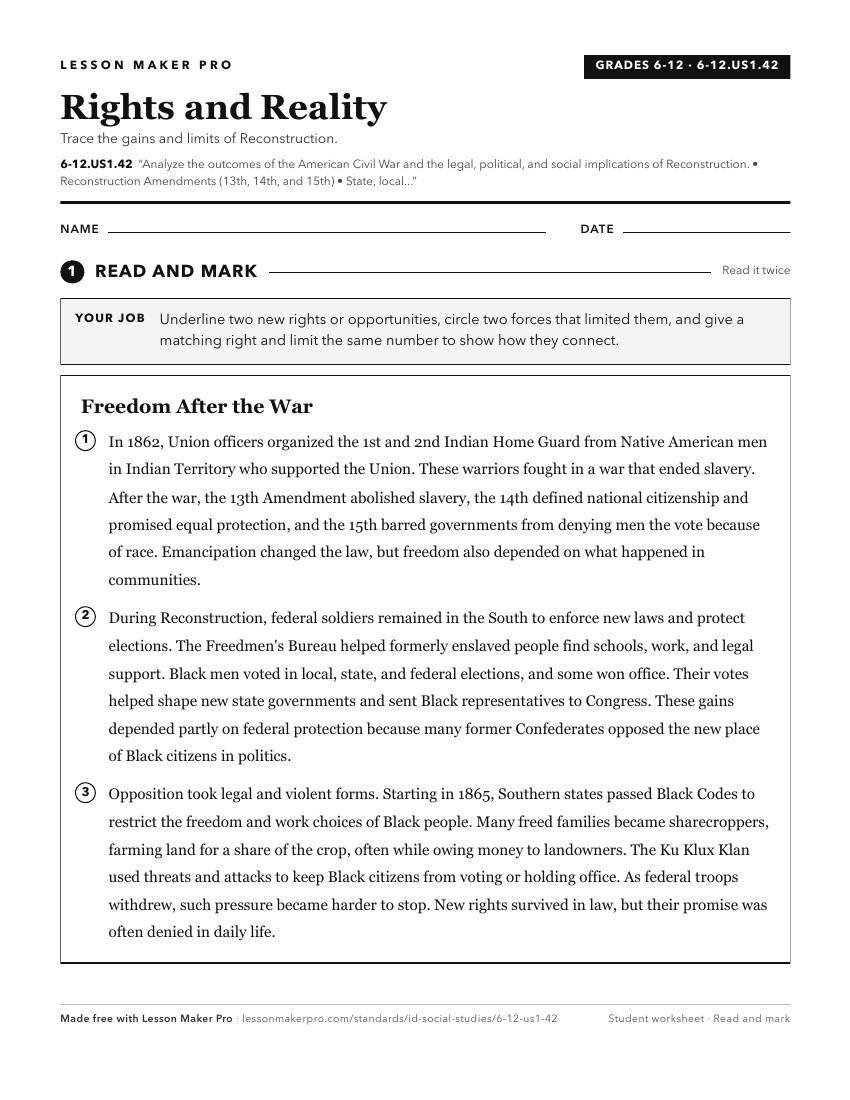
A ready-to-print activity worksheet aligned to 6-12.US1.42, with an answer key for the teacher on its own page. No account needed.
PDF, US Letter, prints cleanly in black and white.
Download the worksheetKeep exploring
Related Standards
- 6-12.US1.45
Explain the social and political impacts of the Civil War on Americans during the war and in the immediate aftermath of the war.
- 6-12.US1.24
Analyze how economic, political, and social events led to the Civil War, including, but not limited to:
- 6-12.US1.43
Analyze the context and consequences of The Compromise of 1877 and the end of Federal Reconstruction.
- 9-12.US2.1
Analyze how federal policies established the relationship between the United States government and American Indian tribes, and the intended and unintended outco...
Turn this exact standard into a lesson
Grade, subject, topic, and the complete standard are prefilled. Create one free, no account needed.
Also for this standard:Make a WorksheetMake a QuizMake a Sub Lesson