Idaho Social Studies 6-12.US1.19
The Standard
Explain the social and economic motivations and developments surrounding the enslavement of peoples in the northern and southern states and territories.
Idaho Content Standards: K-12 Social Studies · Early Republic 1787-1825
Teacher's field guide
What This Standard Means
What Students Need to Do
- Students explain why enslavement expanded in the South and western territories while northern states passed gradual abolition laws. They connect cotton profits, racist beliefs and laws, and northern trade to those choices.
What Mastery Looks Like
- Students can use a map and two short sources to explain a difference between regions and an economic link between them. They can explain why gradual abolition left some people enslaved and why cotton expansion increased the domestic slave trade.
Common Misconceptions
- Students may think northern abolition laws freed everyone at once or ended northern profits from slavery. Some think the cotton gin reduced the need for enslaved workers, or that the 1808 import ban ended slavery.
How to Assess It
- Exit ticket: Why did enslavement grow in cotton-growing areas while northern states passed gradual abolition laws? Name one way northern businesses still profited from enslaved labor.
Lesson moves
Ways to Teach It
Give pairs 1790 and 1820 census tables; have them shade enslaved populations by state on two blank maps and circle changes.
Read a short excerpt from New York's 1799 gradual abolition law; ask, 'Who remained enslaved after it passed, and why?'
Give groups cards for the 1793 cotton gin, 1799 New York law, 1808 import ban, and 1820 Missouri Compromise to sequence and explain.
Bring a cotton T-shirt and an 1820 New England mill image; have students trace cotton from enslaved field labor to northern mills.
Free download
Printable 6-12.US1.19 Worksheet
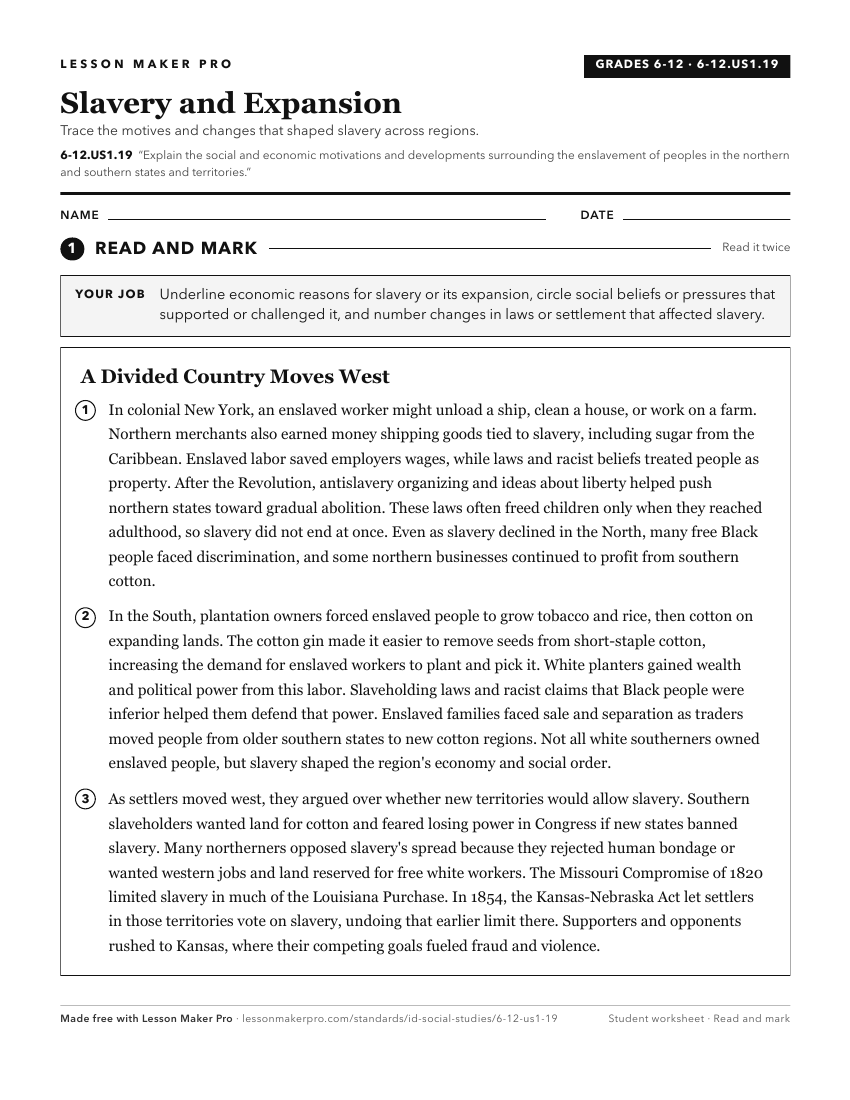
A ready-to-print activity worksheet aligned to 6-12.US1.19, with an answer key for the teacher on its own page. No account needed.
PDF, US Letter, prints cleanly in black and white.
Download the worksheetKeep exploring
Related Standards
- 6-12.US1.27
Compare and contrast the various manifestations of slavery in this time period, for example, ownership patterns, labor divisions, and geographic differences.
- 6-12.US1.28
Compare and contrast various defenses of slavery offered by apologists and various anti-slavery movements including, but not limited to a discussion of:
- 5.SS.1.8
Explain the history of indentured servitude and the slave trade in the United States.
- 6-12.US1.4
Explain the differences with economic systems between New England, and the Mid-Atlantic and Southern colonies, including indentured servitude and slavery as lab...
Turn this exact standard into a lesson
Grade, subject, topic, and the complete standard are prefilled. Create one free, no account needed.
Also for this standard:Make a WorksheetMake a QuizMake a Sub Lesson