Idaho Social Studies 6-12.US1.14
The Standard
Explain the key concerns and compromises that emerged at the Constitutional Convention of 1787, including arguments over the Bill of Rights and its eventual adoption, including, but not limited to: • New Jersy Plan, Virginia Plan, and the Great Compromise • Compromises regarding representation • Compromises regarding taxation • Compromises regarding slavery • State vs. federal power
Idaho Content Standards: K-12 Social Studies · Founding a New Government 1776-1791
Teacher's field guide
What This Standard Means
What Students Need to Do
- Compare the Virginia and New Jersey plans and explain how the Great Compromise settled representation in Congress. Explain how delegates handled direct taxes, slavery, and the division of state and federal power. Describe why critics demanded a Bill of Rights and why it was added later.
What Mastery Looks Like
- A student can explain why populous states wanted House seats based on population and smaller states wanted equal votes in the Senate. They can describe how the Three-Fifths Compromise counted enslaved people for representation and direct taxes, without giving them votes. They can connect demands for limits on federal power to the Bill of Rights adopted in 1791.
Common Misconceptions
- Students may think both chambers give each state equal votes. Some think the Three-Fifths Compromise gave enslaved people votes, or that the Bill of Rights was adopted at the convention. They may also think the new federal government took all power from the states.
How to Assess It
- Ask on an exit ticket: “How did the Great Compromise settle representation? How did the Three-Fifths Compromise affect seats and direct taxes? Why did critics want a Bill of Rights?”
Lesson moves
Ways to Teach It
Give groups state population cards and paper seat tokens, then have them build a population-based House and an equal-state Senate.
Ask students: “Which powers should states keep, and which should the federal government hold? How might a Bill of Rights address critics’ concerns?”
Use printed cards to match the Virginia Plan, New Jersey Plan, Great Compromise, and Three-Fifths Compromise to their effects.
Compare California’s 52 House seats and two senators with Wyoming’s one House seat and two senators, then name the compromise behind the difference.
Free download
Printable 6-12.US1.14 Worksheet
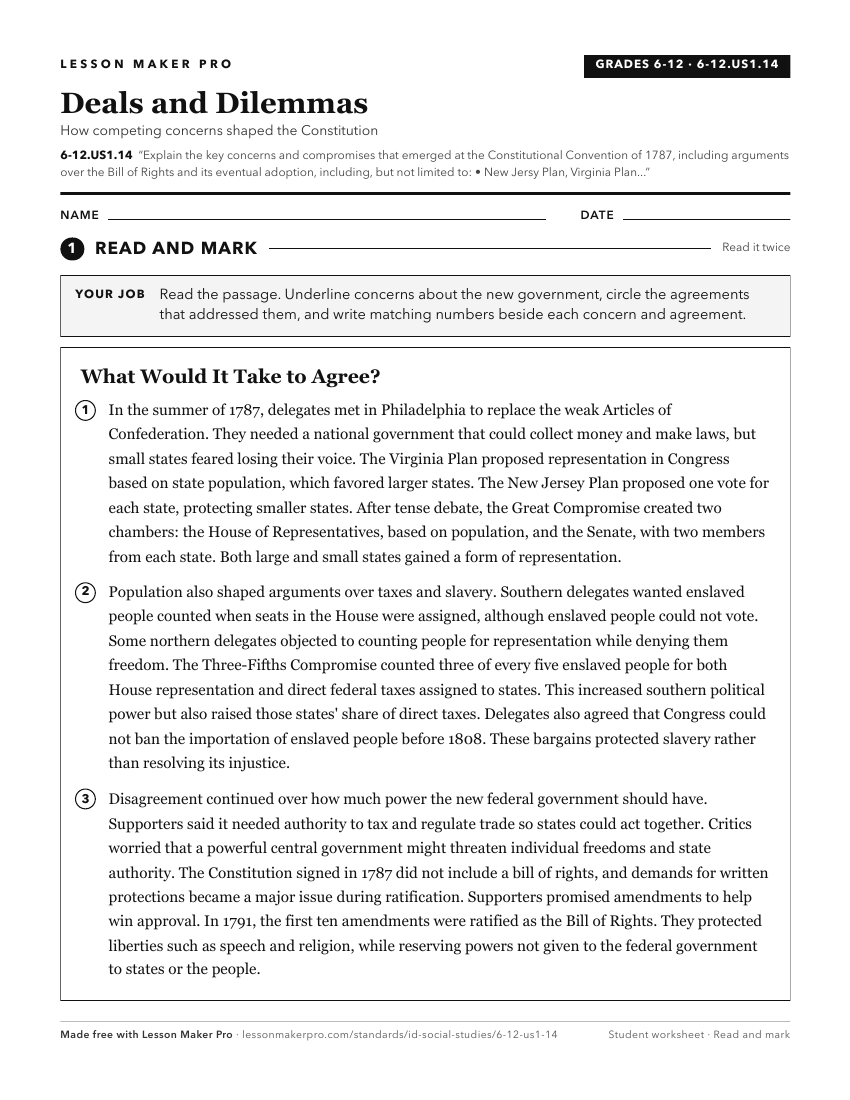
A ready-to-print activity worksheet aligned to 6-12.US1.14, with an answer key for the teacher on its own page. No account needed.
PDF, US Letter, prints cleanly in black and white.
Download the worksheetKeep exploring
Related Standards
- 9-12.GOV.4
Analyze the Constitutional Convention of 1787, including the Great Compromise and the ensuing debate over ratification between the Federalists and Anti-Federali...
- 6-12.US1.15
Analyze the arguments and outcomes of the ratification debate between leading Federalists and Anti-Federalists, including, but not limited to:
- 6-12.US1.13
Analyze the successes and failures of the Articles of Confederation and the events that led to the Constitutional Convention of 1787.
- 6-12.US1.16
Analyze the original Constitution by comparing the powers of government branches, assessing its response to Revolutionary causes and alignment with Declaration ...
Turn this exact standard into a lesson
Grade, subject, topic, and the complete standard are prefilled. Create one free, no account needed.
Also for this standard:Make a WorksheetMake a QuizMake a Sub Lesson