Georgia SS3G3.b
The Standard
- SS3G3
- Describe how physical systems affect human systems.
Describe how the early explorers (SS3H2a) adapted, or failed to adapt, to the various physical environments in which they traveled.
Georgia Standards of Excellence for Social Studies · Describe how physical systems affect human systems.
Teacher's field guide
What This Standard Means
What Students Need to Do
- Students connect landforms, climate, waterways, plants, and food sources to explorers’ choices. They explain how changing routes, supplies, shelter, or travel methods helped or harmed an expedition.
What Mastery Looks Like
- Given an explorer and route, students identify an environmental challenge, describe the response, and explain the result. They also recognize when poor preparation or choices led to failure.
Common Misconceptions
- Students may think adaptation means explorers’ bodies changed, rather than their plans or behavior. They may assume every explorer had accurate maps, enough supplies, and the right clothing.
How to Assess It
- Exit ticket: Choose one explorer studied. Name one physical challenge, explain how the explorer responded, and tell whether the response worked.
Lesson moves
Ways to Teach It
Trace an explorer’s route with yarn on a map, then place climate, landform, food, and water challenge cards along the route.
Write a shipboard journal entry explaining how your crew should respond to cold weather, shallow water, mountains, or limited food.
Match explorer challenge cards with response and outcome cards, then defend each match to a partner.
Plan supplies for a local hike, then compare those choices with what an explorer needed in an unfamiliar environment.
Free download
Printable SS3G3.b Worksheet
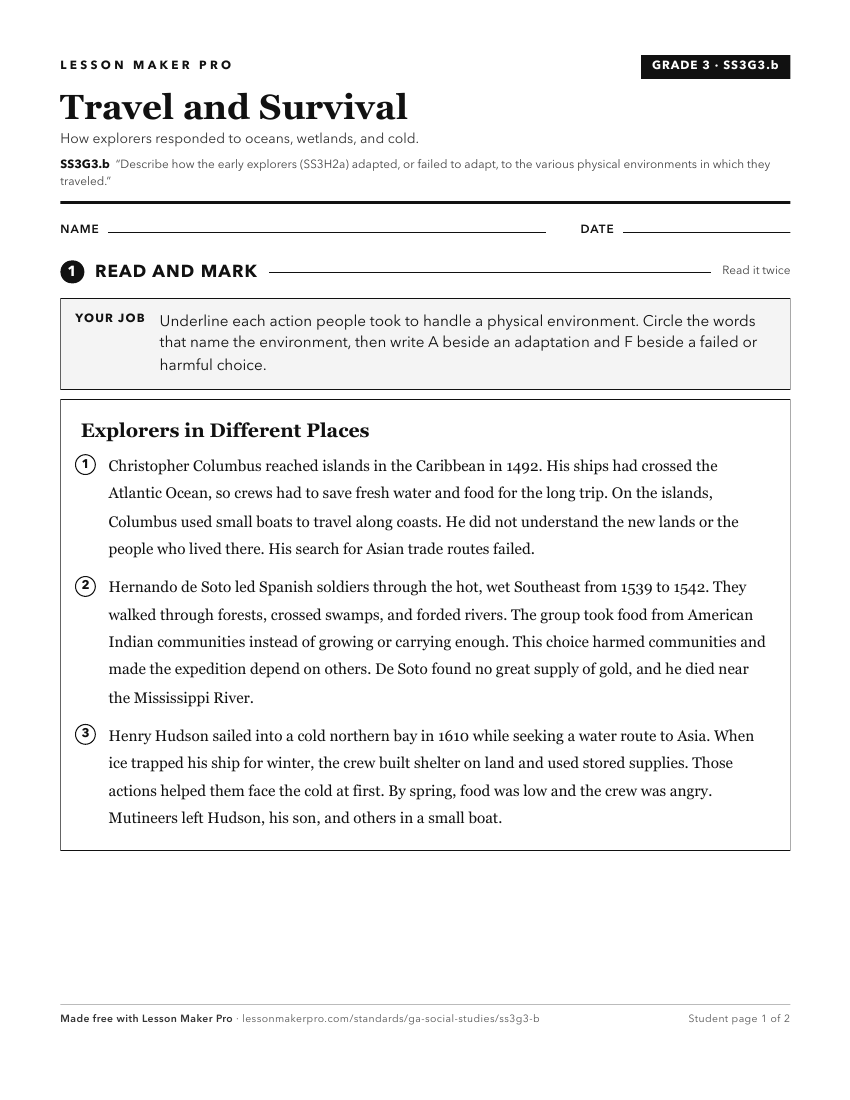
A ready-to-print activity worksheet aligned to SS3G3.b, with an answer key for the teacher on its own page. No account needed.
PDF, US Letter, prints cleanly in black and white.
Download the worksheetKeep exploring
Related Standards
- SS2G2.b
Describe how each historic figure and the Muscogee (Creek) and Cherokee adapted to and were influenced by their environments.
- SS3G3.a
Explain why American Indian groups occupied the areas they did (SS3H1a), with emphasis on why some developed permanent villages and others did not.
- SS3H1.b
Compare and contrast how American Indians in each region used their environment to obtain food, clothing, and shelter.
- SS3H2.c
Describe examples of cooperation and conflict between European explorers and American Indians.
Turn this exact standard into a lesson
Grade, subject, topic, and the complete standard are prefilled. Create one free, no account needed.
Also for this standard:Make a WorksheetMake a QuizMake a Sub Lesson