Georgia SKE1.a
The Standard
- SKE1
- Obtain, evaluate, and communicate observations about time patterns (day to night and night to day) and objects (sun, moon, stars) in the day and night sky.
Ask questions to classify objects according to those seen in the day sky, the night sky, and both.
Georgia Standards of Excellence for Science · Obtain, evaluate, and communicate observations about time patterns (day to night and night to day) and objects (sun, moon, stars) in the day and night sky.
Teacher's field guide
What This Standard Means
What Students Need to Do
- Students ask simple questions about when familiar sky objects can be seen. They sort objects into day, night, or both groups and explain their choices.
What Mastery Looks Like
- Students correctly place the sun in day, stars in night, and the moon and clouds in both. They use observations and ask a relevant question when unsure.
Common Misconceptions
- Students often think the moon appears only at night. They may believe the sun disappears after sunset or sort cards by background color instead of visibility.
How to Assess It
- Give students pictures of the sun, moon, stars, and clouds to place under day, night, or both. Ask them to explain one choice.
Lesson moves
Ways to Teach It
Give pairs picture cards of the sun, moon, stars, and clouds to sort onto day, night, or both mats.
Ask, “Why can the moon belong in more than one group?” and have students draw and label their answer.
Play Sky Sort Relay, where students place one card under day, night, or both and explain each choice.
Keep a three-day sky log by looking outside at arrival and before dismissal, then compare which objects were visible.
Free download
Printable SKE1.a Worksheet
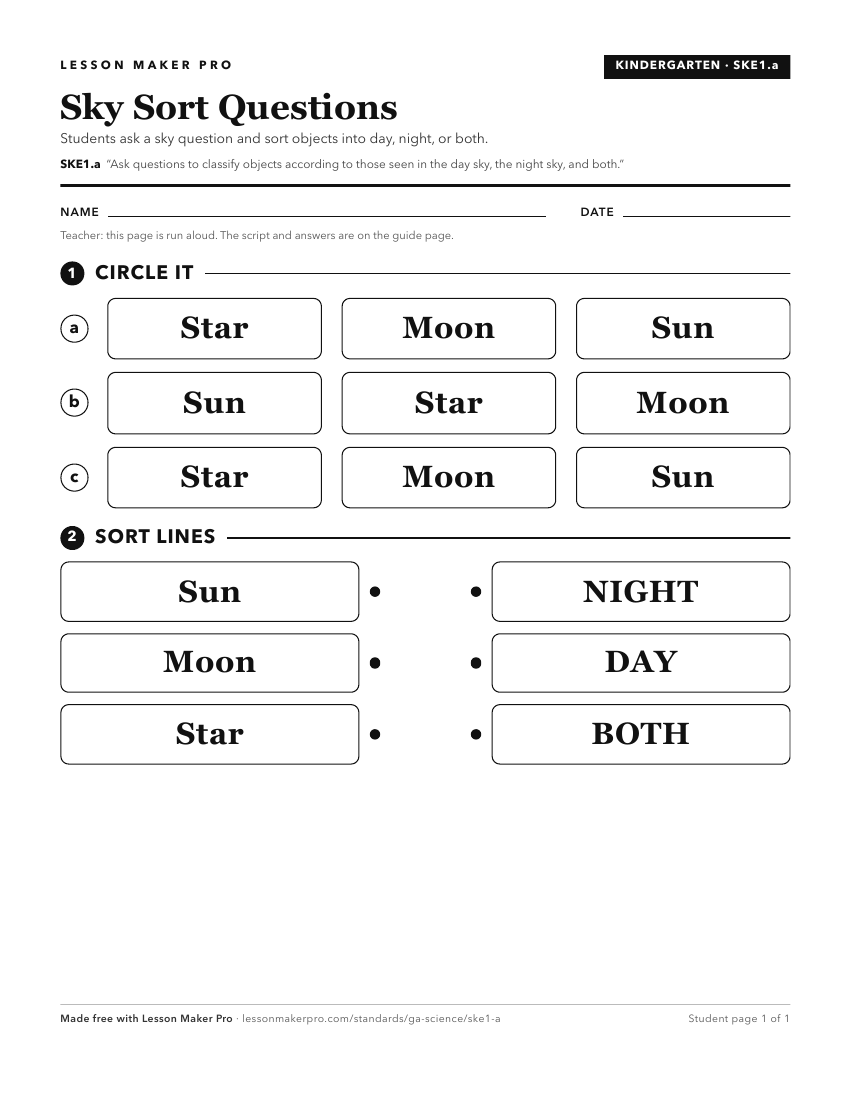
A ready-to-print activity worksheet aligned to SKE1.a, with an answer key for the teacher on its own page. No account needed.
PDF, US Letter, prints cleanly in black and white.
Download the worksheetKeep exploring
Related Standards
- S2E1.a
Ask questions to describe the physical attributes (size and brightness) of stars.
- S2P1.a
Ask questions to describe and classify different objects according to their physical properties.
- SKE1
Obtain, evaluate, and communicate observations about time patterns (day to night and night to day) and objects (sun, moon, stars) in the day and night sky.
- S4E1.a
Ask questions to compare and contrast technological advances that have changed the amount and type of information on distant objects in the sky.
Turn this exact standard into a lesson
Grade, subject, topic, and the complete standard are prefilled. Create one free, no account needed.
Also for this standard:Make a WorksheetMake a QuizMake a Sub Lesson