Georgia S3P1.a
The Standard
- S3P1
- Obtain, evaluate, and communicate information about the ways heat energy is transferred and measured.
Ask questions to identify sources of heat energy.
Georgia Standards of Excellence for Science · Obtain, evaluate, and communicate information about the ways heat energy is transferred and measured.
Teacher's field guide
What This Standard Means
What Students Need to Do
- Students observe objects and events that become warmer. They ask focused questions to determine whether the heat came from sunlight, burning fuel, electricity, friction, or another warm object.
What Mastery Looks Like
- A student can name a likely heat source in a pictured or observed situation. They ask a focused question that could confirm the source, such as whether an appliance was plugged in.
Common Misconceptions
- Students may name the warmed object, such as soup, instead of the stove burner that heated it. They may think fire is the only source and overlook sunlight, electricity, friction, or a warmer object. They may use heat and temperature as if they mean the same thing.
How to Assess It
- Show a picture of chocolate melting on a plate beside a sunny window. Ask, “What is the likely heat source, and what question could you ask to check?”
Lesson moves
Ways to Teach It
Rotate through stations with thermometers in sun and shade, rubbing hands, and a lit lamp, then list each source of heat.
Students discuss whether every warm object is a heat source, then support their claim with one example.
Play Heat Source Sort by placing picture cards under “produces heat” or “receives heat,” then explain two choices.
Make a school heat map by marking sunny windows, radiators, vents, and appliances, then label what produces heat in each location.
Free download
Printable S3P1.a Worksheet
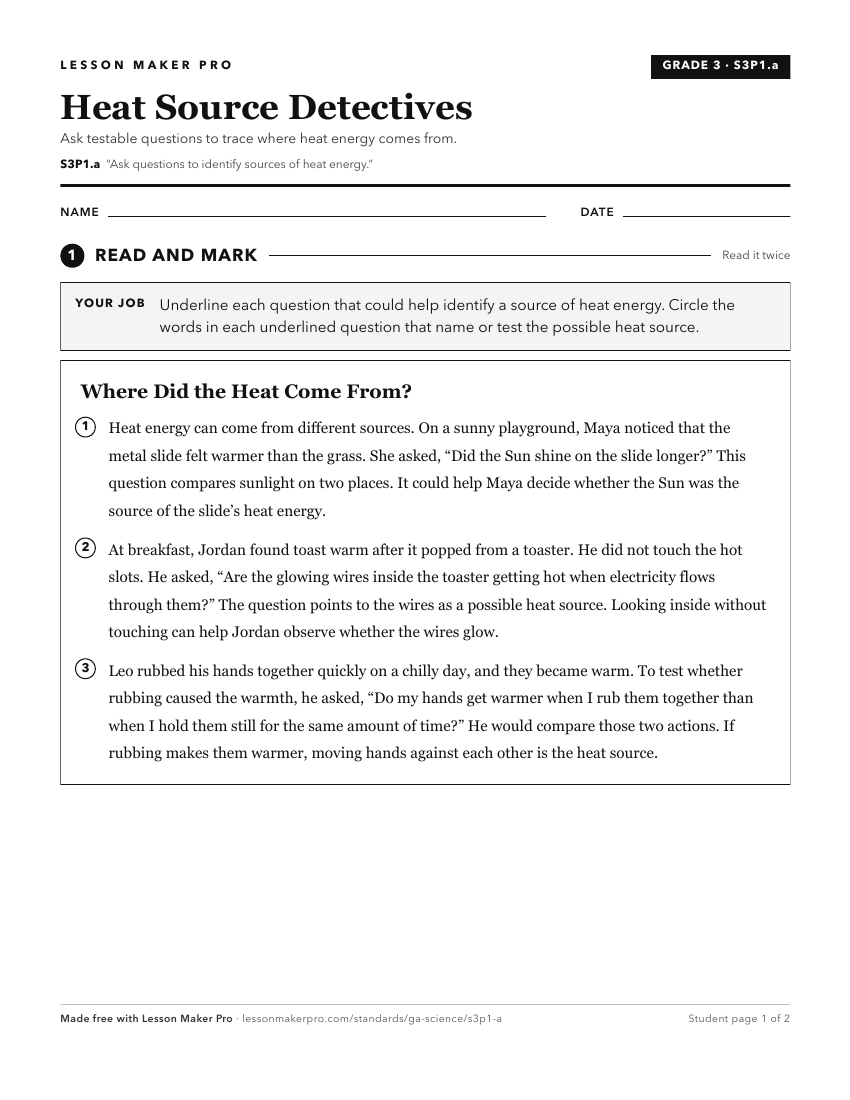
A ready-to-print activity worksheet aligned to S3P1.a, with an answer key for the teacher on its own page. No account needed.
PDF, US Letter, prints cleanly in black and white.
Download the worksheetKeep exploring
Related Standards
- S3P1
Obtain, evaluate, and communicate information about the ways heat energy is transferred and measured.
- S1P1.b
Ask questions to identify and compare sources of light.
- S6E4.b
Plan and carry out an investigation to demonstrate how energy from the sun transfers heat to air, land and water at different rates.
- S8P2.d
Plan and carry out investigations on the effects of heat transfer on molecular motion as it relates to the collision of atoms (conduction), through space (radia...
Turn this exact standard into a lesson
Grade, subject, topic, and the complete standard are prefilled. Create one free, no account needed.
Also for this standard:Make a WorksheetMake a QuizMake a Sub Lesson