Georgia K.P.EICC.2.a
The Standard
Share real or imagined experiences by interpreting and constructing texts that tell or include stories. (I/C)
Georgia's K-12 English Language Arts Standards · Practices (P) · Engagement & Intention for Comprehension & Composition
Teacher's field guide
What This Standard Means
What Students Need to Do
- Students listen to or view stories and explain what happened. They create stories from real life or imagination using talk, drawing, dictation, or early writing. They share their work and listen to others.
What Mastery Looks Like
- A student can identify characters and tell what happened in a familiar story. The student can create and share a simple story with connected events using speech, pictures, labels, or sentences.
Common Misconceptions
- Students may list unrelated details instead of telling events in order. They may think stories must be true or fully written. Some drawings lack characters or actions, making the story hard for an audience to follow.
How to Assess It
- After a short read-aloud, prompt: “Tell one event from the book, then draw and label a similar real or imagined event.”
Lesson moves
Ways to Teach It
Give students three picture cards to arrange, then have them tell the story to a partner in order.
Ask, “What happened to you that could become a story?” Students draw the event and dictate or write one sentence.
Play Story Circle by passing a toy, with each student adding one connected event when holding it.
Bring in a familiar object, such as a lunchbox, and have students tell a true or imagined story about using it.
Free download
Printable K.P.EICC.2.a Worksheet
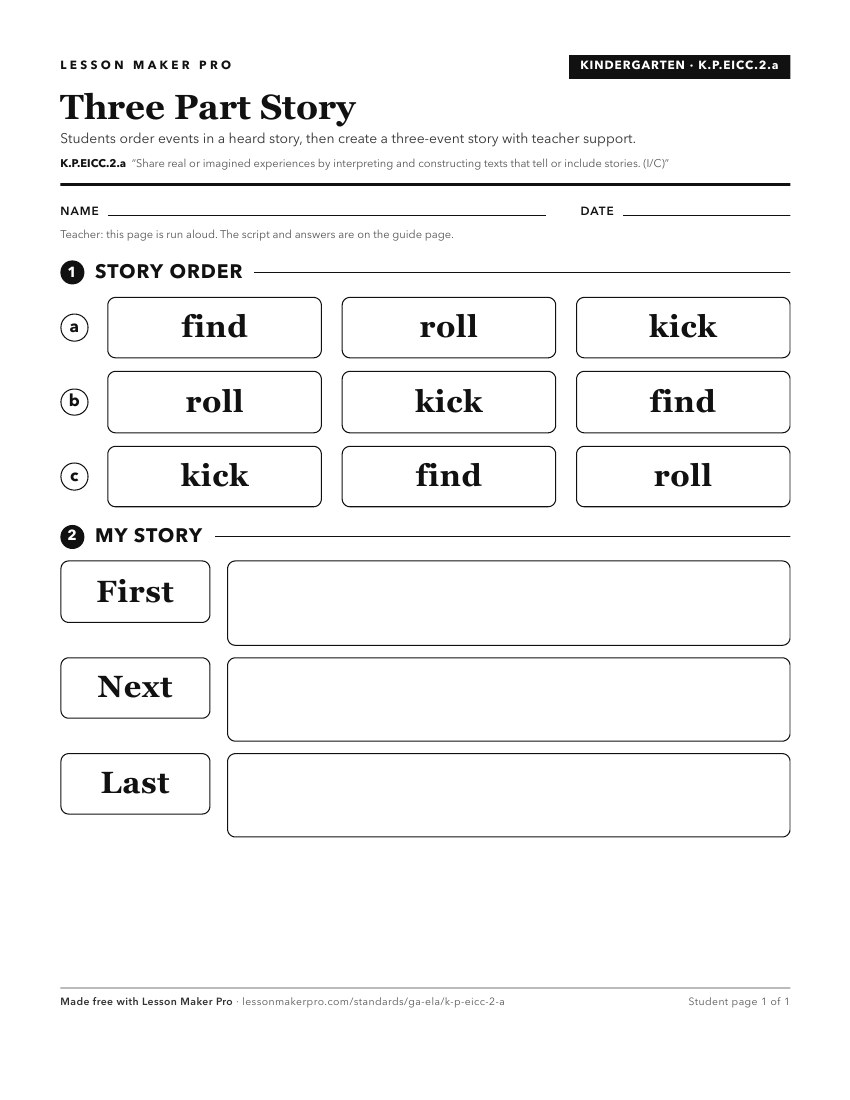
A ready-to-print activity worksheet aligned to K.P.EICC.2.a, with an answer key for the teacher on its own page. No account needed.
PDF, US Letter, prints cleanly in black and white.
Download the worksheetKeep exploring
Related Standards
Turn this exact standard into a lesson
Grade, subject, topic, and the complete standard are prefilled. Create one free, no account needed.
Also for this standard:Make a WorksheetMake a QuizMake a Sub Lesson