Georgia 1.P.EICC.2.a
The Standard
Share real or imagined experiences by interpreting and constructing texts that tell or include stories. (I/C)
Georgia's K-12 English Language Arts Standards · Practices (P) · Engagement & Intention for Comprehension & Composition
Teacher's field guide
What This Standard Means
What Students Need to Do
- Students tell about something that happened or invent a story through speaking, drawing, or writing. They explain events in stories they hear, view, or read. They listen and respond to others’ stories.
What Mastery Looks Like
- A student retells key events from a story in a clear order. The student creates a real or imagined story with connected events and enough detail for a listener to follow.
Common Misconceptions
- Students may list events without putting them in order. They may describe one picture but leave out what happened or why. Some students think imagined stories must be true.
How to Assess It
- Show students a three-picture sequence. Say, “Tell or write what happened first, next, and last, then add how the character felt.”
Lesson moves
Ways to Teach It
Give pairs three picture cards to arrange, then have them use puppets to tell the story in order.
Read a short picture book and ask, “Which event changed what happened next, and how do you know?”
Roll character, setting, and action dice, then tell a quick story using all three details.
Recall a class event, such as a fire drill, and create a shared story about what happened first, next, and last.
Free download
Printable 1.P.EICC.2.a Worksheet
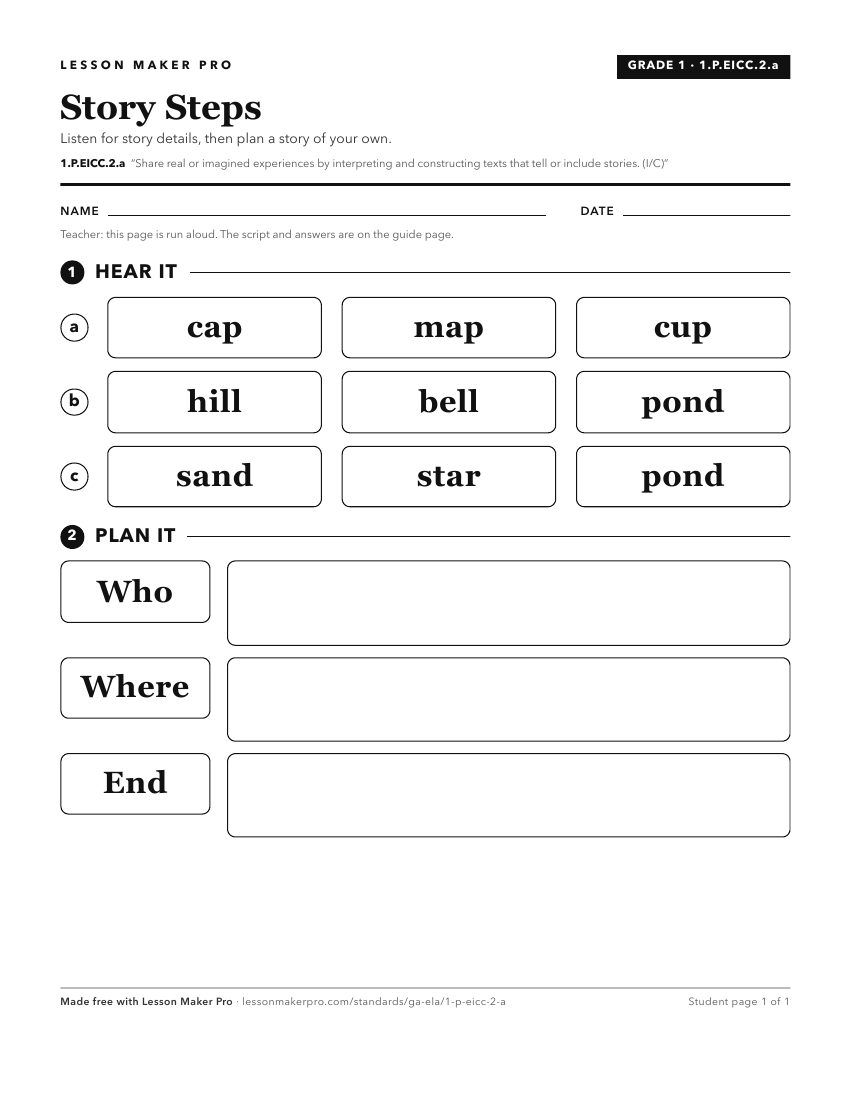
A ready-to-print activity worksheet aligned to 1.P.EICC.2.a, with an answer key for the teacher on its own page. No account needed.
PDF, US Letter, prints cleanly in black and white.
Download the worksheetKeep exploring
Related Standards
Turn this exact standard into a lesson
Grade, subject, topic, and the complete standard are prefilled. Create one free, no account needed.
Also for this standard:Make a WorksheetMake a QuizMake a Sub Lesson