Georgia K.P.CP.2.c
The Standard
Vary tone, pace, and nonverbal gestures as appropriate to purpose and audience. (I/C)
Georgia's K-12 English Language Arts Standards · Practices (P) · Collaboration & Presentation
Teacher's field guide
What This Standard Means
What Students Need to Do
- Students adjust how they speak based on who is listening and why they are speaking. They use voice, speed, facial expressions, and body movements that fit the situation.
What Mastery Looks Like
- A student changes volume, expression, speed, and movement to fit a speaking situation. The student can explain a choice, such as speaking softly near a sleeping baby.
Common Misconceptions
- Students may think louder and faster always means better speaking. They may use gestures that distract, hide their face, or do not match their words.
How to Assess It
- Ask each child to say, “The bus is here,” first to a sleeping baby and then to classmates across the room. Check for changes in voice, speed, facial expression, and gestures.
Lesson moves
Ways to Teach It
Give pairs puppets and scenario cards, then have them act out the same message for a baby, friend, teacher, and large group.
Ask, “How would your voice, face, and body change when sharing good news versus asking for quiet?”
Play Audience Match: students draw a message card and audience card, perform it, and classmates identify the choices that fit.
Role-play greeting a school visitor, cheering for a teammate, and asking a librarian for help using fitting voices and gestures.
Free download
Printable K.P.CP.2.c Worksheet
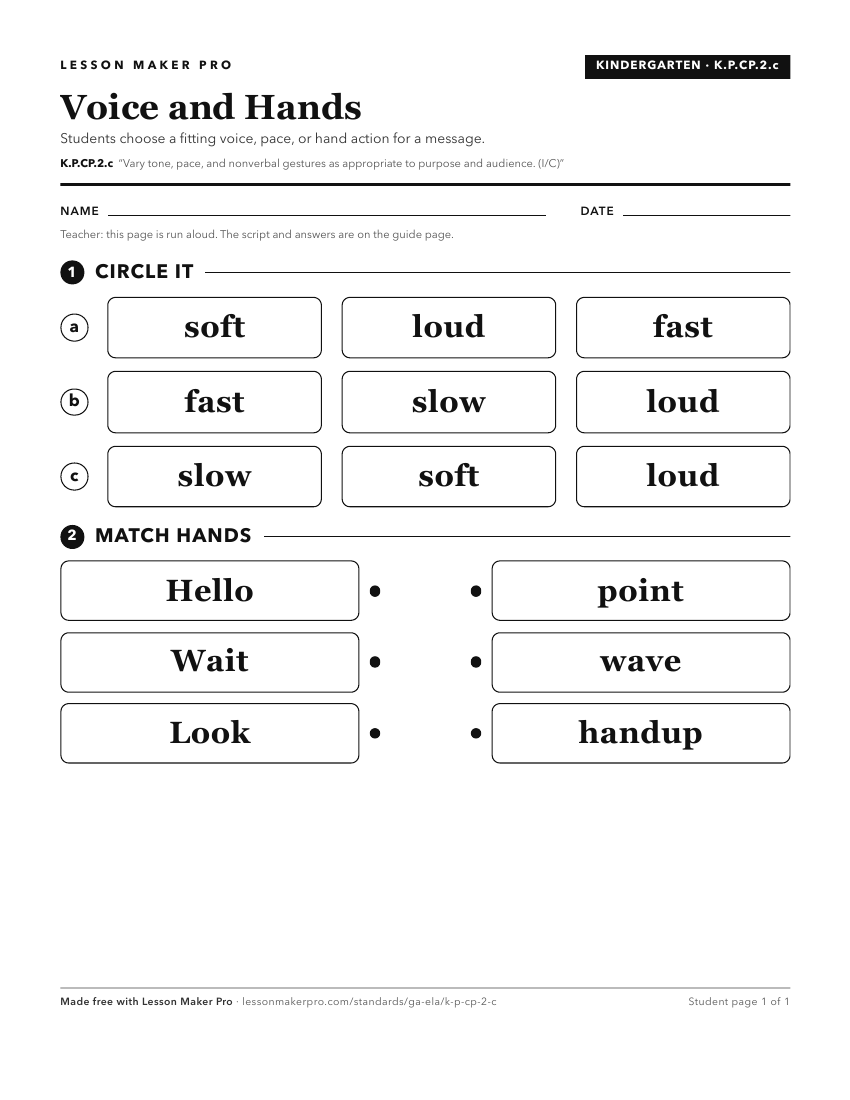
A ready-to-print activity worksheet aligned to K.P.CP.2.c, with an answer key for the teacher on its own page. No account needed.
PDF, US Letter, prints cleanly in black and white.
Download the worksheetKeep exploring
Related Standards
Turn this exact standard into a lesson
Grade, subject, topic, and the complete standard are prefilled. Create one free, no account needed.
Also for this standard:Make a WorksheetMake a QuizMake a Sub Lesson