Florida SS.8.A.3.5
The Standard
- SS.8.A.3
- Demonstrate an understanding of the causes, course and consequences of the American Revolution and the founding principles of our nation.
Describe the influence of individuals on social and political developments during the Revolutionary era.
Florida Next Generation Sunshine State Standards for Social Studies
Teacher's field guide
What This Standard Means
What Students Need to Do
- Students connect the actions, writings, and decisions of key people to changes in public opinion, government, wartime strategy, and debates about rights. They explain each connection with historical evidence.
What Mastery Looks Like
- Students can name a person, identify a specific action or idea, and explain the result. They can compare two people’s effects and separate immediate results from later changes.
Common Misconceptions
- Students may credit one famous leader for events shaped by many people or assume all Patriots shared the same goals. They may confuse military success with political impact or assume calls for liberty included everyone equally.
How to Assess It
- Exit ticket: Choose Thomas Paine, Abigail Adams, George Washington, or Benjamin Franklin. Name one action or writing and explain one social or political result.
Lesson moves
Ways to Teach It
Give groups person, action, quotation, and outcome cards to match, then have them defend two matches with evidence.
Ask students to write: Which person most changed Revolutionary public opinion, and what evidence supports your choice?
Play an influence chain game where teams sequence four cards: person, action, audience, and resulting development.
Rewrite a Revolutionary pamphlet excerpt as three social media posts, then label its intended audience and desired political change.
Free download
Printable SS.8.A.3.5 Worksheet
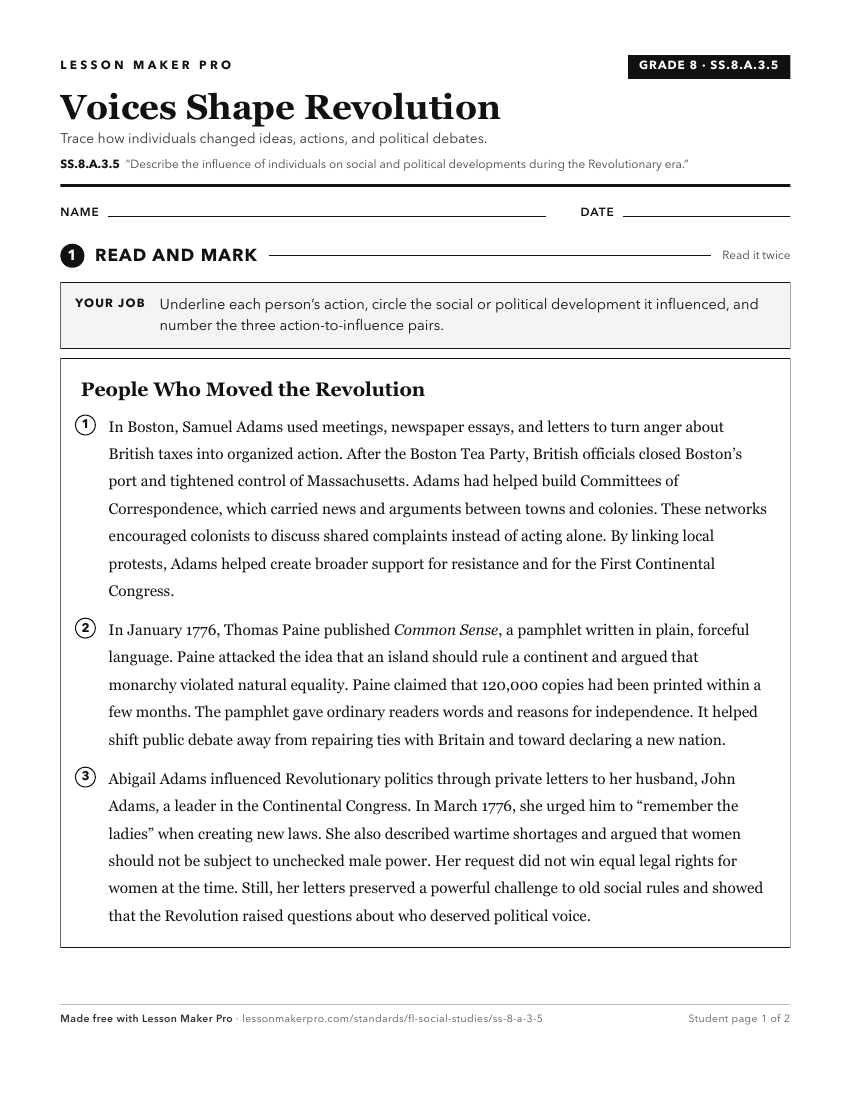
A ready-to-print activity worksheet aligned to SS.8.A.3.5, with an answer key for the teacher on its own page. No account needed.
PDF, US Letter, prints cleanly in black and white.
Download the worksheetKeep exploring
Related Standards
- SS.5.A.5.6
Identify the contributions of foreign alliances and individuals to the outcome of the Revolution.
- SS.8.A.4.8
Describe the influence of individuals on social and political developments of this era in American History.
- SS.5.A.5.2
Identify significant individuals and groups who played a role in the American Revolution.
- SS.8.A.3.8
Examine individuals and groups that affected political and social motivations during the American Revolution.
Turn this exact standard into a lesson
Grade, subject, topic, and the complete standard are prefilled. Create one free, no account needed.
Also for this standard:Make a WorksheetMake a QuizMake a Sub Lesson