Florida SS.8.A.3.2
The Standard
- SS.8.A.3
- Demonstrate an understanding of the causes, course and consequences of the American Revolution and the founding principles of our nation.
Explain American colonial reaction to British policy from 1763-1774.
Florida Next Generation Sunshine State Standards for Social Studies
Teacher's field guide
What This Standard Means
What Students Need to Do
- Students connect British taxes, trade rules, and limits on settlement to specific colonial responses between 1763 and 1774. They explain why colonists used petitions, boycotts, protests, violence, and organized resistance.
What Mastery Looks Like
- Students can match policies such as the Stamp Act and Tea Act with colonial reactions and explain the cause-and-effect link. They can compare peaceful resistance with events such as the Boston Tea Party.
Common Misconceptions
- Students may think all colonists opposed Britain or that protests immediately became demands for independence. They may also confuse the Boston Massacre with the Boston Tea Party or place events in the wrong order.
How to Assess It
- Give students this prompt: Choose one British policy from 1763 to 1774, name one colonial reaction, and explain why that reaction occurred.
Lesson moves
Ways to Teach It
Give pairs event cards to arrange on a timeline, then connect each British policy to a colonial response with string.
Ask students to write whether a merchant should join a boycott, using one likely benefit and one likely cost.
Play a matching game with cards for British policies, colonial grievances, and reactions, requiring students to justify each set.
Compare colonial boycotts with a recent consumer boycott, focusing on goals, methods, and effects rather than whether each cause was justified.
Free download
Printable SS.8.A.3.2 Worksheet
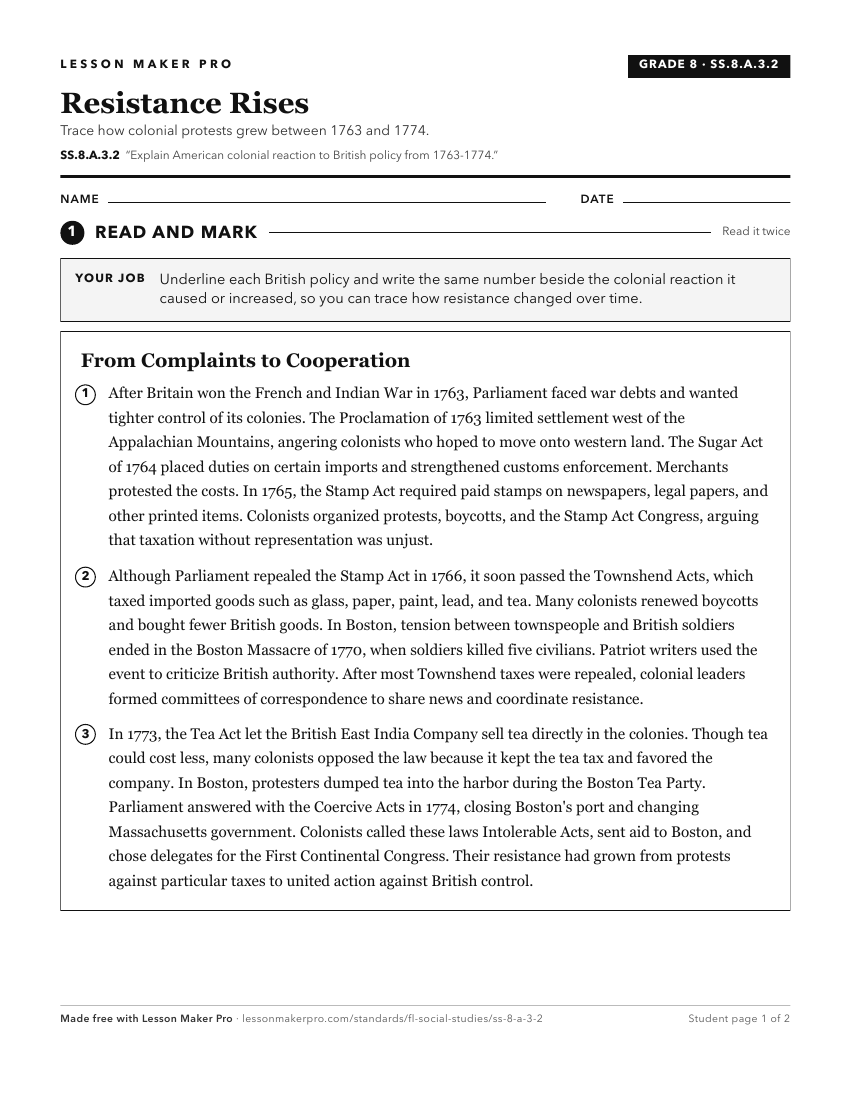
A ready-to-print activity worksheet aligned to SS.8.A.3.2, with an answer key for the teacher on its own page. No account needed.
PDF, US Letter, prints cleanly in black and white.
Download the worksheetKeep exploring
Related Standards
- SS.8.A.2
Examine the causes, course, and consequences of British settlement in the American colonies.
- SS.7.CG.1.5
Describe how British policies and responses to colonial concerns led to the writing of the Declaration of Independence.
- SS.8.A.3.1
Explain the consequences of the French and Indian War in British policies for the American colonies from 1763 - 1774.
- SS.5.CG.2.1
Discuss the political ideas of Patriots, Loyalists, and other colonists about the American Revolution.
Turn this exact standard into a lesson
Grade, subject, topic, and the complete standard are prefilled. Create one free, no account needed.
Also for this standard:Make a WorksheetMake a QuizMake a Sub Lesson