Florida B.E.S.T. ELA.4.R.3.2
The Standard
Summarize a text to enhance comprehension.
Florida B.E.S.T. Standards for English Language Arts
Teacher's field guide
What This Standard Means
What Students Need to Do
- Students condense a text into a few clear sentences using their own words. They select major events and a message for fiction, or the main point and supporting facts for nonfiction.
What Mastery Looks Like
- Students write brief summaries in their own words without opinions or minor details. For stories, they connect major events to a message. For articles, they state the main point and support it with accurate details.
Common Misconceptions
- Students often retell every event instead of selecting key points. They may state a topic as one word, confuse theme with a lesson stated too broadly, or include unrelated facts.
How to Assess It
- Give students one short story and one short article. Ask for a two-sentence summary of each, including the key elements appropriate to each genre.
Lesson moves
Ways to Teach It
Give pairs story sentence strips to sort into key plot events and minor details, then write a two-sentence summary.
After reading, ask, "What matters most, and why?" Students discuss their choices, then write an independent summary.
Play Summary Match by having teams pair short texts with accurate summaries and explain why the extra summaries do not fit.
Students read a school announcement, then write a one-sentence summary for a classmate who was absent.
Free download
Printable ELA.4.R.3.2 Worksheet
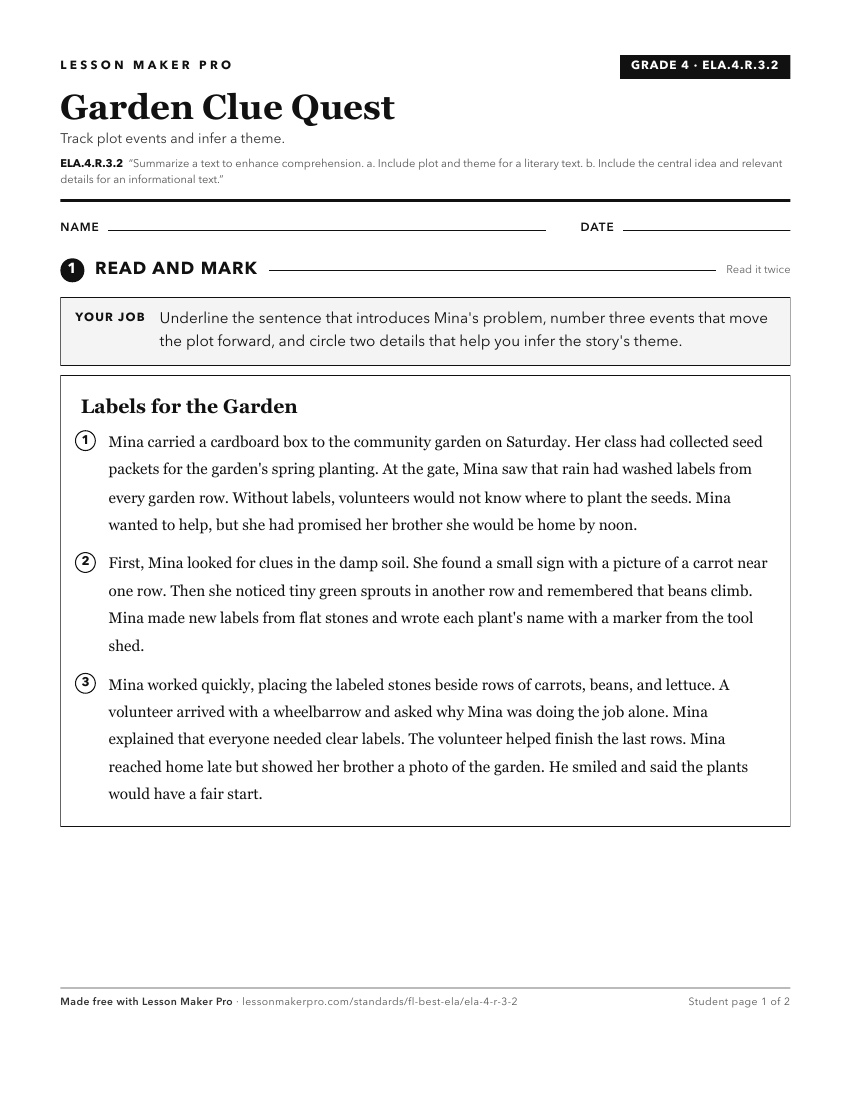
A ready-to-print activity worksheet aligned to ELA.4.R.3.2, with an answer key for the teacher on its own page. No account needed.
PDF, US Letter, prints cleanly in black and white.
Download the worksheetKeep exploring
Related Standards
Turn this exact standard into a lesson
Grade, subject, topic, and the complete standard are prefilled. Create one free, no account needed.
Also for this standard:Make a WorksheetMake a QuizMake a Sub Lesson