Florida B.E.S.T. ELA.1.R.1.2
The Standard
Identify and explain the moral of a story.
Florida B.E.S.T. Standards for English Language Arts
Teacher's field guide
What This Standard Means
What Students Need to Do
- Students determine the lesson a story teaches. They explain how the character’s actions and the story’s ending reveal that lesson.
What Mastery Looks Like
- Students state a clear lesson in their own words. They point to a character’s action, problem, or consequence that supports their answer.
Common Misconceptions
- Students may retell the plot or name the topic instead of stating the lesson. They may choose a lesson that does not match the character’s choices and consequences.
How to Assess It
- Read a short fable aloud. Ask, “What lesson does the story teach, and which event helps you know?”
Lesson moves
Ways to Teach It
Give pairs picture cards from a familiar fable to sequence, then have them select a matching lesson card and explain their choice.
Ask, “What did the character learn, and what could you learn from it?” Students answer with one story detail.
Play Moral Match by having students pair short story summaries with lesson cards, then defend each match to a partner.
Present a playground problem similar to the story and ask students how the story’s lesson could guide their choice.
Free download
Printable ELA.1.R.1.2 Worksheet
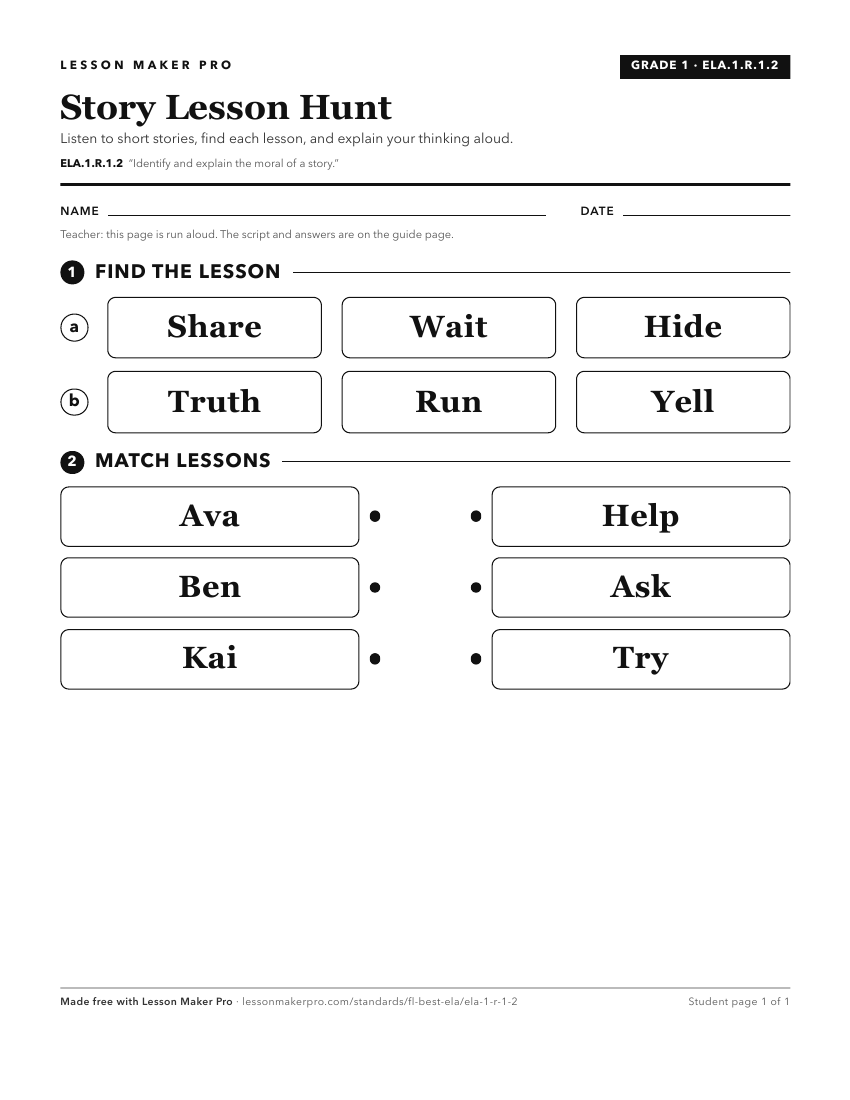
A ready-to-print activity worksheet aligned to ELA.1.R.1.2, with an answer key for the teacher on its own page. No account needed.
PDF, US Letter, prints cleanly in black and white.
Download the worksheetKeep exploring
Related Standards
Turn this exact standard into a lesson
Grade, subject, topic, and the complete standard are prefilled. Create one free, no account needed.
Also for this standard:Make a WorksheetMake a QuizMake a Sub Lesson