Florida B.E.S.T. ELA.2.R.1.2
The Standard
Identify and explain a theme of a literary text.
Florida B.E.S.T. Standards for English Language Arts
Teacher's field guide
What This Standard Means
What Students Need to Do
- Students name the lesson or message a story or poem communicates. They explain how key events, character choices, or lines support that message.
What Mastery Looks Like
- After reading a grade-level text, a student states a message as a complete thought, such as kindness can repair a friendship. The student points to relevant details and explains how they support that message.
Common Misconceptions
- Students may give a topic, such as friendship, instead of a message about friendship. They may retell the plot, give an unsupported personal opinion, or rely on one isolated detail.
How to Assess It
- Use this exit ticket after a short story: “What message does the story share? Name two events or character choices that support your answer.”
Lesson moves
Ways to Teach It
Give pairs story event cards to sequence, then have them choose a message card and mark two supporting events with sticky notes.
After reading The Lion and the Mouse, ask, “What does the story say about helping others, and which events support your answer?”
Play Theme Match: teams pair short plot summaries with message cards, then explain one match to earn a point.
Present a playground conflict and ask students to write a message from it that could also fit a story.
Free download
Printable ELA.2.R.1.2 Worksheet
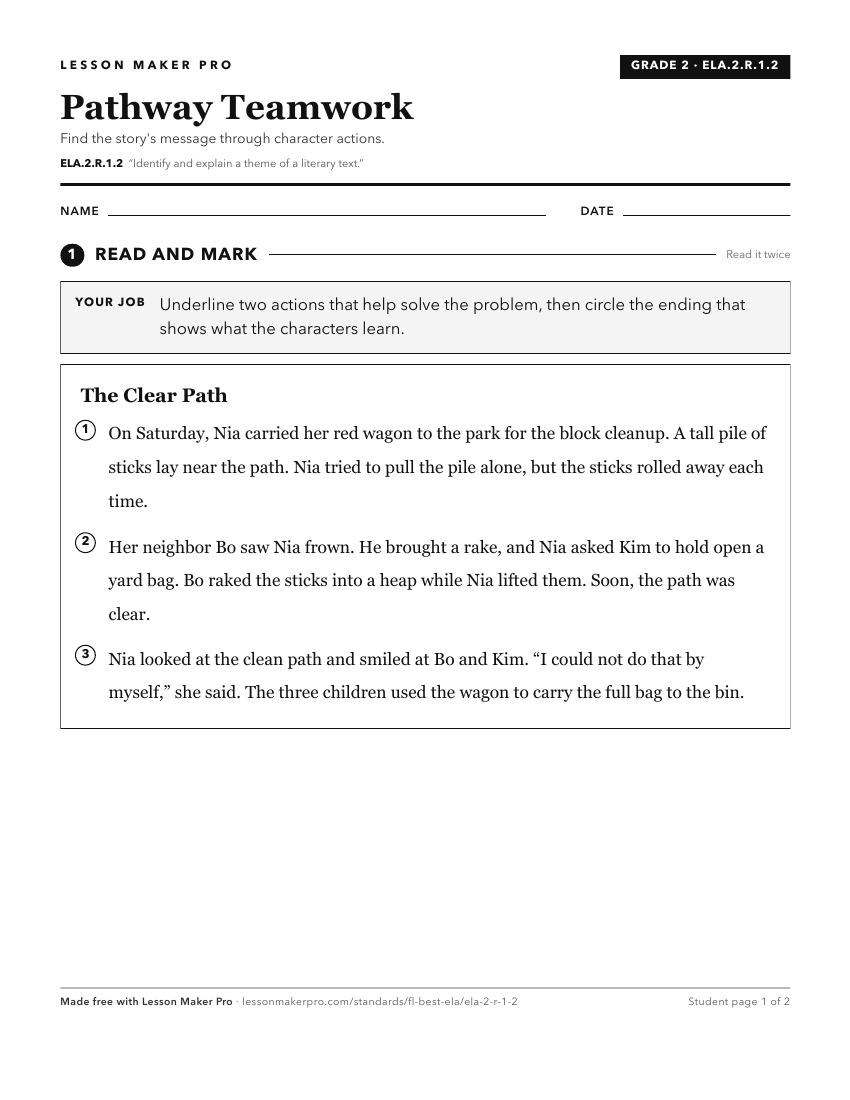
A ready-to-print activity worksheet aligned to ELA.2.R.1.2, with an answer key for the teacher on its own page. No account needed.
PDF, US Letter, prints cleanly in black and white.
Download the worksheetKeep exploring
Related Standards
- ELA.3.R.1.2
Explain a theme and how it develops, using details, in a literary text.
- ELA.5.R.1.2
Explain the development of stated or implied theme(s) throughout a literary text.
- ELA.9.R.1.2
Analyze universal themes and their development throughout a literary text.
- ELA.6.R.1.2
Analyze the development of stated or implied theme(s) throughout a literary text.
Turn this exact standard into a lesson
Grade, subject, topic, and the complete standard are prefilled. Create one free, no account needed.
Also for this standard:Make a WorksheetMake a QuizMake a Sub Lesson