Alabama Social Studies SS24.US2.19a
The Standard
- SS24.US2.19
- Evaluate how political developments and technology shaped economic trends and fluctuations from the 1990s into the early twenty-first century.
Trace the evolution of the environmental movement and political debate over climate change from the 1980s to the present, including how environmental and natural disasters have shaped the discussion.
2024 Alabama Course of Study: Social Studies
Teacher's field guide
What This Standard Means
What Students Need to Do
- Students trace how environmental activism, climate policy, and political arguments changed from the 1980s onward. They explain how disasters brought more attention to environmental risks and government responses.
What Mastery Looks Like
- Students can place environmental justice protests, climate hearings, and major laws in order. They can explain how Katrina raised questions about flood risk without claiming one storm proves climate change. They can describe a disagreement over costs, jobs, or regulation.
Common Misconceptions
- Students may confuse the ozone hole with climate change. They may say a single hurricane was caused by climate change. They may also assume every climate policy debate is about whether warming is happening, rather than what to do about it.
How to Assess It
- Exit ticket: Put the 1988 climate hearings, Hurricane Katrina, and the 2022 Inflation Reduction Act in order. Explain one way Katrina shaped debate and name one disagreement over climate policy.
Lesson moves
Ways to Teach It
Have students arrange printed cards for the Warren County protests, 1988 climate hearings, Katrina, the Paris Agreement, and the 2022 climate law.
Give pairs a 1988 climate hearing excerpt and a 2022 climate law summary; ask, "What changed in the political argument?"
Play a claim-check game: sort temperature records, Katrina, and the ozone hole into long-term evidence, single event, or different issue.
Use NOAA's Climate Explorer for your county; write one heat-risk recommendation and one cost objection a neighbor might raise.
Free download
Printable SS24.US2.19a Worksheet
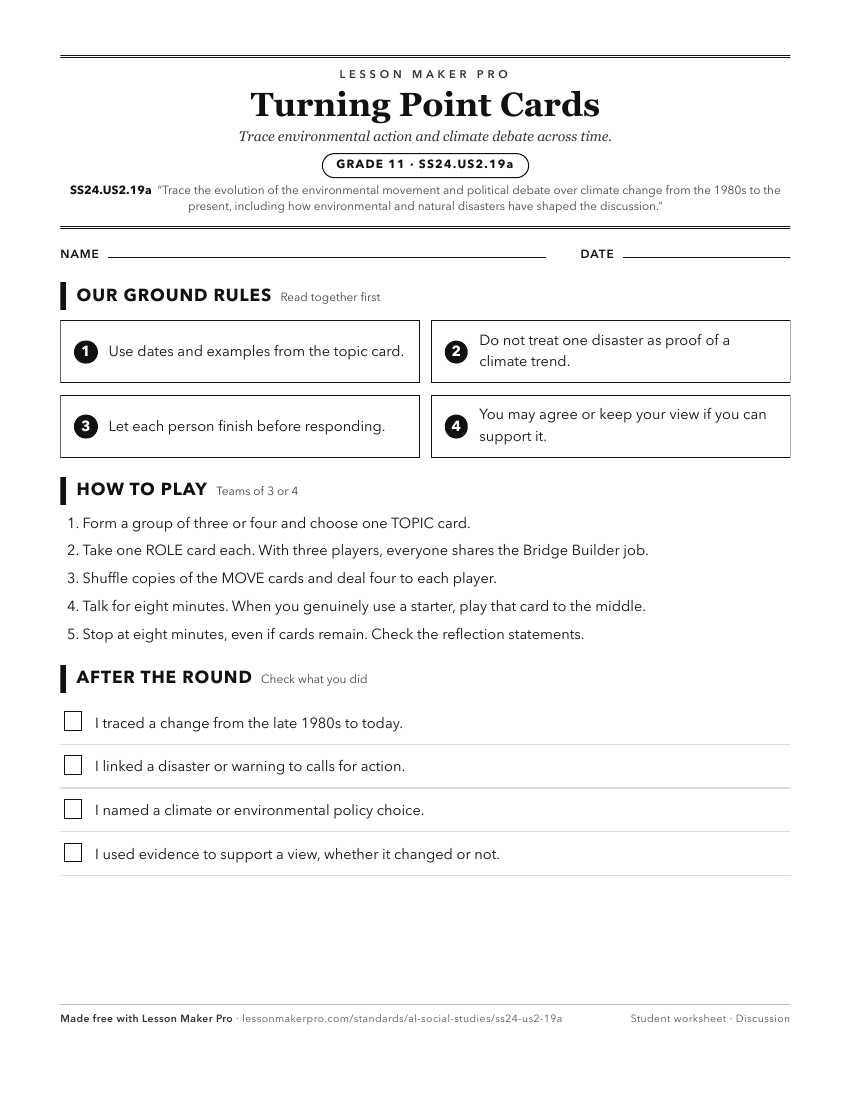
A ready-to-print activity worksheet aligned to SS24.US2.19a, with an answer key for the teacher on its own page. No account needed.
PDF, US Letter, prints cleanly in black and white.
Download the worksheetKeep exploring
Related Standards
- SS24.WH.18
Describe the interrelationship between people and the environment in the late twentieth and early twenty-first centuries.
- SS24.US2.14
Explain shifts in the scope of the Civil Rights Movement from the mid-1960s into the 1970s, including geographic regions, issues of focus, and participation.
- SS24.3.5
Explain the economic, geographic, and social impact of natural disasters over time.
- SS24.US2.15a
Trace the events that fostered the emergence of the modern environmental movement and prompted government regulations as well as civic action.
Turn this exact standard into a lesson
Grade, subject, topic, and the complete standard are prefilled. Create one free, no account needed.
Also for this standard:Make a WorksheetMake a QuizMake a Sub Lesson