Alabama Social Studies SS24.US2.11
Standard Cluster
Analyze how cultural changes, economic growth, and government action during the Truman and Eisenhower administrations shaped the daily lives of Americans. 11a Evaluate the effects of the arms and space races on the growth of the military-industrial complex. 11b Describe the demographic and political changes that occurred as some populations shifted from cities to suburbs.
2024 Alabama Course of Study: Social Studies
Cluster contents
Standards in This Cluster
SS24.US2.11 is a cluster heading. These are the individual standards under it.
Teacher's field guide
What This Cluster Means
What Students Need to Do
- Students explain how television, rising wages, and federal policies changed work, shopping, and family life. They connect weapons and space spending to private contracts and research jobs. They trace moves from cities to suburbs and explain changes in racial makeup, tax revenue, and voting power.
What Mastery Looks Like
- A student can link VA-backed mortgages and federal highways to suburban homebuying and car commutes, while noting who faced housing discrimination. They can explain how arms and space contracts created jobs and gave private companies a stake in federal spending. They can use population and election figures to show how suburban growth shifted political power.
Common Misconceptions
- Students may assume every veteran could get a suburban mortgage, overlooking discriminatory lenders and housing covenants. They may see weapons and satellites as government projects alone, missing contracts with private firms. They may think suburban moves changed only where people lived, missing city tax losses and shifts in voting power.
How to Assess It
- Give students a fact strip listing TV ads, VA mortgages, federal highways, defense contracts, Sputnik, and suburban population growth. Ask for three cause-and-effect sentences: one about daily life, one about arms or space spending and private jobs, and one about voting power.
Lesson moves
Ways to Teach It
Give groups job, mortgage, and housing restriction cards; have them model which families could buy homes in a 1950s suburb.
Read an excerpt from Eisenhower’s farewell address; ask how defense contracts could create jobs and give companies influence over federal spending.
Match cards labeled Sputnik, defense contracts, TV ads, VA mortgages, and highways to cards showing effects on jobs, shopping, and housing.
On a town map, trace a commute along the nearest Interstate; discuss how suburban growth can shift tax revenue and votes.
Free download
Printable SS24.US2.11 Worksheet
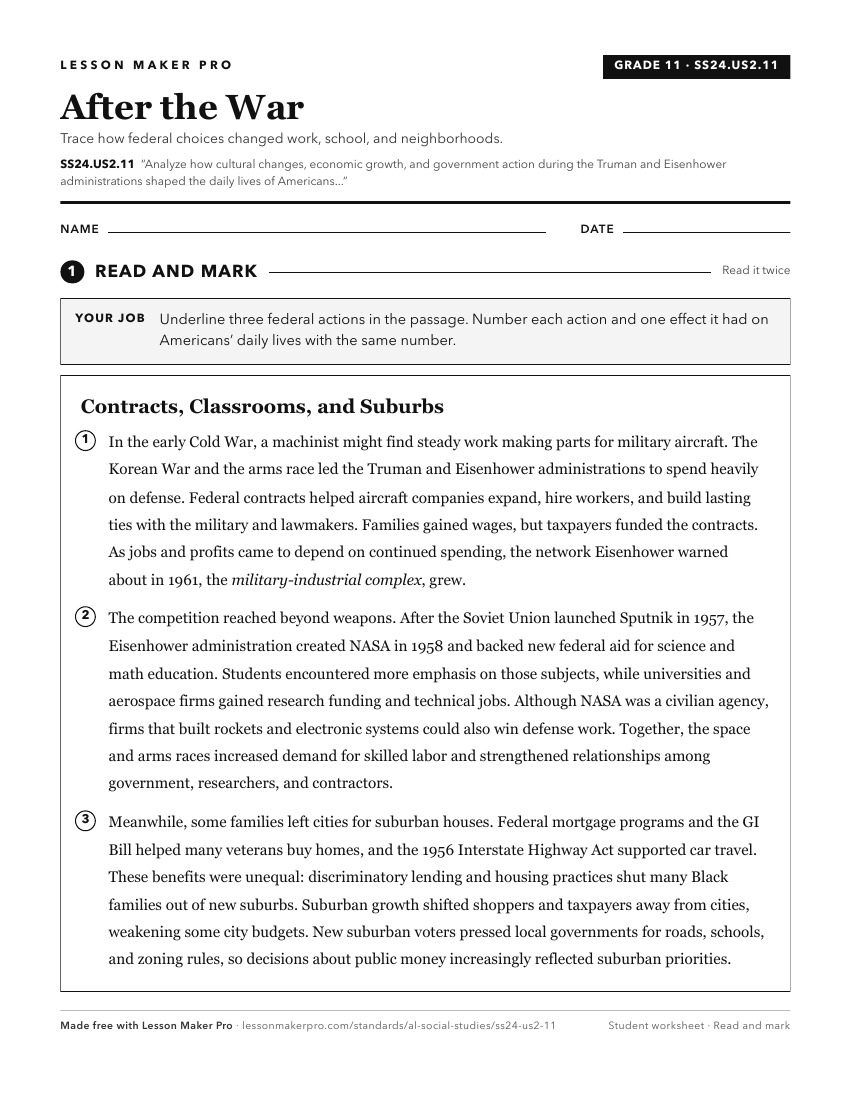
A ready-to-print activity worksheet aligned to SS24.US2.11, with an answer key for the teacher on its own page. No account needed.
PDF, US Letter, prints cleanly in black and white.
Download the worksheetKeep exploring
Related Standards
- SS24.5.8
Analyze how the government-funded New Deal programs of President Franklin D. Roosevelt impacted American society.
- SS24.US2.8
Analyze the domestic, economic, and civil rights impact of World War II on United States society.
- SS24.5.11
Describe how the United States’ economy grew and American culture changed after World War II.
- SS24.US2.3
Evaluate how key figures, events, and trends shaped United States society and culture from the conclusion of World War I through the 1920s.
Turn this cluster into a lesson
Grade, subject, topic, and the complete cluster are prefilled. Create one free, no account needed.
Also for this cluster:Make a WorksheetMake a QuizMake a Sub Lesson