Alabama Social Studies SS24.US2.11b
The Standard
- SS24.US2.11
- Analyze how cultural changes, economic growth, and government action during the Truman and Eisenhower administrations shaped the daily lives of Americans.
Describe the demographic and political changes that occurred as some populations shifted from cities to suburbs.
2024 Alabama Course of Study: Social Studies
Teacher's field guide
What This Standard Means
What Students Need to Do
- Students explain why many families, especially white families, moved from cities to suburbs after World War II. They describe how the move changed city populations, local tax bases, and voting power.
What Mastery Looks Like
- A student can explain how highways and federal mortgage programs helped suburban growth, while discriminatory lending kept many Black families out. They can use population figures to show how a growing suburban electorate could affect local elections.
Common Misconceptions
- Students may assume every family could get a suburban mortgage. They may also think moving across a city line changed only an address, not tax revenue, school districts, or local elections.
How to Assess It
- Give students these figures: city population fell from 100,000 to 80,000; suburban population rose from 20,000 to 40,000. Ask them to describe the shift and one likely effect on local elections.
Lesson moves
Ways to Teach It
Give pairs counters and two town maps; have them shift 20 households to suburbs, then mark changes in voters and tax revenue.
Show a redlined lending map and ask, “Who faced barriers to buying a home, and how might that shape suburban voting?”
Run two election tallies, one before and one after a population shift; have students name which group of voters gained influence.
Compare school district boundary maps for a nearby city and suburb; ask students who pays for each district's schools.
Free download
Printable SS24.US2.11b Worksheet
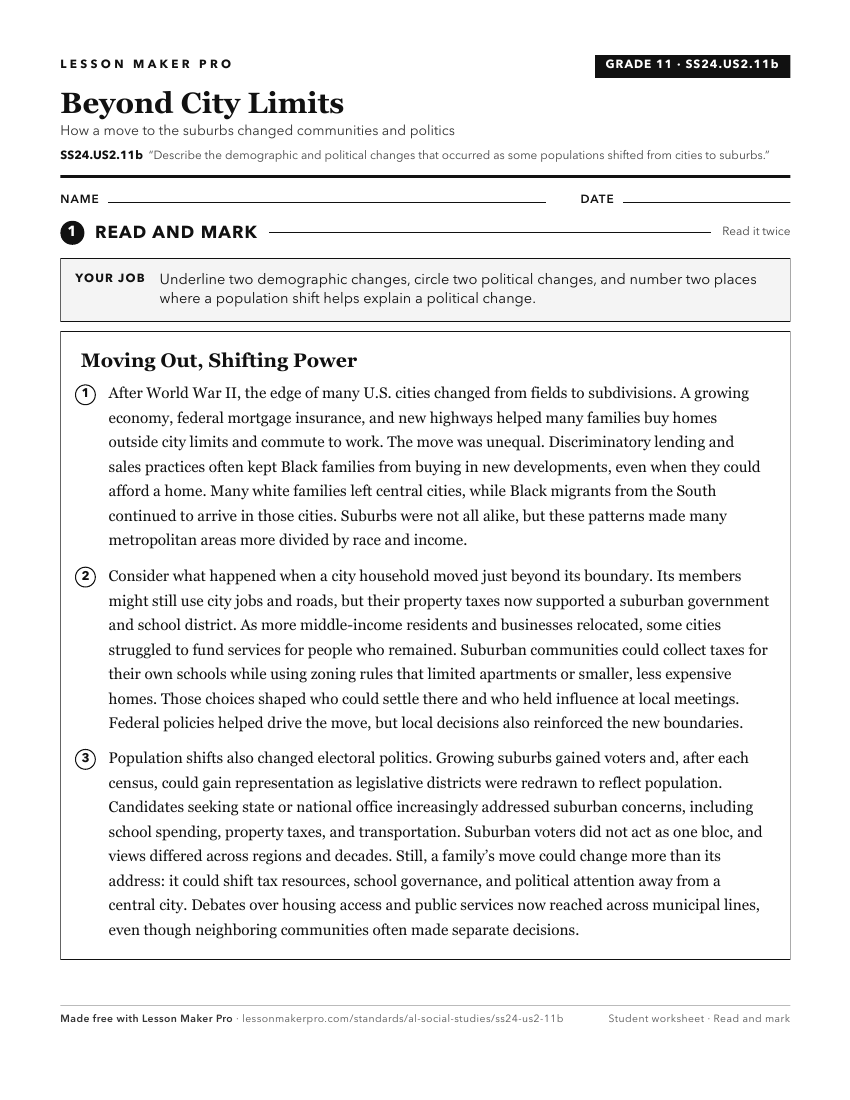
A ready-to-print activity worksheet aligned to SS24.US2.11b, with an answer key for the teacher on its own page. No account needed.
PDF, US Letter, prints cleanly in black and white.
Download the worksheetKeep exploring
Related Standards
- SS24.US1.17
Analyze the push and pull factors contributing to the rapid growth of cities in the United States during the late nineteenth and early twentieth centuries.
- SS24.US1.17b
Explain how various reform and reactionary movements emerged in response to the challenges of urbanization and immigration.
- SS24.HG.11a
Explain how urban sprawl affects a city, the communities around it, and the natural environment.
- SS24.US1.17a
Summarize social, economic, and cultural consequences of urbanization for American society, including changes in living and working conditions, the emergence of...
Turn this exact standard into a lesson
Grade, subject, topic, and the complete standard are prefilled. Create one free, no account needed.
Also for this standard:Make a WorksheetMake a QuizMake a Sub Lesson