Alabama Social Studies SS24.US1.9
Standard Cluster
Explain how economic and social divisions led to heightened sectionalism between the North and the South, examining their geographical and economic distinctions and the disparities between agrarian and industrial interests. 9a Explain how the Market Revolution fostered economic, cultural, and demographic changes in northern states. 9b Describe the central ideas of Henry Clay’s American System, and explain how the implementation of these concepts contributed to the growth of the American economy and sectionalism. 9c Compare and contrast political and sectional views on economic policies, and explain how these views led to political conflict during the early to mid-nineteenth century.
2024 Alabama Course of Study: Social Studies
Cluster contents
Standards in This Cluster
SS24.US1.9 is a cluster heading. These are the individual standards under it.
- SS24.US1.9a
Explain how the Market Revolution fostered economic, cultural, and demographic changes in northern states.
- SS24.US1.9b
Describe the central ideas of Henry Clay’s American System, and explain how the implementation of these concepts contributed to the growth of the American econo...
- SS24.US1.9c
Compare and contrast political and sectional views on economic policies, and explain how these views led to political conflict during the early to mid-nineteent...
Teacher's field guide
What This Cluster Means
What Students Need to Do
- Students use maps and data to connect northern waterways, factories, immigration, and wage work with growing towns. They compare that economy with southern cotton farming and enslaved labor. They explain how Henry Clay's plans for tariffs, a national bank, and roads and canals helped trade but fueled regional disputes.
What Mastery Looks Like
- A student can explain how a canal helped a northern mill town grow and attract workers. They can explain why a mill owner might support a tariff while a cotton planter opposed it. They can connect that disagreement to the nullification crisis.
Common Misconceptions
- Students may think the North had no farms or that all white southerners owned enslaved people. They may think a tariff taxed cotton exports directly, rather than imported goods. Some miss how canals and factories changed where people lived and worked.
How to Assess It
- Exit ticket: “A northern mill owner and a southern cotton planter debate Clay's tariff and road funding. Which policy might each favor or oppose, and why? Name one political conflict their disagreement could cause.”
Lesson moves
Ways to Teach It
Give pairs a blank 1830s map and colored pencils; have them mark canals, mill towns, cotton fields, and ports, then explain one geographic pattern.
Ask: “Why might a Massachusetts mill owner and a South Carolina planter disagree about Clay's tariff and national bank?” Have students cite their incomes.
Run a policy-card sort: students match tariffs, a national bank, and road funding with likely supporters, opponents, and reasons.
Give students a $10 truck quote and a $3 rail quote; ask how cheaper shipping could grow a factory town, then compare 1830s canals.
Free download
Printable SS24.US1.9 Worksheet
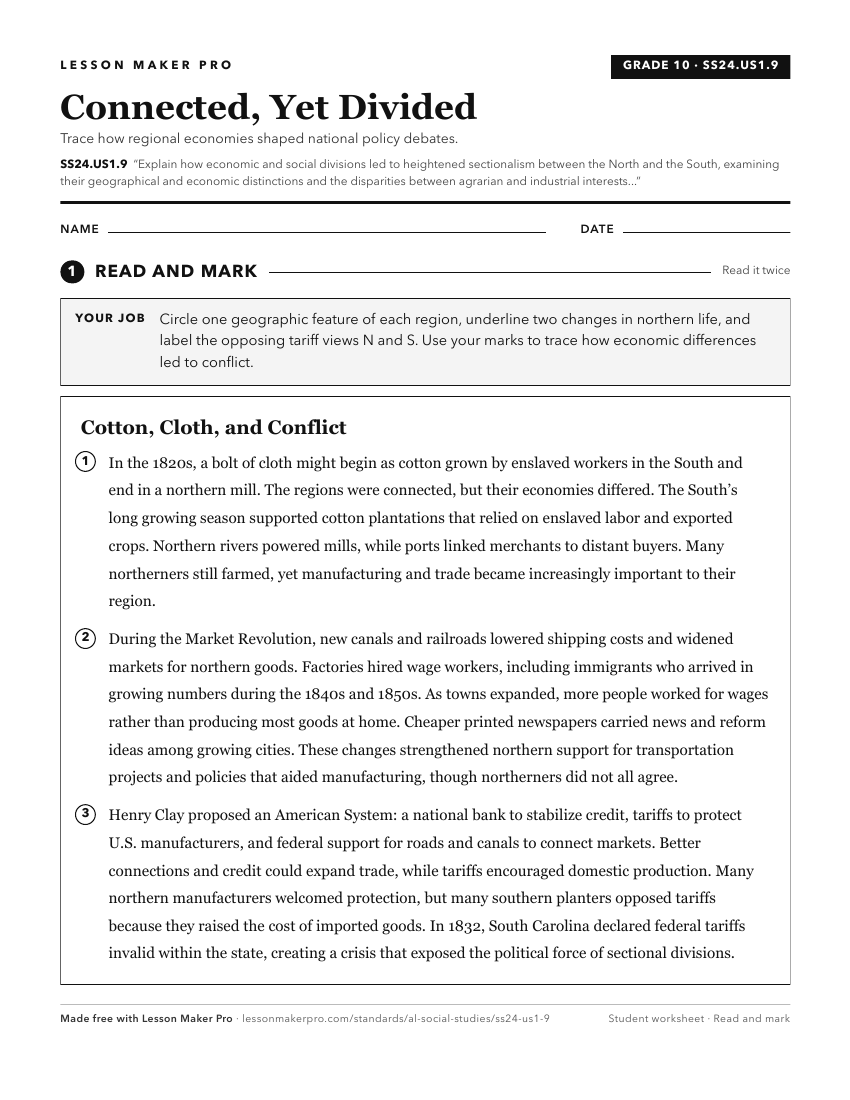
A ready-to-print activity worksheet aligned to SS24.US1.9, with an answer key for the teacher on its own page. No account needed.
PDF, US Letter, prints cleanly in black and white.
Download the worksheetKeep exploring
Related Standards
- SS24.4.13
Describe how slavery contributed to sectional disagreements, divisions over states’ rights, and economic disputes resulting in the Civil War.
- SS24.4.13a
Identify and describe how key events from the Missouri Compromise (1820) to the election of Abraham Lincoln (1860) contributed to growing sectional divisions.
- SS24.US1.11
Analyze how government policies and events related to slavery led to increased sectionalism throughout the United States prior to the Civil War.
Turn this cluster into a lesson
Grade, subject, topic, and the complete cluster are prefilled. Create one free, no account needed.
Also for this cluster:Make a WorksheetMake a QuizMake a Sub Lesson