Alabama Social Studies SS24.US1.20
Standard Cluster
Compare and contrast the domestic agendas and accomplishments of Theodore Roosevelt, William Howard Taft, and Woodrow Wilson. 20a Critique the effectiveness of national legislation passed during the Progressive Era in addressing concerns regarding business practices, including the Sherman Antitrust Act and the Clayton Antitrust Act. 20b Describe the political reforms passed during the Progressive Era.
2024 Alabama Course of Study: Social Studies
Cluster contents
Standards in This Cluster
SS24.US1.20 is a cluster heading. These are the individual standards under it.
Teacher's field guide
What This Cluster Means
What Students Need to Do
- Students compare Roosevelt's consumer protections and conservation, Taft's antitrust cases, and Wilson's banking and antitrust changes. They judge how well two federal antitrust laws curbed unfair business practices and explain changes to voting and elections.
What Mastery Looks Like
- A student can connect food safety laws to Roosevelt, antitrust prosecutions to Taft, and the Clayton Act to Wilson. They explain that the Sherman Act broadly banned monopolization, while the Clayton Act targeted practices such as price discrimination. They can distinguish direct election of senators from women's suffrage and name a limit of antitrust enforcement.
Common Misconceptions
- Students may think all three presidents took the same approach to big business. Some place the 1890 Sherman Act under Wilson or assume an antitrust law ended monopolies as soon as it passed. Others confuse direct election of senators with women's suffrage.
How to Assess It
- Exit ticket: Which president did the most to limit corporate power? Compare one action by each president, explain one limit of antitrust laws, and name one voting reform.
Lesson moves
Ways to Teach It
Give pairs cards for the Meat Inspection Act, trust prosecutions, Federal Reserve Act, and Clayton Act; sort them by president and discuss overlaps.
Ask: Did banning price discrimination make the Clayton Act stronger than the Sherman Act? Give one reason the law might still fall short.
Post four reform names; read scenarios about Senate elections, women's voting, ballot proposals, and removing officials; students move to the matching poster.
Show a 2024 Kroger-Albertsons merger headline; ask whether fewer grocery chains could raise prices and what evidence regulators would need.
Free download
Printable SS24.US1.20 Worksheet
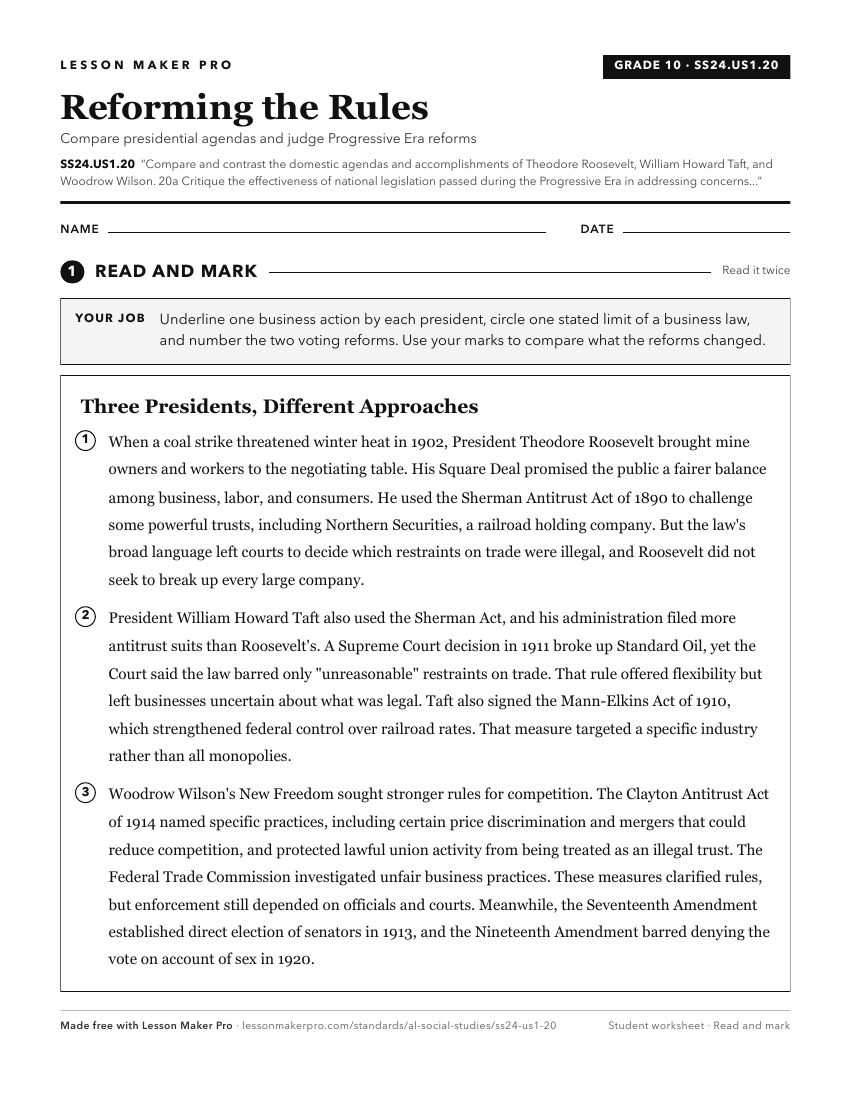
A ready-to-print activity worksheet aligned to SS24.US1.20, with an answer key for the teacher on its own page. No account needed.
PDF, US Letter, prints cleanly in black and white.
Download the worksheetKeep exploring
Related Standards
- SS24.US2.1c
Trace United States’ interventions around the world under Theodore Roosevelt’s Big Stick Diplomacy, William Howard Taft’s Dollar Diplomacy, and Woodrow Wilson’s...
- SS24.US2.7b
Compare and contrast the roles and leadership of United States leaders in securing victory for the Allied powers during World War II.
- SS24.US1.3
Analyze the major policies and political developments of the presidencies of George Washington, John Adams, Thomas Jefferson, James Madison, and James Monroe.
- SS24.US2.11
Analyze how cultural changes, economic growth, and government action during the Truman and Eisenhower administrations shaped the daily lives of Americans.
Turn this cluster into a lesson
Grade, subject, topic, and the complete cluster are prefilled. Create one free, no account needed.
Also for this cluster:Make a WorksheetMake a QuizMake a Sub Lesson