Alabama Social Studies SS24.P.5e
The Standard
- SS24.P.5
- Describe the structure, biochemistry, and circuitry of the brain and nervous system, and explain their roles in human behavior and mental processes.*
Explain how psychoactive drugs affect people, including the mechanisms of addiction, tolerance, and withdrawal.
2024 Alabama Course of Study: Social Studies · Biological Basis of Psychology
Teacher's field guide
What This Standard Means
What Students Need to Do
- Students explain how psychoactive drugs change brain signaling and can affect mood, thinking, and behavior. They explain why repeated use may weaken an effect, why stopping may cause symptoms, and how continued use despite harm can develop.
What Mastery Looks Like
- Given a case, students can identify signs of tolerance, withdrawal, and addiction. They can explain how the brain adapts to repeated use and why withdrawal alone does not prove addiction.
Common Misconceptions
- Students may think tolerance means a drug has stopped working entirely, or that withdrawal always means addiction. They may also think every drug affects the brain in the same way.
How to Assess It
- Exit ticket: A person needs more nicotine for the same effect, feels irritable when they stop, and keeps using it despite wanting to quit. Label the three patterns and explain one brain change behind them.
Lesson moves
Ways to Teach It
Use beans for dopamine and paper cups for receptors; block a drawn reuptake arrow, then remove cups to model reduced response with repeated use.
Ask students: Can someone experience withdrawal without being addicted? Write an answer using daily caffeine use as an example.
Sort six short case cards into tolerance, withdrawal, addiction, or none, then underline the detail that supports each choice.
Compare caffeine amounts on two drink labels, then predict how daily use and suddenly stopping might affect alertness.
Free download
Printable SS24.P.5e Worksheet
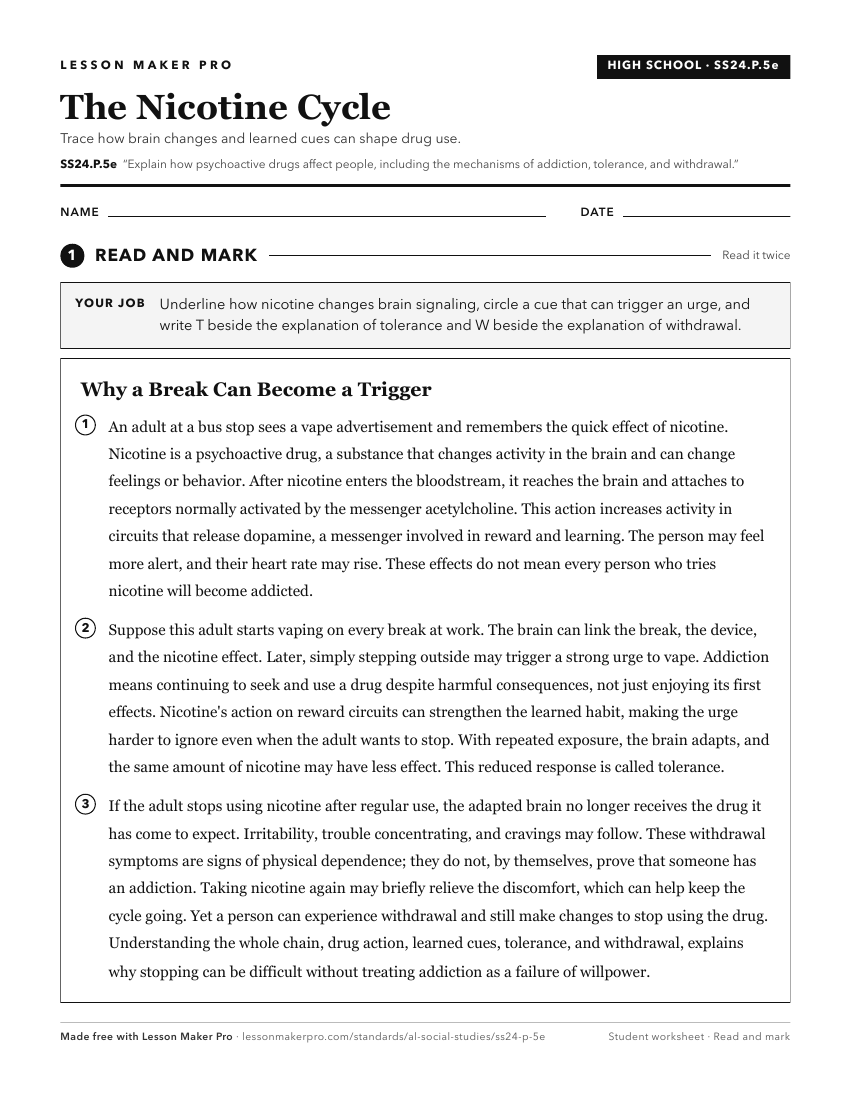
A ready-to-print activity worksheet aligned to SS24.P.5e, with an answer key for the teacher on its own page. No account needed.
PDF, US Letter, prints cleanly in black and white.
Download the worksheetKeep exploring
Related Standards
- SS24.P.17
Describe how attitudes, conditions of obedience and conformity, and other influences affect actions and shape human behavior, including actor-observer, self-ser...
- SS24.P.16
Describe major psychological disorders and their treatments and explain how examples of abnormal behavior differ from normal behavior.*
- SS24.P.16a
Describe various approaches for explaining mental illness, including biological and medical, cognitive, and sociocultural models.
- SS24.P.5b
Explain the effect of neurotransmitters on human behavior and compare the effects of drugs and toxins on the brain.
Turn this exact standard into a lesson
Grade, subject, topic, and the complete standard are prefilled. Create one free, no account needed.
Also for this standard:Make a WorksheetMake a QuizMake a Sub Lesson