Alabama Social Studies SS24.P.5
Standard Cluster
Describe the structure, biochemistry, and circuitry of the brain and nervous system, and explain their roles in human behavior and mental processes.* 5a Describe communication between neurons and the electrochemical process, including the role of neurotransmitters in behavior.* 5b Explain the effect of neurotransmitters on human behavior and compare the effects of drugs and toxins on the brain. 5c Describe the specialized and interdependent functions of sections of the brain, including the lobes and hemispheres of the cerebral cortex. 5d Describe technologies used to study the brain and nervous system.* 5e Explain how psychoactive drugs affect people, including the mechanisms of addiction, tolerance, and withdrawal.
2024 Alabama Course of Study: Social Studies
Cluster contents
Standards in This Cluster
SS24.P.5 is a cluster heading. These are the individual standards under it.
- SS24.P.5a
Describe communication between neurons and the electrochemical process, including the role of neurotransmitters in behavior.*
- SS24.P.5b
Explain the effect of neurotransmitters on human behavior and compare the effects of drugs and toxins on the brain.
- SS24.P.5c
Describe the specialized and interdependent functions of sections of the brain, including the lobes and hemispheres of the cerebral cortex.
- SS24.P.5d
Describe technologies used to study the brain and nervous system.*
- SS24.P.5e
Explain how psychoactive drugs affect people, including the mechanisms of addiction, tolerance, and withdrawal.
Teacher's field guide
What This Cluster Means
What Students Need to Do
- Students trace electrical signals through neurons and chemical messages across synapses. They connect brain regions and pathways to behavior and identify what brain tests measure. They compare how drugs and toxins affect signaling and explain addiction, tolerance, and withdrawal.
What Mastery Looks Like
- A student explains how sodium and potassium ions help create an impulse, then shows neurotransmitters binding to receptors across a synapse. They use a brain diagram to explain how lobes and both hemispheres work together during reading. They compare a drug with a toxin and distinguish tolerance, addiction, and withdrawal.
Common Misconceptions
- Students may think neurotransmitters travel the length of a neuron instead of crossing a synapse. They may treat each lobe or hemisphere as working alone, or think a brain scan shows thoughts directly. They may confuse tolerance, needing more for the same effect, with addiction, continuing use despite harm.
How to Assess It
- Give students a neuron sketch and this case: A daily coffee drinker needs more caffeine for the same alertness and feels tired without it. Ask them to mark the synapse, name the receptor caffeine blocks, and explain tolerance and withdrawal.
Lesson moves
Ways to Teach It
On a paper neuron, move sodium cards in and potassium cards out, then move bead neurotransmitters across a synapse onto receptor stickers.
Ask: Why can caffeine increase alertness while lead exposure can harm learning? Write how each affects brain signaling.
Give pairs reading and ball-catching cards; have them label lobes on both hemispheres of a brain outline and draw connections each task needs.
Give pairs a mock concussion report; ask whether CT or EEG better checks for bleeding or abnormal electrical activity, and why.
Free download
Printable SS24.P.5 Worksheet
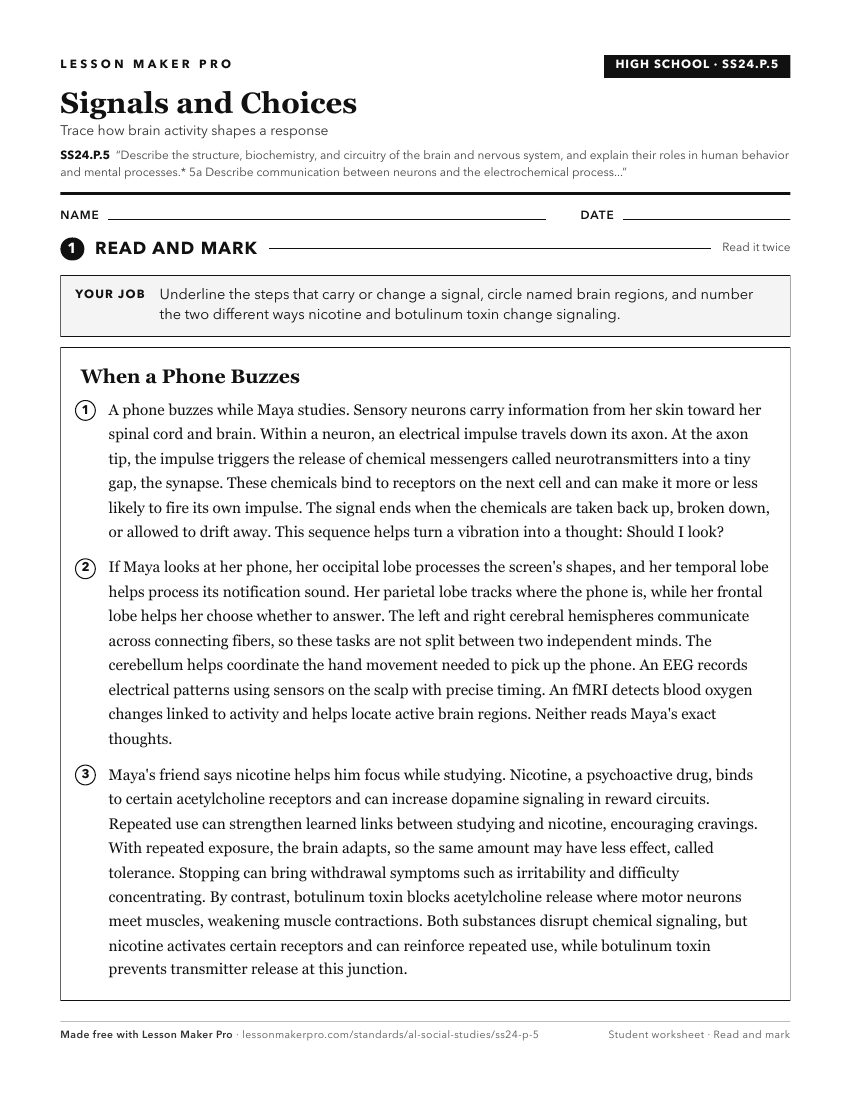
A ready-to-print activity worksheet aligned to SS24.P.5, with an answer key for the teacher on its own page. No account needed.
PDF, US Letter, prints cleanly in black and white.
Download the worksheetKeep exploring
Related Standards
Turn this cluster into a lesson
Grade, subject, topic, and the complete cluster are prefilled. Create one free, no account needed.
Also for this cluster:Make a WorksheetMake a QuizMake a Sub Lesson