Alabama Science HAP.8
Standard Cluster
Obtain, evaluate, and communicate information explaining how the structures of the cardiovascular system are related to its functions. a. Create a model to show how a pressure gradient moves blood through the circulatory system. b. Carry out an investigation exploring the link between blood pressure and heart rate and include the role of baroreceptors and chemoreceptors in the explanation of results. c. Construct an explanation of the cardiovascular system’s relationships with other organ systems, including the body’s mechanisms for maintaining homeostasis.
2023 Alabama Course of Study: Science · From Molecules to Organisms: Structures and Processes
Cluster contents
Standards in This Cluster
HAP.8 is a cluster heading. These are the individual standards under it.
- HAP.8.a
Create a model to show how a pressure gradient moves blood through the circulatory system.
- HAP.8.b
Carry out an investigation exploring the link between blood pressure and heart rate and include the role of baroreceptors and chemoreceptors in the explanation ...
- HAP.8.c
Construct an explanation of the cardiovascular system’s relationships with other organ systems, including the body’s mechanisms for maintaining homeostasis.
Teacher's field guide
What This Cluster Means
What Students Need to Do
- Students trace blood through the heart, lungs, and body, and show how pressure differences move it. They measure pulse and blood pressure before and after activity, then use what they find to explain how the heart, blood vessels, lungs, and kidneys help keep body conditions steady.
What Mastery Looks Like
- A student can draw the path of blood, show where pressure is higher, and explain how valves prevent backflow. They can use pulse and blood pressure readings to discuss the roles of baroreceptors and chemoreceptors without assuming the two readings always change together.
Common Misconceptions
- Students may think veins pull blood back to the heart or that valves push blood forward. They may assume heart rate and blood pressure always rise together. Some mix up baroreceptors, which sense pressure through vessel stretch, with chemoreceptors, which sense changes such as carbon dioxide levels.
How to Assess It
- Exit ticket: Draw blood moving from the heart to the body and back, and label one pressure difference and one valve. Explain why pulse might change after a brisk walk, naming one receptor involved.
Lesson moves
Ways to Teach It
Connect two water-filled syringes with clear tubing, push one plunger, and draw arrows showing flow from higher to lower pressure.
Ask students to write how the lungs and kidneys help the cardiovascular system keep cells supplied during a brisk walk.
Give pairs cards labeled artery, vein, valve, baroreceptor, and chemoreceptor; have them match each structure to its job and explain one match.
Use a cuff and timer to record a volunteer's blood pressure and pulse before and after a one-minute walk, then again after rest.
Free download
Printable HAP.8 Worksheet
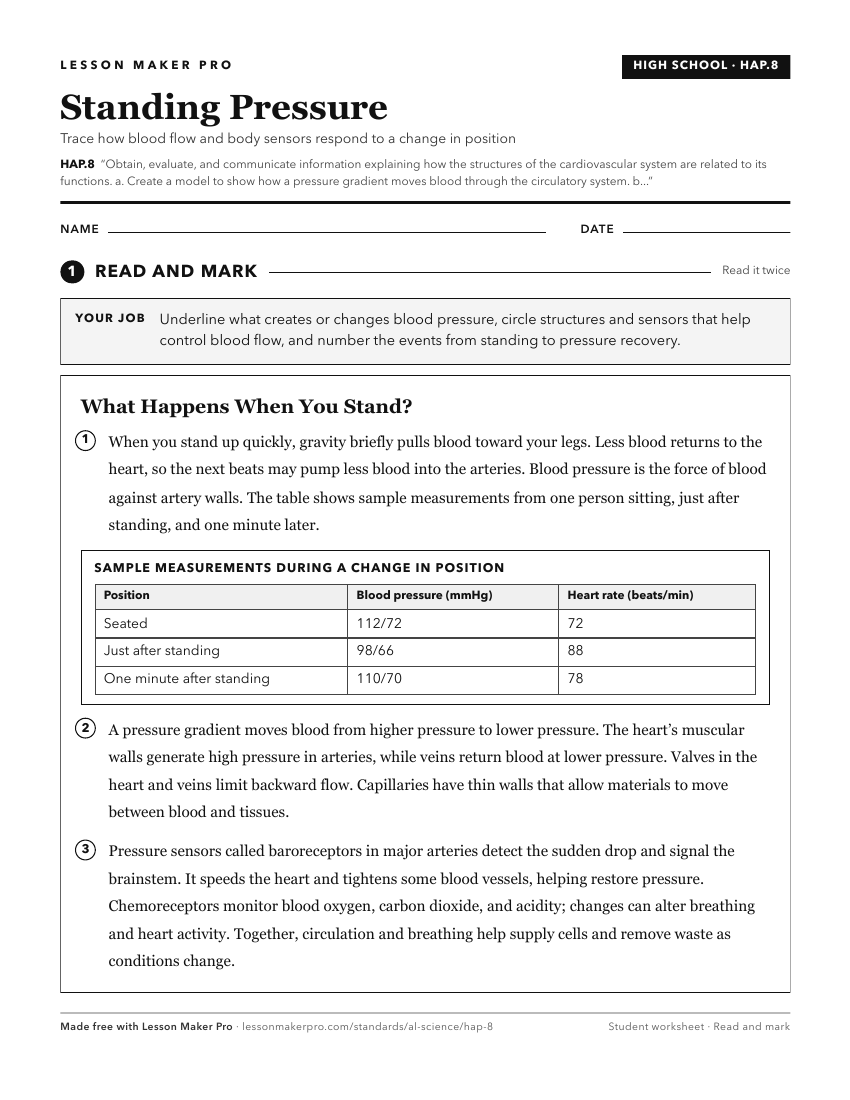
A ready-to-print activity worksheet aligned to HAP.8, with an answer key for the teacher on its own page. No account needed.
PDF, US Letter, prints cleanly in black and white.
Download the worksheetKeep exploring
Related Standards
- 7.4
Obtain, evaluate, and communicate information explaining how cells, tissues, and organs of various systems of the human body work together for specific function...
- HAP.9
Obtain, evaluate, and communicate information to explain the relationship between the structures and functions of the respiratory system.
- HAP.5
Obtain, evaluate, and communicate information explaining the relationship between the structures and functions of the central nervous system and the peripheral ...
Turn this cluster into a lesson
Grade, subject, topic, and the complete cluster are prefilled. Create one free, no account needed.
Also for this cluster:Make a WorksheetMake a QuizMake a Sub Lesson