Alabama Science HAP.2
Standard Cluster
Obtain, evaluate, and communicate information to describe how the structures of the integumentary system and its accessory organs contribute to its function. a. Construct an explanation of the relationships between the integumentary system and other organ systems, including the body’s mechanisms for maintaining homeostasis.
2023 Alabama Course of Study: Science · From Molecules to Organisms: Structures and Processes
Cluster contents
Standards in This Cluster
HAP.2 is a cluster heading. These are the individual standards under it.
Teacher's field guide
What This Cluster Means
What Students Need to Do
- Students use skin diagrams and reliable sources to connect the epidermis, dermis, hair, nails, and glands to their jobs. They explain how skin works with nerves and blood vessels to keep body temperature steady. They check that their sources support their claims.
What Mastery Looks Like
- A student can explain how the epidermis blocks germs, nails protect fingertips, and sweat cools skin when it evaporates. Given a hot-day example, they can trace signals from the brain to sweating and increased blood flow near the skin.
Common Misconceptions
- Students may think sweat cools the body as soon as it appears, rather than when it evaporates. They may reverse what skin blood vessels do in heat and cold, or think skin controls temperature without signals from the nervous system.
How to Assess It
- Give students a labeled skin diagram and ask: “On a hot day, how do sweat glands, skin blood vessels, and nerves help lower body temperature?” Ask them to cite one detail from the diagram.
Lesson moves
Ways to Teach It
Wrap two thermometers in dry and wet paper towels, fan both for three minutes, and compare temperatures to model sweat evaporation.
Give students a skin diagram and textbook paragraph, then ask them to write which source better supports a claim about cooling.
Have pairs match skin structure cards to function cards, then justify each match using a textbook diagram.
Give students a short heat exhaustion case and have them map sweating, skin blood flow, and brain signals on a body outline.
Free download
Printable HAP.2 Worksheet
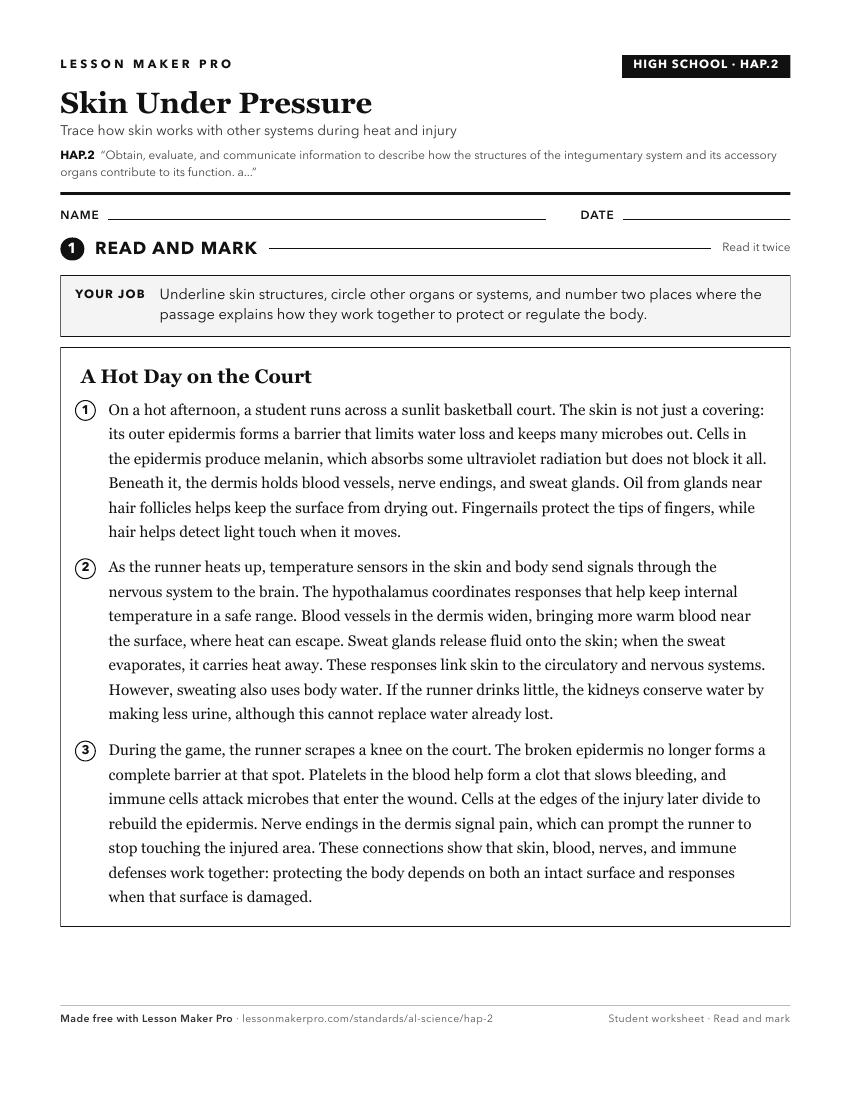
A ready-to-print activity worksheet aligned to HAP.2, with an answer key for the teacher on its own page. No account needed.
PDF, US Letter, prints cleanly in black and white.
Download the worksheetKeep exploring
Related Standards
- 7.4
Obtain, evaluate, and communicate information explaining how cells, tissues, and organs of various systems of the human body work together for specific function...
- HAP.8
Obtain, evaluate, and communicate information explaining how the structures of the cardiovascular system are related to its functions.
- HAP.10
Obtain, evaluate, and communicate information explaining the relationship between the structures and functions of the digestive system, including absorption and...
Turn this cluster into a lesson
Grade, subject, topic, and the complete cluster are prefilled. Create one free, no account needed.
Also for this cluster:Make a WorksheetMake a QuizMake a Sub Lesson