Alabama Science HAP.2.a
The Standard
- HAP.2
- Obtain, evaluate, and communicate information to describe how the structures of the integumentary system and its accessory organs contribute to its function.
Construct an explanation of the relationships between the integumentary system and other organ systems, including the body’s mechanisms for maintaining homeostasis.
2023 Alabama Course of Study: Science · From Molecules to Organisms: Structures and Processes
Teacher's field guide
What This Standard Means
What Students Need to Do
- Students explain how skin works with the nervous and circulatory systems to keep body temperature steady. They trace what happens to sweat and skin blood flow when the body gets too hot or too cold.
What Mastery Looks Like
- Given a hot-day scenario, a student can show how brain signals trigger sweating and widen skin blood vessels. They explain how evaporation and increased heat loss help bring body temperature back down.
Common Misconceptions
- Some students think sweat cools the body just by being on the skin, rather than by evaporating. Others think skin blood vessels widen in the cold, or that skin controls temperature without signals from the brain.
How to Assess It
- Ask on an exit ticket: “After a run, your body heats up. How do the brain, skin, and blood vessels work together to cool you?” Look for sweating, evaporation, and increased blood flow near the skin.
Lesson moves
Ways to Teach It
Have students dampen one forearm, leave the other dry, and hold both before a fan; ask which feels cooler and why.
Ask: “Why might your skin look pale while you wait outside in the cold?” Connect narrower skin blood vessels to reduced heat loss.
Give groups cards labeled brain signal, sweat gland, evaporation, widened skin vessels, and heat loss; have them build two cooling pathways.
Show a photo of a sweaty, flushed runner; have students label the skin, nervous, and circulatory responses that help prevent overheating.
Free download
Printable HAP.2.a Worksheet
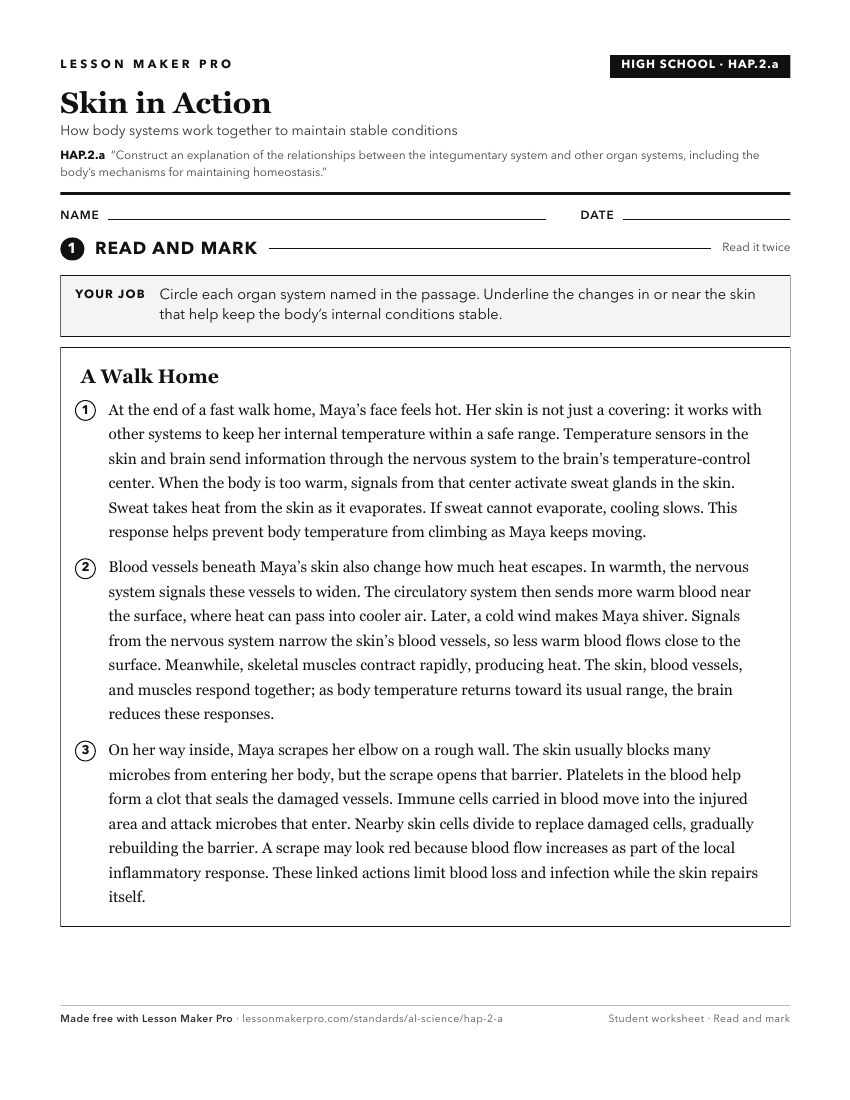
A ready-to-print activity worksheet aligned to HAP.2.a, with an answer key for the teacher on its own page. No account needed.
PDF, US Letter, prints cleanly in black and white.
Download the worksheetKeep exploring
Related Standards
- HAP.10.b
Construct an explanation of the relationships between the digestive system and other organ systems, including the body’s mechanisms for maintaining homeostasis.
- HAP.3.b
Construct an explanation of the relationships between the skeletal system and other organ systems, including the body’s mechanisms for maintaining homeostasis.
- HAP.8.c
Construct an explanation of the cardiovascular system’s relationships with other organ systems, including the body’s mechanisms for maintaining homeostasis.
- HAP.9.c
Construct an explanation of the respiratory system’s relationships with other organ systems, including the body’s mechanisms for maintaining homeostasis.
Turn this exact standard into a lesson
Grade, subject, topic, and the complete standard are prefilled. Create one free, no account needed.
Also for this standard:Make a WorksheetMake a QuizMake a Sub Lesson