Alabama Science HAP.9.c
The Standard
- HAP.9
- Obtain, evaluate, and communicate information to explain the relationship between the structures and functions of the respiratory system.
Construct an explanation of the respiratory system’s relationships with other organ systems, including the body’s mechanisms for maintaining homeostasis.
2023 Alabama Course of Study: Science · From Molecules to Organisms: Structures and Processes
Teacher's field guide
What This Standard Means
What Students Need to Do
- Trace oxygen from the lungs through the blood to body cells, then trace carbon dioxide back to the lungs. Explain how the brain and breathing muscles adjust breathing when carbon dioxide rises.
What Mastery Looks Like
- A student can explain why breathing and heart rates rise after climbing stairs. They connect faster gas exchange and blood flow to oxygen delivery, carbon dioxide removal, and steady blood pH.
Common Misconceptions
- Students may think oxygen travels straight from the lungs to muscles without the blood. They may think breathing speeds up only when oxygen drops, missing the body's response to rising carbon dioxide.
How to Assess It
- Exit ticket: After climbing stairs, why do breathing and heart rates rise? Use the words brain, lungs, blood, oxygen, and carbon dioxide in your answer.
Lesson moves
Ways to Teach It
Have pairs count breaths and pulse for 30 seconds before and after one minute of marching in place, then compare the changes.
Ask, "Why do breathing and heart rates rise together after climbing stairs?" Have students trace both gases on a body outline.
Give groups gas and signal cards to match oxygen, carbon dioxide, and brain signals to arrows on a lung-blood-muscle diagram.
Give students a runner-with-asthma case card; ask how narrowed airways affect oxygen delivery and why breathing rate may rise.
Free download
Printable HAP.9.c Worksheet
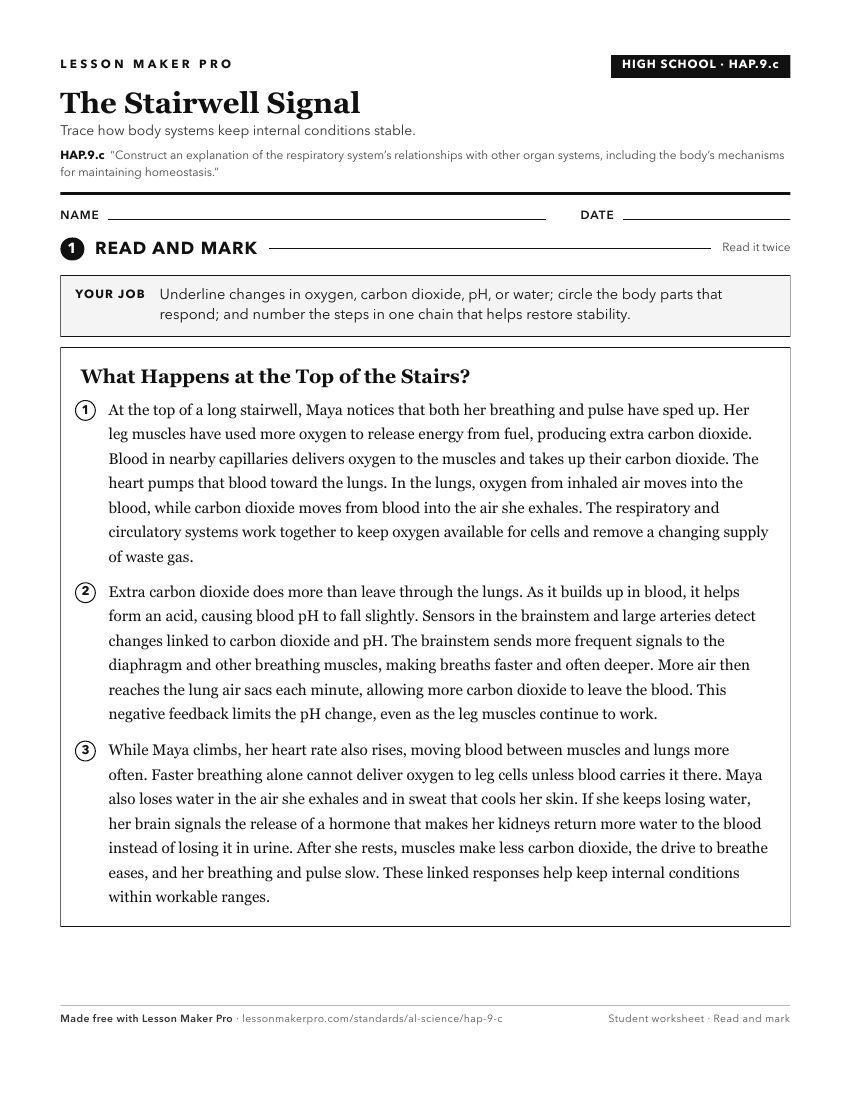
A ready-to-print activity worksheet aligned to HAP.9.c, with an answer key for the teacher on its own page. No account needed.
PDF, US Letter, prints cleanly in black and white.
Download the worksheetKeep exploring
Related Standards
- HAP.8.c
Construct an explanation of the cardiovascular system’s relationships with other organ systems, including the body’s mechanisms for maintaining homeostasis.
- HAP.10.b
Construct an explanation of the relationships between the digestive system and other organ systems, including the body’s mechanisms for maintaining homeostasis.
- HAP.3.b
Construct an explanation of the relationships between the skeletal system and other organ systems, including the body’s mechanisms for maintaining homeostasis.
- HAP.2.a
Construct an explanation of the relationships between the integumentary system and other organ systems, including the body’s mechanisms for maintaining homeosta...
Turn this exact standard into a lesson
Grade, subject, topic, and the complete standard are prefilled. Create one free, no account needed.
Also for this standard:Make a WorksheetMake a QuizMake a Sub Lesson