Alabama Science HAP.10.b
The Standard
- HAP.10
- Obtain, evaluate, and communicate information explaining the relationship between the structures and functions of the digestive system, including absorption and chemical and mechanical digestion.
Construct an explanation of the relationships between the digestive system and other organ systems, including the body’s mechanisms for maintaining homeostasis.
2023 Alabama Course of Study: Science · From Molecules to Organisms: Structures and Processes
Teacher's field guide
What This Standard Means
What Students Need to Do
- Students trace nutrients from the small intestine into the blood and then to cells. They explain how the pancreas responds to rising blood sugar and how the kidneys help control water levels.
What Mastery Looks Like
- A student can draw and label how glucose reaches cells after a meal. They can explain that the pancreas releases insulin when blood sugar rises, and that the kidneys adjust how much water leaves in urine.
Common Misconceptions
- Students may think food enters the blood directly from the stomach or that insulin digests sugar. They may think homeostasis means blood sugar never changes, rather than the body responding when it does.
How to Assess It
- Exit ticket: After eating toast, trace glucose from the small intestine to a cell. Add one sentence explaining how the pancreas responds when blood sugar rises.
Lesson moves
Ways to Teach It
Give pairs organ cards, yarn, and arrow labels to model how glucose moves from the small intestine through the blood to cells.
Ask students to write: After eating rice, why does blood sugar rise, and what does the pancreas do next?
Run a card-sort race using digestion, absorption, blood transport, insulin release, and cell uptake; have teams explain their order.
Use a sports drink label to trace its sugar and water into the blood, then discuss how the kidneys handle extra water.
Free download
Printable HAP.10.b Worksheet
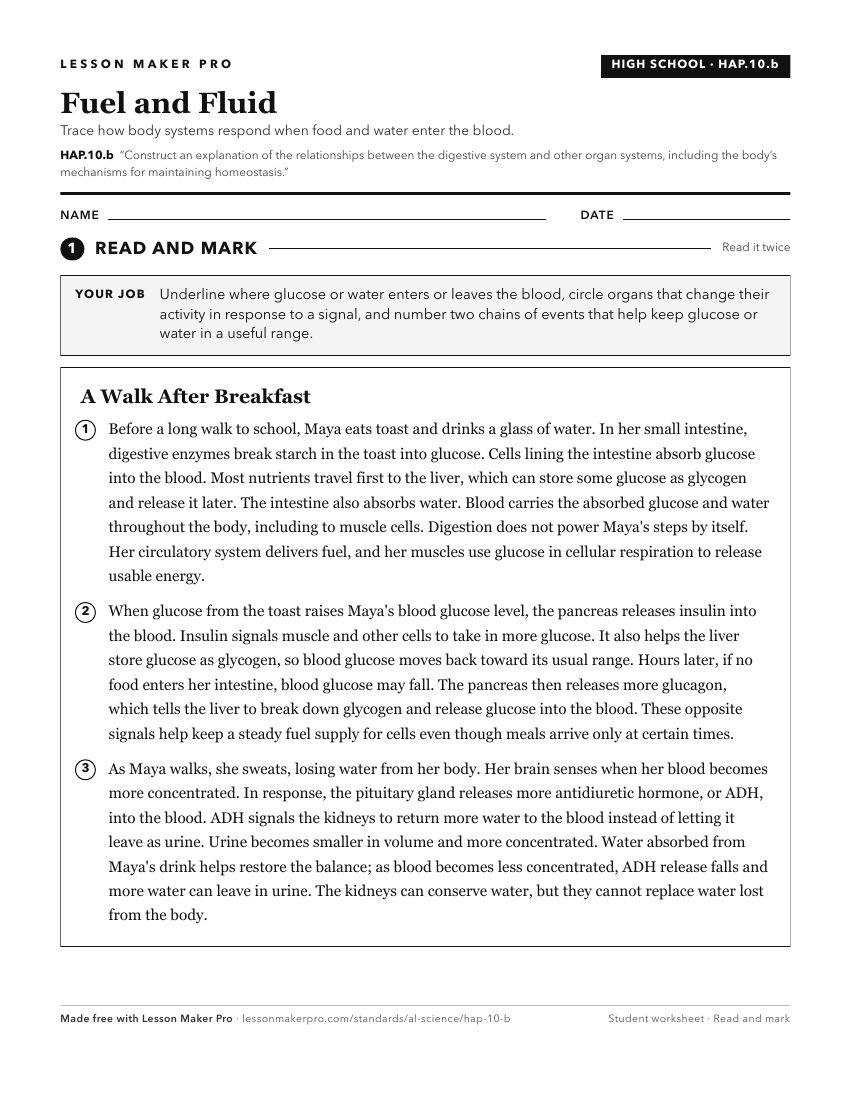
A ready-to-print activity worksheet aligned to HAP.10.b, with an answer key for the teacher on its own page. No account needed.
PDF, US Letter, prints cleanly in black and white.
Download the worksheetKeep exploring
Related Standards
- HAP.3.b
Construct an explanation of the relationships between the skeletal system and other organ systems, including the body’s mechanisms for maintaining homeostasis.
- HAP.8.c
Construct an explanation of the cardiovascular system’s relationships with other organ systems, including the body’s mechanisms for maintaining homeostasis.
- HAP.9.c
Construct an explanation of the respiratory system’s relationships with other organ systems, including the body’s mechanisms for maintaining homeostasis.
- HAP.2.a
Construct an explanation of the relationships between the integumentary system and other organ systems, including the body’s mechanisms for maintaining homeosta...
Turn this exact standard into a lesson
Grade, subject, topic, and the complete standard are prefilled. Create one free, no account needed.
Also for this standard:Make a WorksheetMake a QuizMake a Sub Lesson