Alabama Science 5.2
The Standard
Analyze data collected through observations and measurements to identify materials based on their properties, including color, hardness, and reflectivity.
2023 Alabama Course of Study: Science · Matter and Its Interactions
Teacher's field guide
What This Standard Means
What Students Need to Do
- Students record color, scratch test results, and how much light a material reflects. They compare the data to identify an unknown sample.
What Mastery Looks Like
- A student matches an unknown sample to a known material using more than one property. They explain why color alone may not be enough.
Common Misconceptions
- Students may think two gray samples must be the same material, or that every shiny sample is metal. They may confuse hardness with flexibility or compare reflected light from different angles.
How to Assess It
- Give students this exit ticket: “A gray plastic lid has no penny marks and looks dull. Gray foil has two penny marks and looks shiny. An unknown gray sample has two penny marks and looks shiny. What is it, and which results support your answer?”
Lesson moves
Ways to Teach It
Have pairs scratch foil, plastic, and wood three times with a penny, then record mark counts, color, and flashlight reflection.
Show two gray sample data cards, one shiny and easy to scratch, one dull and hard to scratch; ask which traits distinguish them.
Play a match game with labeled material cards and mystery cards showing color, penny scratch results, and reflected light scores.
At a recycling bin, compare a foil wrapper and a gray plastic lid; write which test would distinguish them and why.
Free download
Printable 5.2 Worksheet
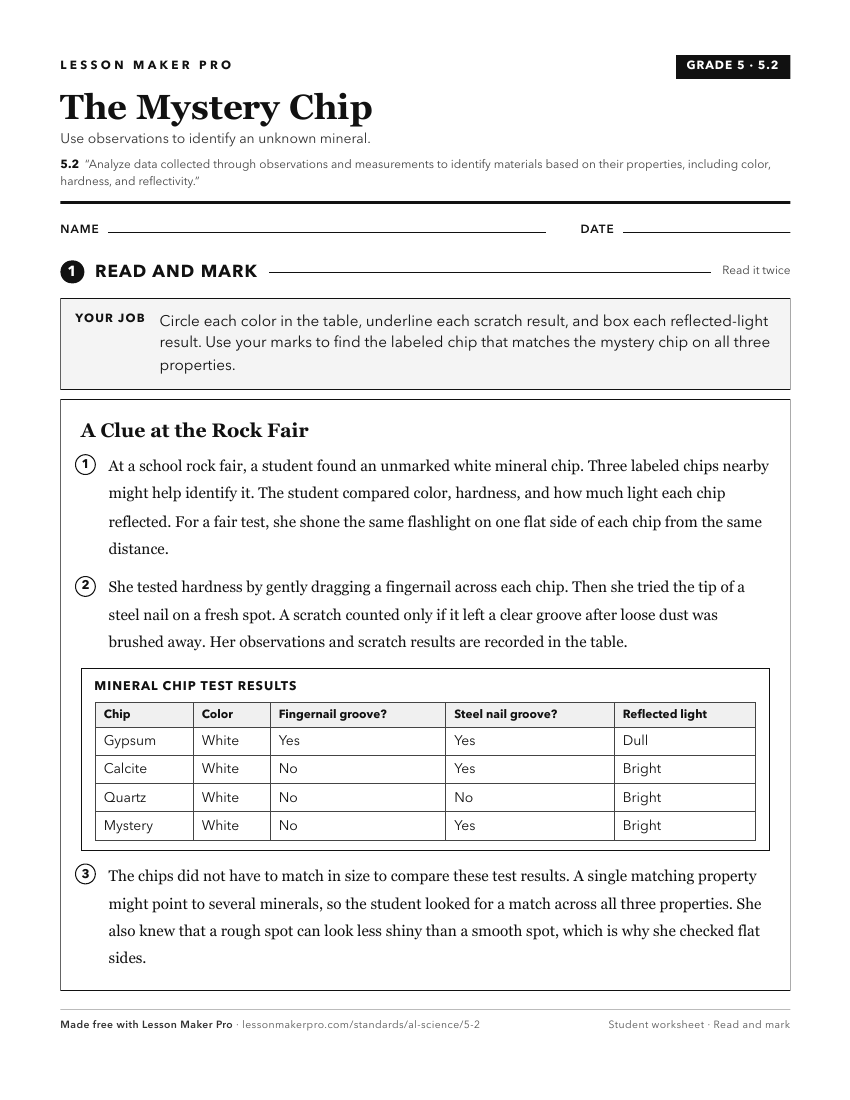
A ready-to-print activity worksheet aligned to 5.2, with an answer key for the teacher on its own page. No account needed.
PDF, US Letter, prints cleanly in black and white.
Download the worksheetKeep exploring
Related Standards
- 2.1
Plan and carry out investigations to compare, contrast, and classify various solid and liquid materials according to physical properties, including color and te...
- 8.4.a
Analyze and interpret data to differentiate among elements based on their properties and classify the elements as metals, nonmetals, or metalloids.
- PS.5
Analyze and interpret data to justify the selection of a specific material for a practical application, considering a range of constraints.
- 1.3
Plan and carry out investigations to determine how light is affected when it interacts with various types of materials.
Turn this exact standard into a lesson
Grade, subject, topic, and the complete standard are prefilled. Create one free, no account needed.
Also for this standard:Make a WorksheetMake a QuizMake a Sub Lesson