Alabama ELA 2.LF.23
Standard Cluster
Identify the main story elements in a literary text. a. Explain the plot of a narrative, using textual evidence to list the major events in sequence. b. Describe the characters’ traits, feelings, and behaviors in a story. c. Describe the setting of a narrative, using textual evidence. d. Identify the central message or moral of a story. e. Identify the theme in myths, fables, and folktales.
2021 Alabama Course of Study: English Language Arts · Literacy Foundations K-3
Cluster contents
Standards in This Cluster
2.LF.23 is a cluster heading. These are the individual standards under it.
- 2.LF.23.a
Explain the plot of a narrative, using textual evidence to list the major events in sequence.
- 2.LF.23.b
Describe the characters' traits, feelings, and behaviors in a story.
- 2.LF.23.c
Describe the setting of a narrative, using textual evidence.
- 2.LF.23.d
Identify the central message or moral of a story.
- 2.LF.23.e
Identify the theme in myths, fables, and folktales.
Teacher's field guide
What This Cluster Means
What Students Need to Do
- Students put the major events in order and point to details in the text that support their retelling. They describe the setting and the characters’ traits, feelings, and actions. They identify the story’s lesson or theme.
What Mastery Looks Like
- A student retells the events in order without getting stuck on small details. They use the text to support where the story happens and what a character is like. They explain the lesson using something the characters did.
Common Misconceptions
- Students may list every action instead of the events that change the story. They may confuse a character’s feeling with a trait or guess the setting from a picture. Some name a topic like “friendship” without saying what the story teaches about friends.
How to Assess It
- Give students a copy of “The Lion and the Mouse.” On an exit ticket, ask them to list three events in order, find text details for the setting and one lion trait, and write the fable’s lesson.
Lesson moves
Ways to Teach It
Give pairs three event cards from a familiar fable; have them order the cards and match each one to a sentence in the text.
After reading “The Lion and the Mouse,” ask pairs: How did the lion act at first, what changed, and which words show it?
Play story detective with a short myth: students highlight a setting clue, circle a character action, and underline a detail supporting the theme.
Read a fable about helping, then have students write a two-sentence playground situation that shows the same lesson.
Free download
Printable 2.LF.23 Worksheet
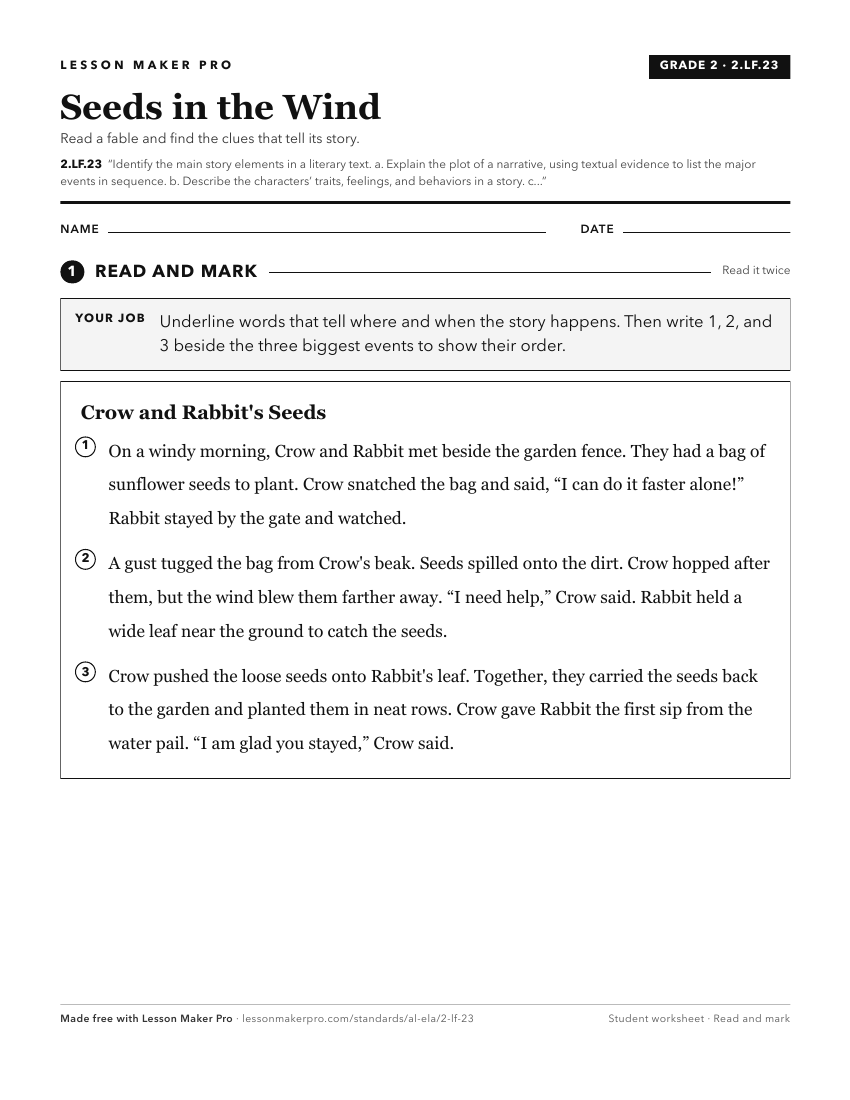
A ready-to-print activity worksheet aligned to 2.LF.23, with an answer key for the teacher on its own page. No account needed.
PDF, US Letter, prints cleanly in black and white.
Download the worksheetKeep exploring
Related Standards
Turn this cluster into a lesson
Grade, subject, topic, and the complete cluster are prefilled. Create one free, no account needed.
Also for this cluster:Make a WorksheetMake a QuizMake a Sub Lesson