Virginia SOL 6.8.c
The Standard
- 6.8
- The student will investigate and understand that land and water have roles in watershed systems. Key ideas include
the Chesapeake Bay is an estuary that has many important functions
Virginia Standards of Learning for Science
Teacher's field guide
What This Standard Means
What Students Need to Do
- Students explain how mixed fresh and salt water creates habitats for many organisms. They connect the Bay to nursery habitat, food webs, water filtering, flood protection, recreation, and local jobs.
What Mastery Looks Like
- A student can name several Bay functions and explain how each supports organisms or people. The student can use features such as wetlands, shallow water, and brackish water as evidence.
Common Misconceptions
- Students may think the Bay is entirely fresh water or entirely salt water. They may describe only human uses, or assume wetlands remove every pollutant from runoff.
How to Assess It
- Exit ticket: Name three functions of the Chesapeake Bay. Choose one and explain how a Bay feature helps it perform that function.
Lesson moves
Ways to Teach It
Build a marsh filter with cups, gravel, soil, and grass, then compare water clarity before and after muddy water passes through it.
Write a response to this prompt: Which Bay function would cause the greatest impact if it were lost, and why?
Match cards showing Bay features, such as wetlands and shallow water, with function cards, such as flood protection and nursery habitat.
Read short headlines about oysters, fishing, flooding, and tourism, then identify the Bay function and community affected in each case.
Free download
Printable 6.8.c Worksheet
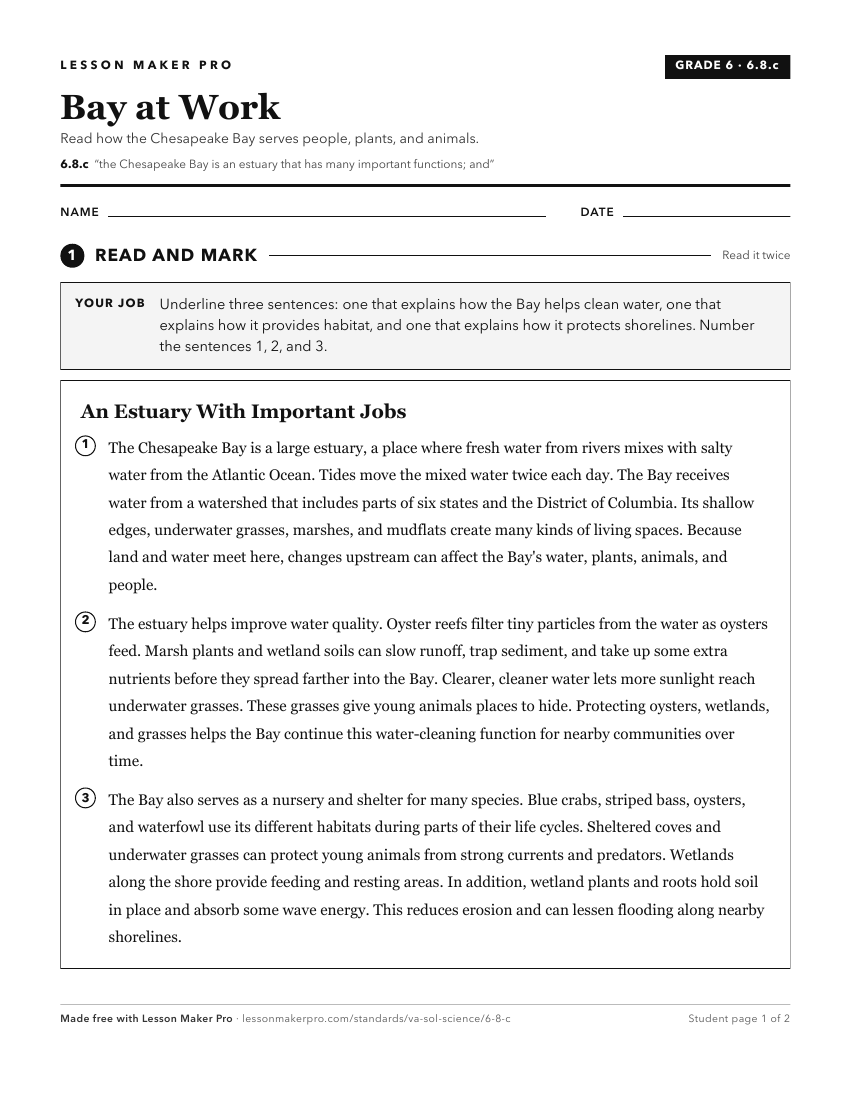
A ready-to-print activity worksheet aligned to 6.8.c, with an answer key for the teacher on its own page. No account needed.
PDF, US Letter, prints cleanly in black and white.
Download the worksheetKeep exploring
Related Standards
Turn this exact standard into a lesson
Grade, subject, topic, and the complete standard are prefilled. Create one free, no account needed.
Also for this standard:Make a WorksheetMake a QuizMake a Sub Lesson