Virginia SOL 3.5
SOL Standard (Key Ideas Cluster)
The student will investigate and understand that aquatic and terrestrial ecosystems support a diversity of organisms. Key ideas include ecosystems are made of living and nonliving components of the environment; and relationships exist among organisms in an ecosystem.
Virginia Standards of Learning for Science
Cluster contents
Key Ideas in This Standard
3.5 is a Standards of Learning science standard. These are the key ideas and practices under it.
Teacher's field guide
What This Cluster Means
What Students Need to Do
- Students identify living and nonliving parts of pond, stream, forest, and grassland habitats. They explain how plants and animals depend on other organisms and their surroundings for food, water, shelter, and space.
What Mastery Looks Like
- A student can sort ecosystem features as living or nonliving and support each choice. The student can describe specific connections, such as a frog eating an insect or using pond plants for shelter.
Common Misconceptions
- Students may label water, sunlight, or rocks as living because organisms need them. They may also think organisms in the same habitat live independently or that predators are harmful to the ecosystem.
How to Assess It
- Show a pond picture and ask students to name two living parts, two nonliving parts, and one relationship between organisms. Require evidence from the picture.
Lesson moves
Ways to Teach It
Build a shoebox habitat with plant, animal, water, soil, sunlight, and shelter cards, then connect parts with labeled yarn.
Ask students to explain what might happen in a pond if all the insects disappeared.
Play ecosystem connection bingo using organism, food, shelter, water, and sunlight cards from forest and pond habitats.
Inspect the schoolyard, record living and nonliving parts, and sketch one way an organism uses another organism or nearby material.
Free download
Printable 3.5 Worksheet
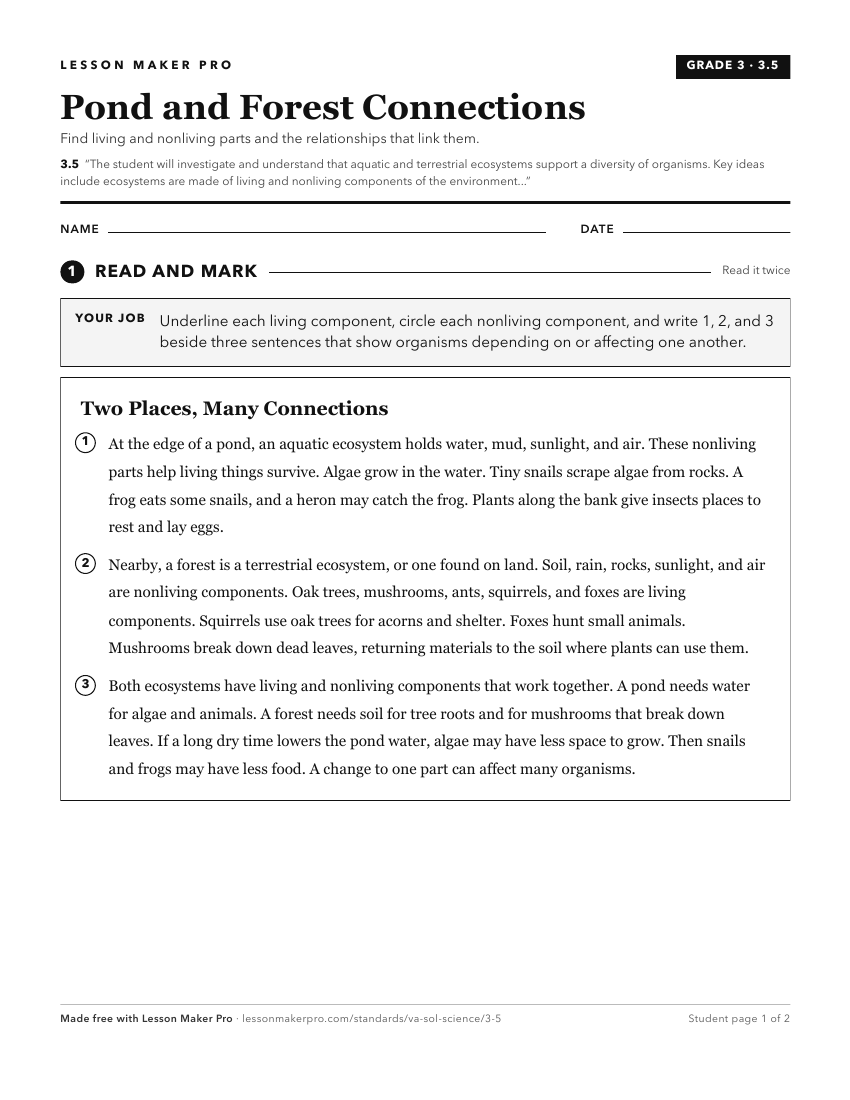
A ready-to-print activity worksheet aligned to 3.5, with an answer key for the teacher on its own page. No account needed.
PDF, US Letter, prints cleanly in black and white.
Download the worksheetKeep exploring
Related Standards
- LS.7
The student will investigate and understand that adaptations support an organism’s survival in an ecosystem. Key ideas include
- 4.3
The student will investigate and understand that organisms, including humans, interact with one another and with the nonliving components in the ecosystem. Key ...
- 3.8
The student will investigate and understand that natural events and humans influence ecosystems. Key ideas include
- LS.5
The student will investigate and understand that biotic and abiotic factors affect an ecosystem. Key ideas include
Turn this cluster into a lesson
Grade, subject, topic, and the complete cluster are prefilled. Create one free, no account needed.
Also for this cluster:Make a WorksheetMake a QuizMake a Sub Lesson