Virginia SOL 2.8.c
The Standard
- 2.8
- The student will investigate and understand that plants are important natural resources. Key ideas include
plants can help reduce the impact of wind and water.
Virginia Standards of Learning for Science
Teacher's field guide
What This Standard Means
What Students Need to Do
- Students explain how roots hold soil in place and how stems and leaves slow wind and moving water. They compare planted soil with bare soil and describe which loses less soil.
What Mastery Looks Like
- A student can predict that planted ground will lose less soil during wind or rain. The student supports the prediction with evidence from a model, picture, or observation.
Common Misconceptions
- Students may think plants stop all soil movement or that roots absorb all rainwater. Some focus only on roots and miss how leaves and stems block wind and slow raindrops.
How to Assess It
- Show pictures of a bare hill and a grass-covered hill. Ask, “Which hill will lose more soil during heavy rain, and why?”
Lesson moves
Ways to Teach It
Pour equal amounts of water over trays of bare soil and grass-covered soil, then compare the amount and color of the runoff.
Ask students to write why grass planted beside a playground might help after heavy rain.
Match picture cards showing roots, leaves, wind, rain, and moving soil, then explain each match to a partner.
Walk around the schoolyard, locate bare and planted soil, and identify places where plants may limit soil loss.
Free download
Printable 2.8.c Worksheet
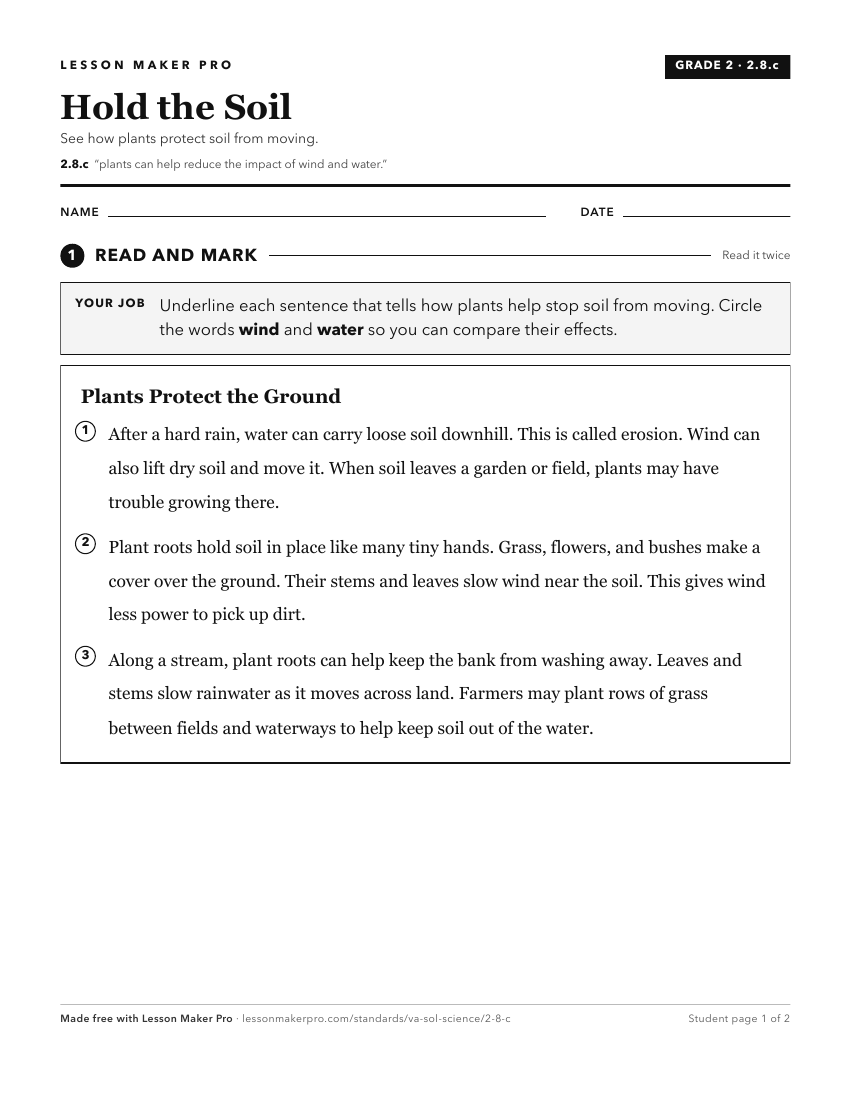
A ready-to-print activity worksheet aligned to 2.8.c, with an answer key for the teacher on its own page. No account needed.
PDF, US Letter, prints cleanly in black and white.
Download the worksheetKeep exploring
Related Standards
Turn this exact standard into a lesson
Grade, subject, topic, and the complete standard are prefilled. Create one free, no account needed.
Also for this standard:Make a WorksheetMake a QuizMake a Sub Lesson