Virginia SOL 2.5.b
The Standard
- 2.5
- The student will investigate and understand that living things are part of a system. Key ideas include
an animal’s habitat provides all of its basic needs
Virginia Standards of Learning for Science
Teacher's field guide
What This Standard Means
What Students Need to Do
- Students identify what an animal gets from its surroundings, including food, water, shelter, air, and enough space. They explain how a particular place supports a particular animal.
What Mastery Looks Like
- A student can match an animal to a suitable home and point out where it finds food, water, shelter, and space. The student can explain why another place would not work as well.
Common Misconceptions
- Students may think any animal can live anywhere if food is present. They may also treat a nest or den as the whole habitat, rather than one part of the animal’s surroundings.
How to Assess It
- Show a pond picture and ask, “How does this place help a frog live?” Students should name and explain at least three supports shown.
Lesson moves
Ways to Teach It
Build a shoebox home for a chosen animal, then label its food, water source, shelter, and space.
Ask students to write, “A squirrel can live in a forest because...” and include three details.
Play a card-matching game with animals, places, foods, water sources, and shelters, then explain each completed set.
Walk around the schoolyard and record signs that birds or insects can find food, water, shelter, and space there.
Free download
Printable 2.5.b Worksheet
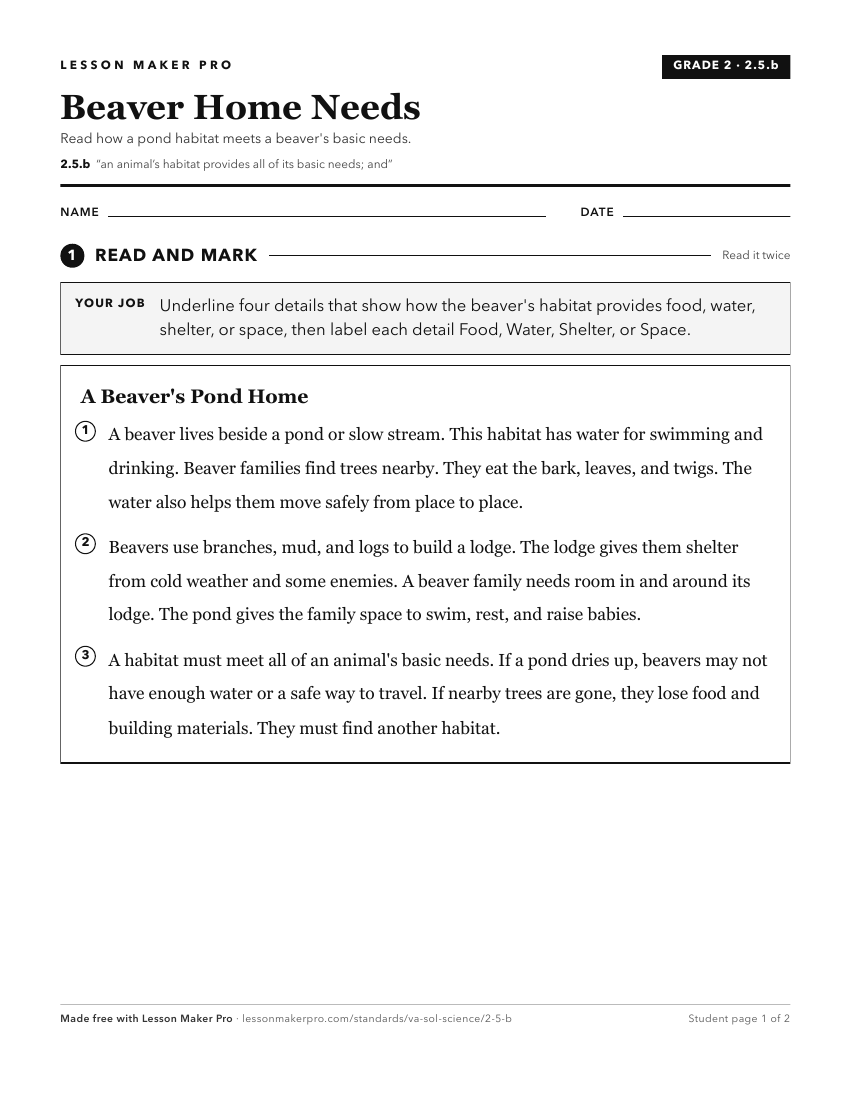
A ready-to-print activity worksheet aligned to 2.5.b, with an answer key for the teacher on its own page. No account needed.
PDF, US Letter, prints cleanly in black and white.
Download the worksheetKeep exploring
Related Standards
- 2.8.b
plants provide oxygen, homes, and food for many animals
- 1.5.a
animals need air, food, water, shelter, and space (habitat)
- K.7.a
living things need adequate food, water, shelter, air, and space to survive
- 1.5
The student will investigate and understand that animals, including humans, have basic life needs that allow them to survive. Key ideas include
Turn this exact standard into a lesson
Grade, subject, topic, and the complete standard are prefilled. Create one free, no account needed.
Also for this standard:Make a WorksheetMake a QuizMake a Sub Lesson