Virginia SOL 1.6.a
The Standard
- 1.6
- The student will investigate and understand that there is a relationship between the sun and Earth. Key ideas include
the sun is the source of energy and light that warms the Earth’s land, air, and water
Virginia Standards of Learning for Science
Teacher's field guide
What This Standard Means
What Students Need to Do
- Students identify the Sun as the main source of daylight and warmth on Earth. They describe how sunlight warms soil, water, and outdoor air.
What Mastery Looks Like
- Students explain why a sunny spot feels warmer than a shady spot. They use a drawing or observation to show sunlight warming land, water, or air.
Common Misconceptions
- Students may think the Sun only provides light, not warmth. They may think sunlight warms land but not water or air, or that clouds and the Moon make their own light.
How to Assess It
- Exit ticket: Draw arrows from the Sun to soil, a pond, and outdoor air. Write or tell what the Sun gives each one.
Lesson moves
Ways to Teach It
Place cups of soil and water in sunlight and shade, then compare their temperatures by touch or with classroom thermometers.
Ask, “What feels warmer after sitting in sunlight: soil, water, or air?” Students draw one example and explain the Sun’s role.
Play a matching game where students connect the Sun to pictures of warmed soil, lake water, and outdoor air, then explain each match.
Compare sunny and shady playground spots, then decide where a wet towel would warm faster and explain why.
Free download
Printable 1.6.a Worksheet
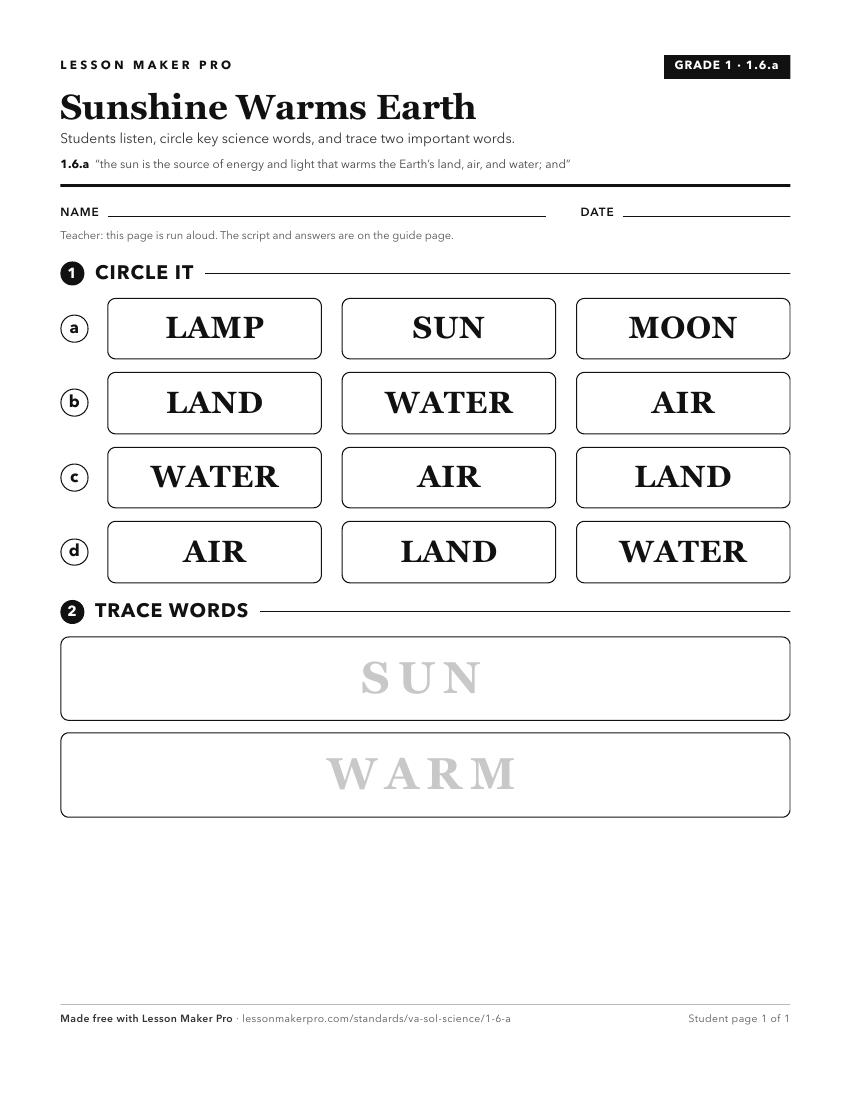
A ready-to-print activity worksheet aligned to 1.6.a, with an answer key for the teacher on its own page. No account needed.
PDF, US Letter, prints cleanly in black and white.
Download the worksheetKeep exploring
Related Standards
Turn this exact standard into a lesson
Grade, subject, topic, and the complete standard are prefilled. Create one free, no account needed.
Also for this standard:Make a WorksheetMake a QuizMake a Sub Lesson