Virginia SOL USII.8.e
The Standard
- USII.8
- The student will apply history and social science skills to analyze the key changing patterns of society during the second half of the 20th and early 21st centuries by
describing the protections and provisions of the Americans with Disabilities Act (ADA)
Virginia Standards of Learning for History and Social Science
Teacher's field guide
What This Standard Means
What Students Need to Do
- Students explain how the law protects people with disabilities from discrimination. They identify required access and reasonable accommodations in workplaces, government services, transportation, public businesses, and communication.
What Mastery Looks Like
- Students can examine a scenario, identify an access barrier, and suggest a reasonable change. They can explain that the law supports equal opportunity, not guaranteed outcomes.
Common Misconceptions
- Students may think only people with visible physical disabilities are protected. They may assume every requested change is required or that the law guarantees jobs and services without qualifications.
How to Assess It
- Give students this prompt: “A qualified employee who is blind asks for screen-reading software. Explain how the law applies and name the required response.”
Lesson moves
Ways to Teach It
Use blocks and a paper floor plan to redesign a store entrance, restroom, and checkout area for customers with different disabilities.
Write a response to this prompt: “How is a reasonable accommodation different from special treatment?”
Sort scenario cards into discrimination, reasonable accommodation, or equal access, then defend each choice to a partner.
Inspect a local library website or transit map for accessibility features, then list one barrier and one practical improvement.
Free download
Printable USII.8.e Worksheet
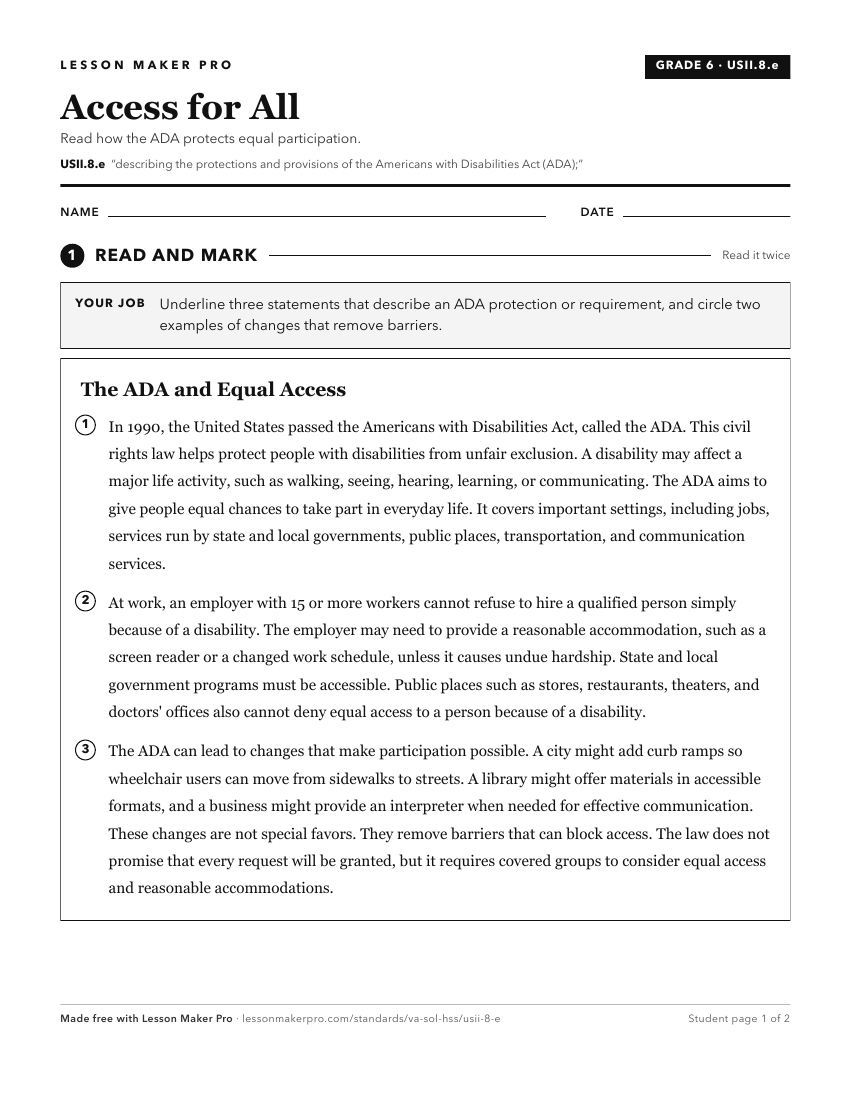
A ready-to-print activity worksheet aligned to USII.8.e, with an answer key for the teacher on its own page. No account needed.
PDF, US Letter, prints cleanly in black and white.
Download the worksheetKeep exploring
Related Standards
- VS.8.a
describing what the Thirteenth, Fourteenth, and Fifteenth Amendments to the Constitution accomplished
- CE.6.b
describing the rights and privileges guaranteed by the First Amendment, including freedoms of religion, speech, press, assembly, and petition, the rights guaran...
- CE.5.b
describing how due-process protections seek to ensure justice
- 3.1.b
describing the rights guaranteed to citizens in the First Amendment
Turn this exact standard into a lesson
Grade, subject, topic, and the complete standard are prefilled. Create one free, no account needed.
Also for this standard:Make a WorksheetMake a QuizMake a Sub Lesson